

Pregnant Inmate Escapes During Whataburger Stop
America ı By Michallie K Harrison
0 Comments

Key Takeaways
- A pregnant inmate identified as Rebecca Taylor escaped from New Mexico correctional custody Nov. 25 after three officers transporting her from medical appointments stopped at an Albuquerque Whataburger. Authorities say she entered the driver's seat of their state-owned SUV and drove away.
- Investigators recovered the abandoned corrections vehicle approximately three miles from the restaurant. Authorities also located a corrections-issued cellphone and Taylor's prison jumpsuit as the multiagency search continued.
- New Mexico law restricts the use of restraints on pregnant prisoners but does not categorically prohibit all restraints throughout pregnancy. The law requires correctional agencies to balance legitimate medical protections with appropriate security measures.
- The Corrections Department has not publicly explained where all three officers were positioned, whether the vehicle was running or whether the food stop was authorized. Those unanswered questions are central to determining whether transport procedures were followed.
- Taylor's escape prompted temporary statewide prison lockdowns and an investigation into correctional transport security. Officials have not released verified findings establishing that any officer violated departmental policy.
ALBUQUERQUE, N.M. — A pregnant inmate escaped from New Mexico correctional custody after three officers transporting her from a medical appointment stopped at a Whataburger restaurant. The 26-year-old woman reportedly climbed into the driver's seat of a state-owned SUV and drove away, leaving corrections personnel stranded. Authorities recovered the vehicle about an hour later, but the inmate remained missing as investigators examined how the escape occurred.
The New Mexico Corrections Department identified the woman as Rebecca Taylor. A transport team took her from Albuquerque to Western New Mexico Correctional Facility in Grants on Wednesday, Nov. 25. 25. Taylor and another incarcerated woman had attended prenatal medical appointments before the transport team stopped for food. Officials said the team left Taylor unrestrained due to pregnancy; at least one officer stood outside as she drove away.
The incident raises questions about correctional transport procedures, vehicle security and the supervision of incarcerated people during medical trips. New Mexico law restricts the use of restraints on pregnant prisoners, but it does not eliminate the responsibility to maintain secure custody. The Corrections Department has acknowledged that it is investigating the escape but has not publicly released specific findings about the officers' actions.
How Rebecca Taylor escaped during a Whataburger stop
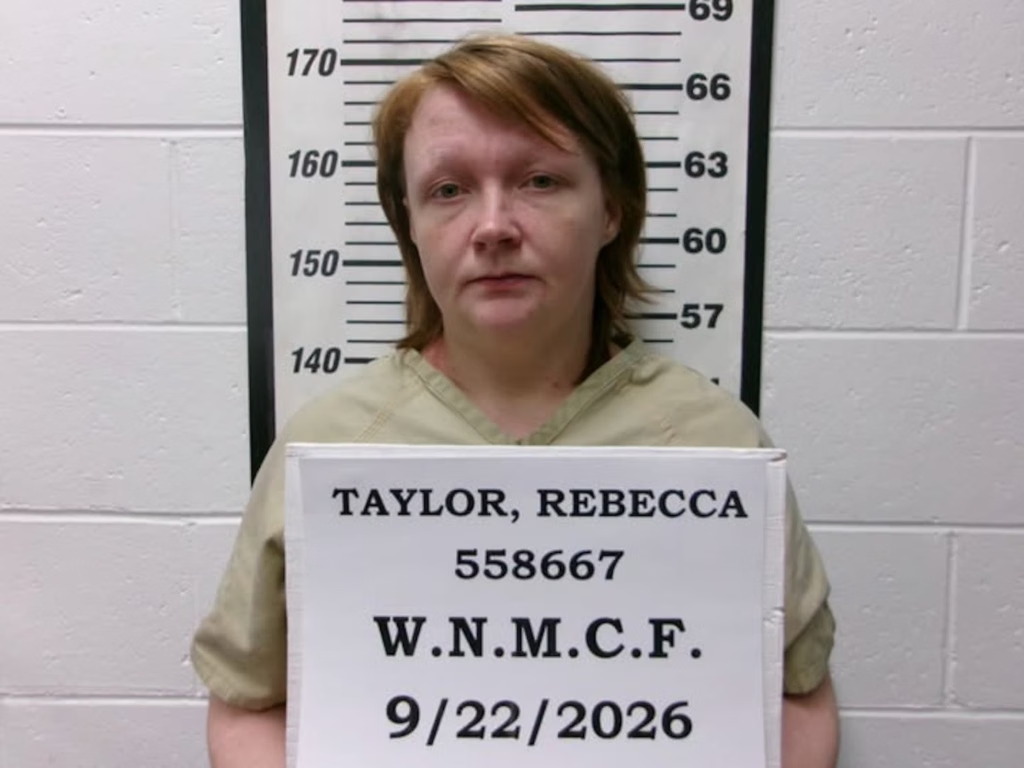
According to the Corrections Department's Nov. 25 account, three officers were transporting two incarcerated women in a Dodge Journey SUV. Both women had received prenatal care in Albuquerque and were returning to Western New Mexico Correctional Facility, approximately 80 miles west of the city. Around 11:35 a.m., the transport team stopped for food at a Whataburger along 98th Street NW.
During the stop, Taylor unbuckled her seat belt and moved from the passenger area into the driver's seat. She then drove away in the corrections vehicle before officers could prevent her departure. Department spokesperson Brittany Roembach said the agency initially understood that one officer was near the vehicle but not inside it when the escape occurred.
The department has not publicly explained where all three officers were positioned during the escape of the pregnant inmate. Officials also have not explained whether someone left the vehicle running, who controlled its keys, or who authorized the stop. Those details are central to determining how Taylor gained control of a vehicle that remained under correctional supervision.
A second pregnant inmate remained in custody
The Dodge Journey was carrying another incarcerated woman when Taylor took control. According to corrections officials, the second woman exited the vehicle during the incident and remained in department custody. Authorities have not publicly identified her or provided a detailed account of how she left the SUV.
The presence of a second inmate makes the sequence particularly important. Investigators must establish whether an officer remained responsible for supervising both women while other personnel obtained food. They must also determine whether Taylor put the second woman in danger when Taylor entered the driver's seat and drove away.
The public record does not establish that the second inmate assisted Taylor or had advance knowledge of the escape. There is also no publicly verified account of whether officers attempted to stop the departing SUV. Those questions require the transport team's statements, available surveillance footage and investigative findings.
New Mexico law restricts restraints during pregnancy
The Corrections Department has attributed Taylor's lack of restraints to her pregnancy. However, New Mexico's legal requirements are more specific than a blanket prohibition on restraining every pregnant inmate.
Under New Mexico Statutes Section 33-1-4.2, correctional facilities must use the least restrictive restraints necessary when they know an inmate is in the second or third trimester. The law imposes stricter limitations during labor, delivery and recovery. In those circumstances, officials generally may not use restraints unless they identify a serious threat or substantial flight risk they cannot reasonably manage through other measures.
The statute recognizes both medical safety and security concerns. Correctional officers need not disregard escape risks, and the statute does not mandate restraints for every pregnant inmate during transportation. Determining whether Taylor's treatment complied with the law would require reviewing her medical status, the department's applicable policies and any documented security assessment.
Pregnancy protections serve a medical purpose
Restrictions on restraints during pregnancy address legitimate medical risks. Handcuffs, leg irons and other devices can increase the danger of falling, restrict movement and complicate emergency treatment. Medical professionals also warn that unnecessary restraints may interfere with the ability to respond quickly to pregnancy-related complications.
The National Commission on Correctional Health Care recommends avoiding restraints throughout pregnancy unless a compelling security concern makes them necessary. Its guidance emphasizes individualized decisions and the least restrictive means available when staff cannot avoid using restraints. It also discourages leg restraints and positioning that increases the risk of injury.
Correctional agencies should not conflate these protections with the circumstances that allowed Taylor to access the driver's seat. Correctional agencies must accommodate medical needs while maintaining appropriate supervision and vehicle security. The relevant question is whether officers followed procedures designed to accomplish both objectives.
Pregnant Inmate Transport and Security Requirements
New Mexico's published correctional policies establish responsibilities for transporting incarcerated people to outside medical facilities. The department's medical transportation policy, CD-173100, states that such movements must protect an inmate's life, safety and health. The publicly posted version, revised in 2018, also recognizes the need for appropriate security provisions during transfers for outside medical care.
The policy assigns responsibility for safe and timely medical transportation to correctional administrators and health services personnel. Its procedures address transport authorization, medical needs and coordination with receiving facilities. The document also refers to additional departmental transportation and security requirements.
That policy does not independently establish whether the Whataburger stop violated the rules governing Taylor's trip. The department has not publicly released the specific operational instructions given to the three officers. To determine whether officers followed established procedures, reviewers need those instructions and current policies governing medical escorts and unauthorized stops.
Why Officers Stopped With a Pregnant Inmate
The decision to stop at a fast-food restaurant is a central part of the investigation. The transport team was returning from medical appointments, not conducting a routine trip between unrestricted locations. Officers remained responsible for the custody and safety of both incarcerated women throughout the journey.
The review should determine whether officers planned or approved the food stop, or departmental procedures permitted it. Investigators also need to determine what led someone to place the vehicle where Taylor could reach the driver's seat. Any explanation must account for the officers' responsibilities while maintaining necessary protections for the pregnant passengers.
The number of officers involved makes the unanswered questions more significant. Officials assigned three personnel to the transport, yet one inmate reportedly obtained the vehicle and escaped. Determining whether that resulted from a policy violation, an operational failure or circumstances not yet disclosed requires evidence beyond the initial incident account.
Investigators recover the abandoned corrections SUV
Authorities located the Dodge Journey around 12:30 p.m. Wednesday after tracking it through GPS technology. The vehicle was recovered near Crestview Drive in southwest Albuquerque, approximately three miles from the Whataburger. Taylor was no longer inside, leaving investigators to determine how she departed the area.
Later that afternoon, civilians discovered a corrections-issued transport cellphone near Alamosa Park. The device was turned over to New Mexico State Police around 2:40 p.m., according to the department's account. Authorities also recovered Taylor's orange prison jumpsuit in southwest Albuquerque.
The recovered items may help investigators reconstruct the pregnant inmate's escape, but their precise evidentiary significance has not been publicly established. Investigators have not disclosed whether the cellphone contains relevant communications or whether the vehicle yielded evidence identifying anyone who may have assisted Taylor. Those possibilities remain investigative questions rather than confirmed developments.
Multiagency search extends beyond Albuquerque
The search involves several agencies, including New Mexico State Police, the Albuquerque Police Department, the Bernalillo County Sheriff's Office and the U.S. Marshals Service. The Corrections Department's Security Threat Intelligence Unit has also participated. Authorities have pursued leads involving public transportation and individuals who may have information about Taylor's whereabouts.
Corrections officials identified Taylor as originally from Cleveland, Texas, with connections to Houston and Albuquerque. Investigators have examined possible travel routes and reviewed information concerning her personal contacts. Those investigative activities do not establish that Taylor left New Mexico or received assistance from another person.
As of the latest publicly available reports Friday, Nov. 27, authorities were still searching for Taylor. Officials urged anyone who encounters her not to attempt an arrest or confrontation. Members of the public were instructed to contact law enforcement through 911.
New Mexico prisons temporarily locked down
The pregnant inmate escape also prompted a statewide correctional security response, temporarily placing New Mexico prison facilities under lockdown. The Corrections Department placed state prison facilities on lockdown as investigators coordinated the search and officials assessed institutional security concerns. The restrictions affected facilities that were not directly involved in Taylor's transportation.
The department subsequently announced that statewide lockdowns would end at 6 a.m. Thursday, Nov. 26. Western New Mexico Correctional Facility remained subject to modified movement restrictions, including limitations on visitation. Officials did not publicly identify an additional escape attempt or a related security incident at another prison.
The response demonstrates how a transport failure can affect operations across an entire correctional system. Lockdowns require changes to staffing, movement, visitation and other institutional activities. Understanding why statewide restrictions were necessary would help explain the department's initial assessment of the escape and any concerns about broader operational weaknesses.
What Taylor's criminal history establishes
Taylor was incarcerated in connection with theft and burglary offenses involving vehicles, according to the Corrections Department's public account. Court records cited in reporting describe a six-year prison sentence following guilty pleas to four offenses connected to vehicle thefts dating to 2024. The full judgment and sentencing documents have not been independently examined for this article.
Her criminal history may be relevant to a security assessment, but it does not establish how the transport team evaluated her before the medical trip. Officials have not publicly identified her assigned custody classification or disclosed whether she had previous escape attempts or disciplinary findings. The department has also not released a specific assessment explaining why the transport arrangements were considered appropriate.
A proper review of the pregnant inmate's escape would distinguish documented criminal history from assumptions about the likelihood of flight. It would examine what information officers possessed before departure and which procedures applied to the assigned passengers. Any future criminal charges stemming from the escape would require separate proceedings and should not be treated as already established.
Pregnant Inmate Escape Raises Questions About Officers
The Corrections Department says it is investigating how Taylor escaped. However, it has not publicly identified the officers involved or announced findings concerning their conduct. USA Herald previously investigated a Tennessee prison escape that exposed a reported five-hour delay in notifying local police. Although the circumstances differ, both incidents raise questions about correctional security procedures and accountability. No verified disciplinary determination has been released concerning the New Mexico officers.
Several records could help establish the sequence. Transport orders and dispatch logs may identify who authorized the trip, assigned the officers and approved any stops. Vehicle records and available surveillance footage could help establish when personnel exited the SUV and how Taylor gained access to the driver's position.
Investigators should also determine what training the officers received concerning pregnant inmates, emergency medical transport and vehicle security. The existence of a departmental policy does not establish that it was followed or violated in this incident. Any finding of misconduct should rest on documented actions and the rules governing the trip.
Records could clarify how the escape occurred
New Mexico's public records system provides a mechanism for seeking agency documents concerning the pregnant inmate's escape, subject to applicable exemptions. The Corrections Department's Public Relations Office directs requests through the state's Inspection of Public Records Act process. Its website identifies the department's records portal and procedures for submitting requests.
Relevant records include transport authorizations, applicable policies, incident reports and available communications concerning the food stop. Requests for vehicle and surveillance footage could also establish the chronology. Some material may be withheld because of security concerns, medical confidentiality or the ongoing investigation.
The department should be able to explain which operational procedures govern stops during inmate transportation. It should also identify whether those procedures were reviewed after Taylor escaped and whether additional safeguards have been adopted. Those answers would provide a clearer basis for accountability than an assurance that the incident is under investigation.
An escape that raises larger security questions
The pregnant inmate escape occurred during a routine medical return trip involving three corrections officers and two pregnant women. The department has established that she gained control of its vehicle during a food stop and fled. It has not publicly explained how officers lost control of the SUV or whether the transport complied with applicable procedures.
New Mexico's pregnancy-restraint protections address legitimate medical and safety concerns. Those protections do not excuse inadequate supervision or eliminate the responsibility to safeguard correctional vehicles. A complete investigation should determine whether the escape involved a failure to follow existing rules or weaknesses requiring policy changes.
The immediate priority remains locating Taylor and ensuring the safety of everyone involved. The longer-term issue is whether the department can demonstrate that its transportation procedures are effective, lawful and consistently enforced. Until those findings are released, the central question remains unanswered: How did an inmate under the supervision of three officers manage to drive away in their corrections vehicle?

Discussion
No comments yet. Be the first to join the discussion!
FOLLOW US
Recent Posts


Don’t Miss It

California Freezes Property Insurance Cancellations: One-Year…
The decision that California freezes property insurance cancellations arrives as…
By – Rachel Moore
Thanksgiving 2026: Macy’s Parade Postponed, Storm…
Key Takeaways Macy’s Thanksgiving Day Parade postponed to Saturday. Major…
By – Jackie Allen
Thanksgiving Day 2026: Sports to Watch
Thanksgiving Day 2026 offers sports fans a full schedule of…
By – Jackie Allen
Inflation Jumps to 3.8% as Trump…
October PCE inflation rose 3.8% as the administration proposed a…
By – Derek Johnson
Trump’s Second Birthright Citizenship Order Blocked…
Judge Christopher Cooper blocked Trump's second birthright citizenship order on…
By – Derek Johnson
From ‘America’s Mayor’ to Disbarred Election…
Trump gave Rudy Giuliani, 82, the Presidential Medal of Freedom…
By – Derek Johnson
Liberty Mutual faces new robocall lawsuit
The Liberty Mutual new robocall lawsuit begins with a phone…
By – Tyler Brooks
Amica insurance Becomes Title Sponsor of…
The Amica Insurance WCC sponsorship deal puts a fresh brand…
By – Tyler Brooks
Oklahoma Insurance Investigation Leads to $45M…
The State Farm $45M settlement closes a high-stakes examination into…
By – Tyler Brooks
Thanksgiving 2026: Powerful Storm Crawls Up…
Thanksgiving 2026 is shaping up as a weather story. A…
By – Tyler Brooks
Elon Musk Envisions 100,000 Starlink Satellites…
Elon Musk is proposing an ambitious expansion of SpaceX’s satellite…
By – Jackie Allen
Attorneys Seek to Stop Firing Squad…
Nidal Hasan, the former Army psychiatrist convicted of killing 13…
By – Jackie Allen
Noah’s Ark Search Team Reports 4,300-Year-Old …
A research team investigating a boat-shaped geological formation near Mount…
By – Jackie Allen
Iranian Singer Parastoo Ahmadi Receives Beating…
An Iranian singer has reportedly received 74 lashes after performing…
By – Jackie Allen
Applied Systems Acquires Insurtech Tailwind
The news that Applied Systems acquires insurtech Tailwind signals a…
By – Rachel Moore
Turkcell to Sell Digital Insurance Unit:…
The news that Turkcell is set to sell its digital…
By – Rachel Moore
Allstate Tech outage blocks insurance claims,…
The Allstate insurance tech outage is the latest in a…
By – Rachel Moore
Fentanyl Investigation DEA Agents Allow Millions…
The DEA fentanyl investigation in New Mexico is drawing renewed…
By – Jackie Allen
Kalshi Suspends Utah Operations As Founders…
By Samuel López | USA Herald | November 24, 2026…
By – Samuel Lopez
Ilhan Omar Search Files Show Judge…
WASHINGTON — Newly unsealed Ilhan Omar search warrant records reveal…
By – Michallie K Harrison
Montgomery Challenges Tuberville’s National Guard Pledge
Gov.-elect Tommy Tuberville’s National Guard pledge has drawn opposition from…
By – Michallie K Harrison
Judge Approves Bayer’s $7.25B Roundup Settlement
Bayer has secured a major legal breakthrough after a Missouri…
By – Rachel Moore
U.S. Army Overrides Federal Court Order…
Middletown, Iowa – The U.S. Army is preparing to detonate…
By – Samuel Lopez
BAAJA Would Make It Harder for…
WASHINGTON — Under BAAJA, a tribe could win a court…
By – Michallie K Harrison
Macy’s Thanksgiving Day Parade 2026: Will…
The Macy’s Thanksgiving Day Parade is still scheduled to take…
By – Jackie Allen
Skywatchers: 2026 Beaver Moon Lights Up…
The November 2026 full moon is giving skywatchers another opportunity…
By – Jackie Allen
Trump Order Targets Congressional Oversight
WASHINGTON — A Trump executive order requires federal contractors to…
By – Michallie K Harrison
Avengers: Doomsday Thor’s Mighty Hammer Appears…
A massive version of Thor’s legendary hammer, Mjolnir, has…
By – Jackie Allen
Seasonal Affective Disorder: Why Shorter Days…
Seasonal Affective Disorder (SAD), a form of depression associated with…
By – Jackie Allen
Nvidia Stock Jumps 31.5% as Jensen…
Nvidia stock surged 31.5% Monday after directors reinstated co-founder Jensen…
By – Michallie K Harrison
Alabama Pipeline Fire Near Ward Forces…
WARD, Ala. — An Alabama pipeline fire forced Ward residents…
By – Michallie K Harrison
Human Skeletons Reveal that Ancient Bones…
Human Skeletons recovered from hundreds of archaeological sites across Europe…
By – Jackie Allen
CoverGirl Hit With Heavy Metals Lawsuit…
Coty Inc., the cosmetics giant behind CoverGirl, is facing a…
By – Samuel Lopez
Iowa Schools Cancel Classes as Army…
MIDDLETOWN, Iowa — Schools in southeast Iowa have canceled Friday…
By – Michallie K Harrison
13 U.S. Babies Born With Measles…
U.S. officials documented 13 babies born with measles and 112…
By – Michallie K Harrison
Katie Couric Reveals Memory-Loss Episode That…
Katie Couric is opening up about a recent frightening medical…
By – Jackie Allen
What the GTA 6 ‘Simp’ Backlash…
OPINION When a parent on Threads asked what their son…
By – Michallie K Harrison
Liz Cambage Reveals Battle With Alcohol…
Key Takeaways Former WNBA star Liz Cambage revealed that she…
By – Jackie Allen
Ohio State Football vs University of…
The Ohio State vs Nebraska showdown arrives Saturday with the…
By – Rachel Moore
43 Soldiers Unlock a GTA 6…
FORT STEWART, Ga. — The 9th Brigade Engineer Battalion offered…
By – Michallie K Harrison
Content Creator Chrisean Rock Faces Looming…
By Samuel Lopez – USA Herald INGLEWOOD, Calif. – What…
By – Samuel Lopez
Tower Hill Investment in Gator Athletics:…
The Tower Hill investment in Gator Athletics just rewrote the…
By – Tyler BrooksNo posts found.
No posts found.


Join the Discussion
Share your thoughts, ask questions, and engage with
other readers. Sign in or create a free account to
comment.