

Sunward Anti-Tail of 3I/ATLAS May Be a Hidden Swarm Moving With the Interstellar Visitor
America ı By Samuel Lopez
0 Comments
Key Findings
- The newest images reveal a structure that should not exist.
- Its shape ignores the rules comets have followed for centuries.
- And each new frame pushes us closer to an unsettling possibility.
Avi Loeb’s latest analysis suggests the strange glow pointing toward the Sun may not be a tail at all.
By Samuel Lopez | USA Herald - The latest analysis of 3I/ATLAS comes not from an observatory in orbit, but from the desk of Harvard astrophysicist Avi Loeb, who continues to provide the only coherent mathematical framework for the anomalies recorded since October.
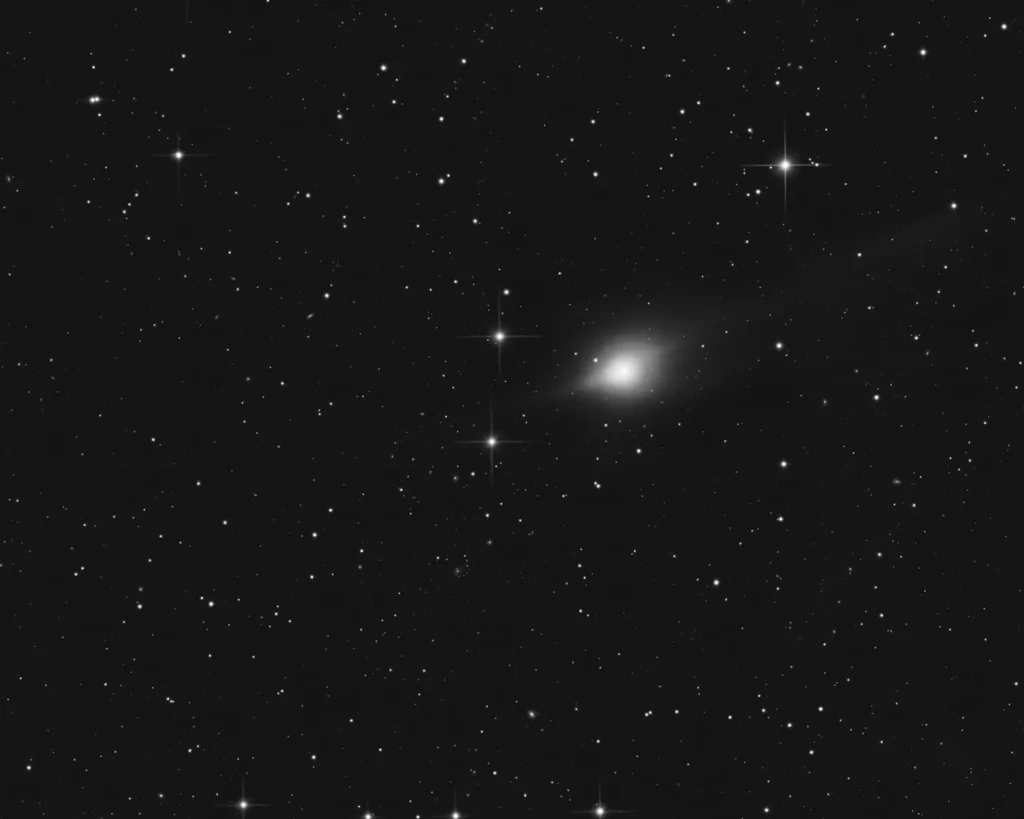
In his most recent Medium report, Loeb tackles the strange sunward elongation—what looks like a backward-pointing tail—that has appeared consistently in post-perihelion imagery throughout November. NASA’s Hubble images captured the same shape months earlier. Rather than behaving like a normal comet tail that blows away from the Sun, this feature extends toward it. Loeb proposes that the simplest explanation may be the most extraordinary: the glow could be caused not by gas or dust, but by a swarm of small objects traveling alongside 3I/ATLAS.
To understand his logic, I re-examined the physics underlying JPL Horizons tracking data, which reports a persistent non-gravitational acceleration acting on 3I/ATLAS—essentially a small push away from the Sun that gravity alone cannot explain. Loeb describes this force as equivalent to the Sun being slightly less massive for 3I/ATLAS than it really is. In plain English, imagine two cars coasting downhill at the same speed. If a gust of wind pushes one car slightly harder uphill, that car will fall behind relative to the other even though the slope is the same. That is the situation Loeb envisions for 3I/ATLAS. It is being pushed ever so slightly, while nearby fragments—if they exist—are not.
Using that analogy, the fragments would drift closer to the Sun while 3I/ATLAS is nudged outward. Over the vast distances involved in interplanetary motion, even a tiny difference compounds dramatically. Loeb calculates that at the object’s current distance from the Sun—about 270 million kilometers—the offset would be around 54,000 kilometers. When viewed from Earth, that displacement would appear as a separation of roughly 0.7 arcminutes, almost identical to the sunward tear-drop glow recorded in November images. The alignment is too precise to ignore.
If such a swarm surrounds 3I/ATLAS, its collective surface area could dwarf the surface of the primary object. Loeb proposes a real-world example: a trillion pieces of material, together weighing just one-thousandth of 3I/ATLAS’s mass, would produce a reflective surface area one hundred times larger than the object itself. This would make the swarm—not the central body—responsible for nearly all the visible light captured in the Hubble frames. It would also explain how 3I/ATLAS displays a stable sunward anti-tail both while approaching the Sun and now moving away from it, something no known comet has ever exhibited.
The logic rests on a simple rule of orbital mechanics: objects with the same velocity but slightly different distances from the Sun behave differently over time. Loeb’s analysis shows that if the swarm does not respond to whatever non-gravitational acceleration is acting on 3I/ATLAS, the geometry will naturally produce an anti-tail that always points toward the Sun, shrinking toward zero as the group converges at perihelion. That is precisely what observations show.
This model also aligns with previous anomalies we have documented, including the straight, rigid jets that refuse to point away from the Sun, the rotational twisting in Ray’s Astrophotography footage, the unexplained surges in brightness at perihelion, and the now-well-documented pattern of pulsations in the object’s activity. Taken together, these behaviors challenge the assumption that 3I/ATLAS is a natural comet. The existence of a swarm would add yet another layer of complexity to a case already reshaping our understanding of interstellar visitors.
What remains unknown is the nature of the fragments. Loeb does not claim they are artificial or natural—only that physics demands their presence if the data holds. They could be rocky debris, shattered remnants of a parent body, or something more exotic. The fact that they appear not to sublimate under solar heat suggests they are not ice-based, placing them outside the category of typical cometary particles.
As we approach the critical December 19 close-approach window, the geometry between the object, Earth, and Sun could provide new angles to resolve the structure of this proposed swarm and determine whether the anti-tail is truly a cloud of companions or an illusion we have yet to decode.
Avi Loeb framed it plainly: when the simplest natural explanations fail, the scientific duty is not to dismiss, but to investigate. My review of his calculations finds no internal contradictions and no overlooked conventional force that would remove the anomaly. For now, the swarm hypothesis stands as one of the most coherent physical explanations for an interstellar object that refuses to behave like any comet known to science.
We will continue monitoring every frame as new data emerges

Discussion
No comments yet. Be the first to join the discussion!
FOLLOW US

Recent Posts

Every Pentagon UAP File Drop Has Landed on Friday and…

Molestation Allegations Rock Kern County Political Dynasty as SCRIVNER Act…

Rioters in France: School Protests Escalate as Teacher Is Doused…

SNAP Cost Shift Sends a Bigger Bill to States and…

Cornell University Rape Case Escalates as New York Appoints Special…

Atlantic Coast Insurance Suspension Follows Growing Financial Concerns

Kaiser Permanente Layoffs Eliminate 147 Jobs Across California
Don’t Miss It
ICC Ends Contract With French Insurer Axa Amid U.S. Sanctions Pressure
By – Rachel MooreMinnesota Health Insurance Rates Rise as 2027 Premiums Jump Up to 21.4%
By – Rachel MooreNexfibre’s $2.7B Deal Faces U.K. Competition Roadblock
By – Tyler BrooksNFL Concussion Claims Count as Separate Insurance Occurrences in Major New York Ruling
By – Samuel LopezVisa Mastercard Antitrust Suit Targets Card Giants Over Billions in Merchant Fees
By – Tyler BrooksOperation Epic Fury: Trump Warns Iran Was Weeks From Nuclear Weapon as Oil Exports Hit Zero
By – Jackie AllenCapitol Police Plaque Lawsuit Dismissal Ends Officers’ Legal Fight
By – Tyler BrooksG7’s Release of 100M Barrels of Oil and Diesel Fuel May Bring Truckers Relief But the Bigger Fuel Crisis Is Far From Over
By – Samuel Lopez
Halle Berry Hit with Temporary Restraining…
What the Court Order Signals A Los Angeles judge granted…
By – Samuel Lopez
Killed by in-laws: New York Times…
Jonathan McKinsey, 40, was killed by his elderly in-laws. They…
By – Jackie Allen
Government Spending: Trump Administration Moves to…
The Trump administration is moving to cancel nearly $1 billion…
By – Jackie Allen
Lyft $272.5M Settlement Marks California’s Largest…
Some settlements fade quietly into legal history. This one is…
By – Tyler Brooks
Google Launches Project Suncatcher, Betting on…
Sometimes the boldest ideas start small — in this case,…
By – Tyler Brooks
TJ Maxx Closing Three More Stores…
Empty storefronts have become almost a recurring chapter in retail’s…
By – Rachel Moore
TJ Maxx Closing Three More Stores…
Empty storefronts have become almost a recurring chapter in retail’s…
By – Rachel Moore
$500 Obamacare Refund Checks Land in…
Not every government payment lands evenly across the map —…
By – Rachel Moore
Zurich Beazley Takeover Officially Closes, Creating…
Months of regulatory hurdles, court hearings and shareholder maneuvering have…
By – Rachel Moore
Sailors Rescued After Whale Collision Sinks…
One moment, four sailors were cruising through the remote South…
By – Rachel Moore
JPMorgan Executive Renews Countersuit After Ex-Banker’s…
The “sex slave” allegations involving JPMorgan Chase executive Lorna Hajdini…
By – Jackie Allen
Diesel Crisis: Louisiana Relief Meets New…
Louisiana’s diesel crisis has entered October with emergency relief still…
By – Michallie Harrison
Diesel Crisis: Louisiana Relief Meets New…
Louisiana’s diesel crisis has entered October with emergency relief still…
By – Michallie Harrison
Chad Lowe’s Daughter Fiona Dies at…
Actor Chad Lowe and his wife, producer Kim Painter, are mourning the…
By – Jackie Allen
Clone Saga could replace Spider-Noir as…
The Clone Saga could be coming to television as Sony…
By – Jackie Allen
Unabomber: Russell Crowe true-crime thriller surges…
“Unabomber,” Netflix’s new true-crime drama starring Russell Crowe and Jacob…
By – Jackie Allen
Cornell University case draws renewed scrutiny…
ITHACA, N.Y. — A key piece of evidence in the…
By – Jackie Allen
New York Times Executive Jonathan McKinsey…
A New York Times technology executive was fatally shot Saturday…
By – Jackie Allen
Newsom Signs AI Laws Barring California…
What California Workers and Lawyers Need to Know AI cannot…
By – Samuel Lopez
Senate Sponsor Says Mercedes-Benz Won’t Be…
The Fight Over Who Gets Shut Out Sponsor Bernie Moreno…
By – Samuel Lopez
“NHI vs. NHI” David Grusch Tells…
Key Takeaways Former U.S. intelligence officer David Grusch told Joe…
By – Samuel Lopez
Two-Time NBA Champion J.R. Smith Arrested…
What We Know About the Smith Arrest Smith, 41, is…
By – Samuel Lopez
Former NASCAR Driver Jennifer Jo Cobb…
What This Verdict Means A North Carolina jury found former…
By – Samuel Lopez
Arnold Schwarzenegger Heads to Jury Trial…
What the Jury Will Decide Schwarzenegger has conceded negligence in…
By – Samuel Lopez
Arnold Schwarzenegger Heads to Jury Trial…
What the Jury Will Decide Schwarzenegger has conceded negligence in…
By – Samuel Lopez
Oklahoma Judge Strips Secrecy From 11…
Inside the Hursh Courtroom Showdown A judge removed the confidential…
By – Samuel Lopez
AI Is Creating New Losses Faster…
What Policyholders Need to Know Deepfakes and misinformation dominate reported…
By – Samuel Lopez
California ‘Kelvin Wave’ Phenomena Could Supercharge…
What Coastal Homeowners Need to Know A massive El Niño-linked…
By – Samuel Lopez
Queen and David Bowie’s Copyright Dispute…
What the Copyright Record Actually Shows Queen and David Bowie…
By – Samuel Lopez
Wladimir Klitschko Moves to Protect Daughter…
What the Court Filing Reveals Klitschko wants immediate legal authority…
By – Samuel Lopez
Trump Launches America.gov AI Portal That…
What Americans Need to Know gov is now an AI-powered…
By – Samuel Lopez
Pope Leo XIV Condemns France’s New…
What Readers Should Know Pope Leo XIV used his visit…
By – Samuel Lopez
Strangers Collected $30 Million In ‘Illegal…
What You Need to Know 1. George A. Neukom Jr.’s estate…
By – Samuel Lopez
Princess Diaries Star Heather Matarazzo Says…
WHY THIS MATTERS Heather Matarazzo just admitted something most working…
By – Samuel Lopez
California’s $11 Billion Undocumented Immigrant Benefits…
By Samuel López | USA Herald SACRAMENTO – California is…
By – Samuel Lopez
Hayden Panettiere’s Cause of Death Confirms…
What the Toxicology Findings Tell Us Hayden Panettiere’s death has…
By – Samuel Lopez
JJ McCarthy Trade Sends Former First-Rounder…
Two years ago, a franchise spent a top-10 pick on…
By – Tyler Brooks
New York Sues Polymarket Claiming Prediction…
What This Fight Is Really About New York says Polymarket…
By – Samuel Lopez
New York Sues Polymarket Over Alleged…
What’s Riding on the Bet New York says Polymarket’s sports…
By – Samuel Lopez
Roblox widow alleges $6 million scam,…
The Roblox widow says a former companion took $6 million…
By – Jackie Allen
Network Traffic Challenges May be Reshaped…
Network traffic has traditionally moved in one dominant direction: from…
By – Jackie Allen
Gilbert Goons Defendant Arrested Again for…
A Gilbert Goons defendant awaiting trial in the 2023 death…
By – Jackie AllenNo posts found.
No posts found.


Join the Discussion
Share your thoughts, ask questions, and engage with
other readers. Sign in or create a free account to
comment.