

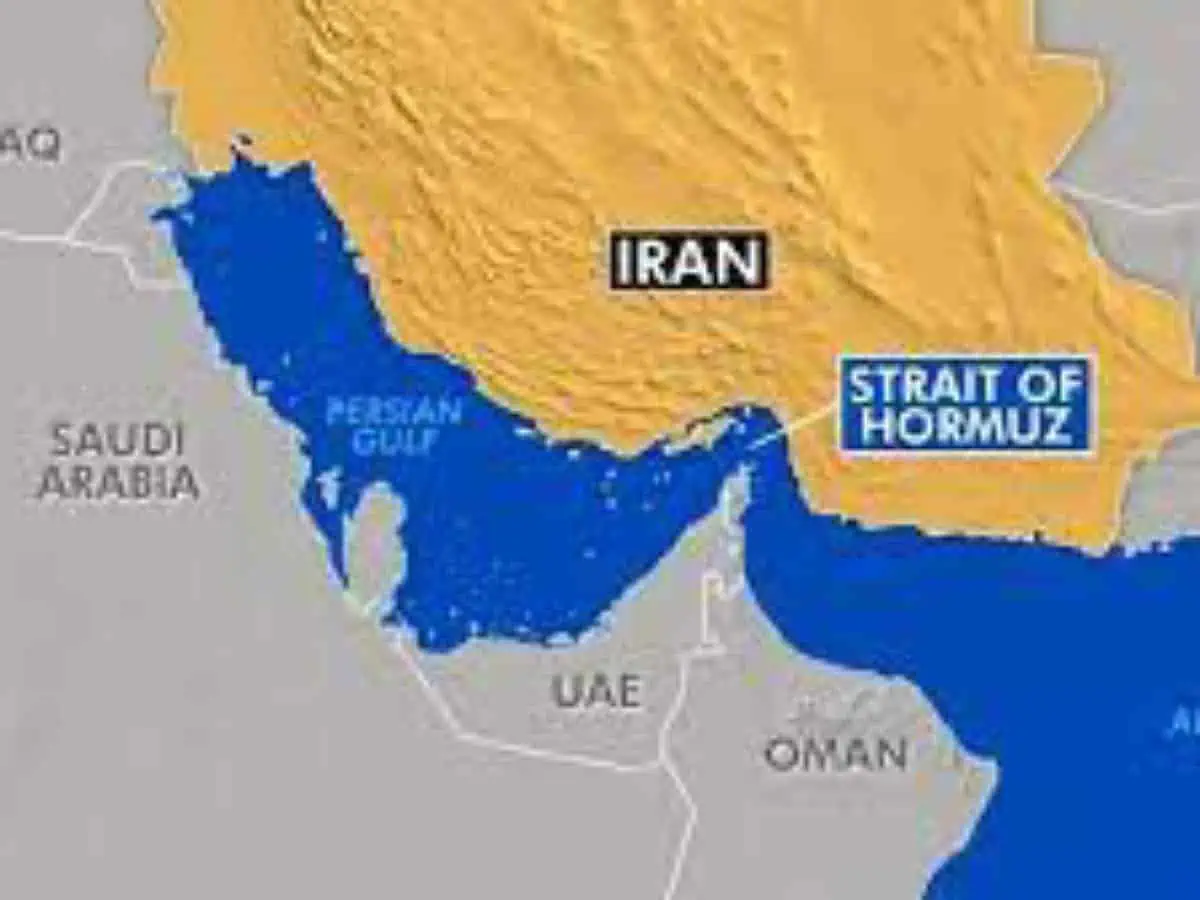
The missiles moved first.
The insurance market moved faster.
When U.S. and Israeli military strikes against Iran began on February 28, the immediate focus was geopolitical escalation. Within hours, however, a second and more structurally significant development was underway inside the global marine insurance market. War risk underwriters began issuing cancellation notices for Gulf transit policies before financial markets reopened on Monday morning.
By the time brokers in London and New York resumed trading, the cost of sending a commercial vessel through the Strait of Hormuz had materially shifted.
This was not rumor-driven volatility. It was repricing at speed.
According to estimates circulated by Marsh McLennan, near-term hull and machinery rate increases for vessels transiting the Strait of Hormuz and surrounding Gulf waters could range between 25 and 50 percent. Before the strikes, war risk premiums for a Hormuz transit were commonly priced near 0.25 percent of a vessel’s insured value. Brokers now indicate premiums could reach 0.5 percent or higher.
For a large container ship valued at $150 million, that shift translates into a single-transit premium rising from approximately $375,000 to $750,000. Those costs do not remain confined to carriers. They are passed directly to cargo owners as war risk surcharges and, ultimately, into the broader supply chain.
The more consequential development, however, may not be price escalation. It may be selective uninsurability.
Industry leaders at BIMCO have warned that vessels with business connections to the United States or Israel could face difficulty obtaining coverage at any price. That distinction matters. Premium inflation is disruptive but manageable. A denial of cover effectively removes a vessel from the trade lane. Marine insurance operates as a private gatekeeper for global commerce. If coverage cannot be secured, the ship does not sail.
No formal embargo is required. No government order needs to be issued. Insurance availability alone can shut down a corridor.
The Strait of Hormuz remains one of the most strategically sensitive waterways in the world. A significant portion of global oil flows and a substantial volume of containerized trade pass through its narrow channel. Insurers are now modeling risks that include vessel seizure, retaliatory interdictions, mining, missile strikes, and even temporary closure of the strait. Unlike the gradual premium adjustments seen during the Red Sea crisis, this is a binary underwriting moment. Either the risk is tolerable within pricing parameters, or it is not.
The Lloyd’s Market Association Joint War Committee is expected to update its Listed Areas designation in the coming days. That classification is more than symbolic. Once a region is formally listed, automatic war risk clauses embedded in charter parties and insurance contracts activate. Coverage terms reset. Surcharges become mandatory. Cancellation windows shorten.
Protection and Indemnity clubs, which provide liability coverage essential to vessel operations, have not yet issued comprehensive public guidance. Their position will be decisive. Without P&I cover, vessels cannot legally or commercially operate in high-risk zones.
Freight markets were already signaling strain before the strikes began. Data published by Freightos showed the global average container spot rate at $1,946 per FEU as of February 20, elevated above pre-Red Sea baselines. Routes connecting China and the UAE had already begun climbing in advance of the military action. The present escalation introduces a fresh supply shock into an already fragile rate environment.
Should carriers execute sustained regional withdrawals rather than temporary diversions, available tonnage on major east-west trade lanes will tighten. Longer routing around the Cape of Good Hope increases fuel consumption, extends voyage times, and compresses capacity elsewhere in the network. The resulting cost accumulation does not occur in isolation. War risk surcharges layer atop fuel adjustments, congestion premiums, and emergency contingency pricing.
For shippers with Gulf-dependent supply chains, the calculus is immediate and unforgiving. Cargo already in transit may require shelter-port strategies. New bookings must account for elevated premiums, potential cancellation clauses, and the possibility that certain operators simply cannot secure the insurance necessary to enter the region.
What is unfolding is not merely a geopolitical flashpoint. It is a stress test of the global maritime risk architecture. Insurance markets are functioning as an early-warning system for commercial disruption. They are pricing not just current hostilities, but the probability of escalation.
The unanswered question is whether this repricing represents a short-term spike or the beginning of a structural shift in how underwriters assess exposure in the Gulf. If coverage becomes selectively unavailable, even temporarily, the implications extend beyond freight rates. They touch energy markets, inflation dynamics, and the resilience of just-in-time supply chains.
For now, vessels continue to move.
But the cost of moving them has changed.
And in global trade, insurance is often the first signal that the system is under strain.
What remains unclear is whether this was a rapid but temporary market adjustment — or the first visible fracture in a much larger commercial realignment.
This investigation is ongoing.
About the Author
Samuel Lopez is an investigative journalist and legal analyst for USA Herald. His reporting focuses on institutional accountability, litigation exposure, financial risk architecture, and the intersection of geopolitics and market stability.



