

The Strait of Hormuz is not just a shipping lane. It is the pressure valve of the global energy system, and when something explodes there, the consequences do not remain local.
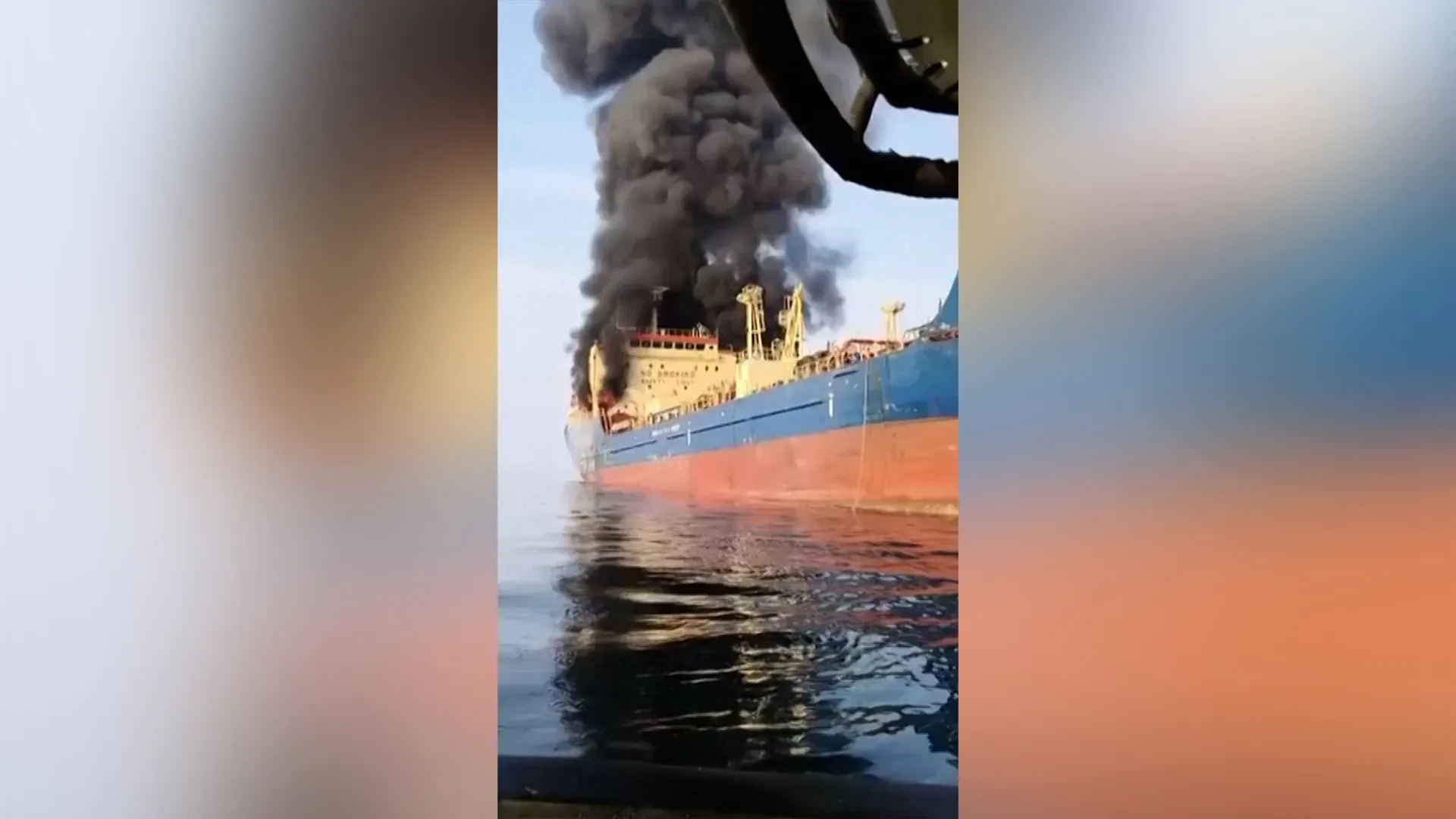
An oil tanker was attacked roughly five nautical miles north of Khasab Port, according to Oman’s Maritime Security Centre. Twenty crew members were on board — fifteen Indian nationals and five Iranians. All were evacuated. At least four individuals were injured.
There has been no official attribution of responsibility. But the attack occurred days after Iran’s Islamic Revolutionary Guard Corps issued radio warnings declaring the Strait closed to international navigation following U.S. and Israeli strikes on Iranian targets. The timing alone ensures this will not be viewed as an isolated maritime accident.
This is an escalation in one of the most strategically sensitive waterways on Earth.
Following renewed hostilities involving Iran, IRGC-linked channels announced that the Strait of Hormuz would be closed. Radio warnings reportedly followed. Within days, a commercial tanker operating near Omani waters was attacked. Immediately thereafter, shipping traffic slowed, some vessels altered course, and marine insurers began reassessing risk exposure in the region.
Oil futures reopened Sunday evening amid widespread discussion that Brent crude could approach $100 per barrel — levels not seen since the early months following Russia’s invasion of Ukraine. Analysts at Barclays warned that a prolonged halt in traffic through the Strait could disrupt up to 20 million barrels per day, representing roughly one-fifth of global oil supply.
Meanwhile, eight OPEC+ nations — Saudi Arabia, Russia, Iraq, the United Arab Emirates, Kuwait, Kazakhstan, Algeria and Oman — held a virtual meeting to review market conditions. They announced a modest production increase of 206,000 barrels per day beginning in April and confirmed continued monthly monitoring.
The increase is measured. The vulnerability is not.
The Strait of Hormuz connects the Persian Gulf to the Gulf of Oman and the Arabian Sea. At its narrowest point, it spans approximately 21 miles. It is the only maritime outlet for oil exports from several Gulf states. There are few meaningful alternatives for the volumes that pass through it daily.
That is the systemic problem.
Modern energy markets operate on assumptions of uninterrupted transit. Insurance contracts, futures pricing models, refinery scheduling, and sovereign reserve strategies all rely on the premise that this corridor remains open.
When that assumption weakens, markets react instantly — even before formal declarations are made.
We are watching concentration risk collide with geopolitical volatility.
Oman’s Maritime Security Centre confirmed that the vessel was attacked north of Khasab Port and that all crew members were safely evacuated. Injuries were reported. No official statement has attributed responsibility.
Euronews reported that oil prices were already rising upon reopening of trading and cited analyst forecasts placing Brent near the $100 threshold in a sustained disruption scenario. The same reporting indicated that up to 20 million barrels per day could be affected if the Strait were effectively halted.
There has been no internationally recognized declaration of a lawful maritime blockade at the time of publication.
Freedom of navigation through international straits is protected under international maritime law. A sustained closure or de facto obstruction would raise immediate questions regarding coalition naval response, international diplomatic escalation, and the potential invocation of broader security mechanisms.
From an economic perspective, even temporary disruption can create cascading consequences. Energy prices feed directly into transportation costs, manufacturing expenses, consumer inflation, and central bank policy decisions. Insurance suspensions alone can restrict shipping activity without a single additional missile being fired.
This is how chokepoints become leverage.
If you have information relevant to maritime security developments in the Gulf region, USA Herald welcomes confidential tips.
This investigation is ongoing.



