



Each year, skywatchers are treated to the dazzling spectacle of the Orionid meteor shower, which occurs when Earth passes through the debris trail of Halley's Comet.
Lasting from October 2 to November 7, the meteor shower will peak on October 21-22, providing the best viewing opportunities. You don't need to focus exclusively on the Orion constellation, as these meteor trails will be visible across the entire night sky.
How to Watch
The Orion constellation, where the meteors seem to originate, is easy to locate.
In the Northern Hemisphere, it appears in the southwestern sky, while viewers in the Southern Hemisphere will find it in the northwestern sky. But rest assured, you don’t need to aim your gaze directly at Orion to enjoy the show—meteors will streak across various parts of the sky.
The Winter Triangle
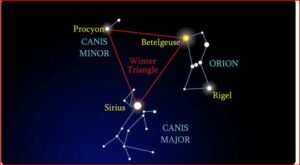
For those seeking guidance on finding the Orion constellation, NASA suggests looking for the Winter Triangle, a grouping of three prominent stars: Sirius, Procyon, and Betelgeuse. Sirius, the brightest star in the night sky, is a good starting point. From there, locate Procyon (the eighth-brightest star) and Betelgeuse (the tenth-brightest star), which is part of the Orion constellation. In the Northern Hemisphere, Betelgeuse appears as the upper-left star of Orion.
Whether you’re a seasoned astronomer or a casual stargazer, the Orionid meteor shower offers a breathtaking celestial event not to be missed.
Halley's Comet and Its Trail
The Orionid meteor shower comes from small fragments of Halley's Comet (also known as 1P/Halley), which is currently far from Earth.
The comet won't be visible again until 2061, but each year, as Earth crosses its orbital path, debris from the comet collides with our atmosphere at speeds of around 148,000 miles per hour, creating stunning streaks of light.
The meteor shower is named after the Orion constellation because the radiant point, or the area in the sky from which the meteors appear to originate, lies near Orion.
Halley’s Comet Discovery
Halley's Comet was first recorded by Chinese astronomers in 239 BC, though it wasn’t until English astronomer Edmond Halley in the 18th century that it was recognized as a periodic event. He correctly predicted the comet's return, and as a result, the comet was named in his honor.

















































 No comments yet. Be the first to comment!