

Iran War Nearly Drains Key U.S. Long-Range Missiles
America ı By Michallie K Harrison
0 Comments
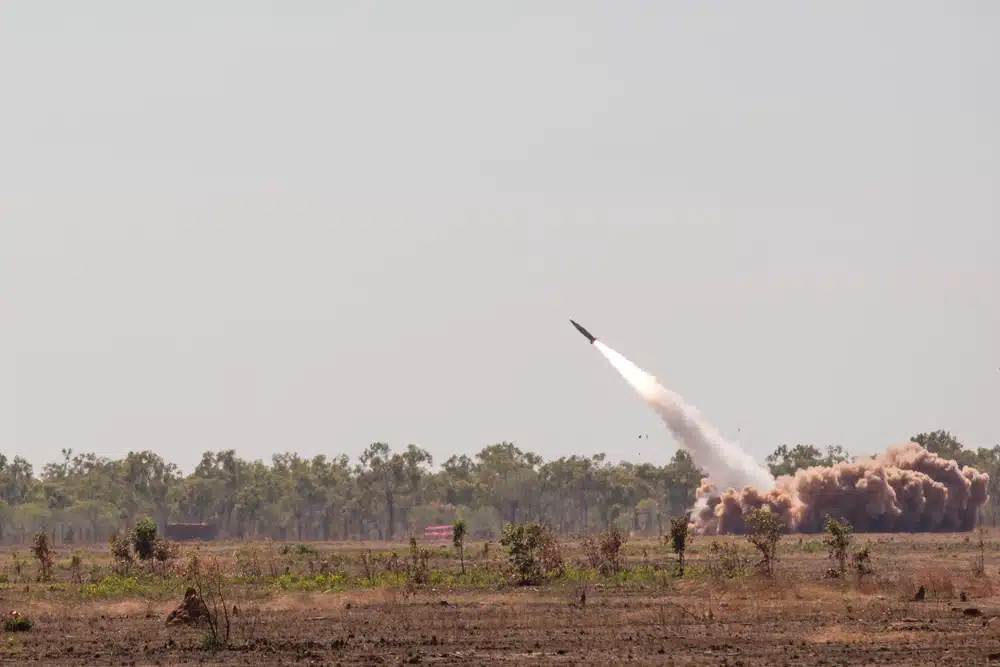
U.S. long-range missiles are under new scrutiny after two sources said the Army used virtually all its ATACMS and Precision Strike Missile inventories during more than five months of war with Iran. One source separately said the military fired a little less than half its global Tomahawk supply. The Pentagon has not disclosed how many of the weapons remain.
The reported drawdown does not mean the United States has exhausted every long-range weapon in its arsenal. The “virtually all” claim applies to two ground-launched Army systems, while the Tomahawk figure remains a separate estimate that Reuters could not independently verify. CBS News later reported the same ATACMS and PrSM claim through two sources with direct knowledge.
President Donald Trump rejected the reports again Thursday, saying the country possesses “massive amounts” of munitions. He said additional weapons are being manufactured and shipped to the United States as needed. Trump also called the anonymous disclosures treasonous and threatened long prison sentences for the people responsible.
Sources Say Key Army Missile Stocks Are Nearly Gone
Three people familiar with internal military data described the decline in U.S. long-range missiles to Reuters. Two said the military had used virtually all its global ATACMS and PrSM inventories during Operation Epic Fury. The sources spoke anonymously because the government has not publicly released the classified stockpile figures.
ATACMS stands for Army Tactical Missile System. The surface-to-surface missile can strike targets approximately 190 miles away and launch from HIMARS or larger Multiple Launch Rocket System vehicles. The long-range weapons cost more than $1 million each.
The Precision Strike Missile, commonly called PrSM, is the newer replacement for ATACMS. Current Pentagon documents place its range above 310 miles, and its launchers can carry two PrSM rounds in the space required for one ATACMS missile. Deliveries began in 2023, leaving the military with a relatively small inventory when the Iran war started.
Neither the Pentagon nor Lockheed Martin, which produces both weapons, has released remaining totals. An April analysis from the Center for Strategic and International Studies estimated that perhaps as many as 800 shorter-range ATACMS missiles remained at that point. The analysis also found disagreement among officials over whether the entire PrSM inventory had been expended.
Those public estimates may involve different missile variants, ranges and points in the conflict. The military also resumed operations after the April assessment, potentially reducing the remaining supply further. Until officials release system-specific figures, claims that the inventories are nearly exhausted must remain clearly attributed.
Why U.S. Long-Range Missiles Matter
ATACMS and PrSM allow forces to attack missile launchers, command centers, radar systems and other protected targets from a distance. Their range and accuracy reduce the need to send pilots directly into heavily defended airspace. That advantage becomes more important against countries with advanced air-defense systems.
One source said the Trump administration relied heavily on U.S. long-range missiles to avoid riskier bombing missions over Iran. That decision reduced the immediate danger to American aircrews. However, it also consumed weapons that commanders would need during another major conflict.
The same capabilities would be important during a confrontation involving China or Russia. Geography and China’s extensive missile network make long-range weapons especially valuable in the Western Pacific. U.S.-supplied ATACMS have also helped Ukraine strike military targets beyond its front lines.
Tomahawk and Defensive Missile Supplies Also Fell
The Army systems represent only part of the broader inventory problem. One Reuters source said the United States used a little less than half its worldwide Tomahawk cruise missile supply after the Iran war began. The Navy has not released an official count, and Reuters could not independently verify the estimate.
The Navy launches Tomahawks from ships and submarines to strike defended targets without placing pilots in danger. Years of relatively low production have limited how quickly manufacturers can replace the missiles. Even major increases in future orders will not produce immediate replacements.
Defensive missile inventories have also fallen. CSIS estimated that the United States had approximately 2,330 Patriot interceptors before the war but only 759 to 827 by the end of July. The same analysis estimated that THAAD interceptor inventories fell from approximately 452 to between 234 and 278 by July 27.
Those figures are open-source estimates rather than official Pentagon totals. However, sources told Reuters that the estimates closely matched internal military data. U.S. officials also told CBS News that Patriot and THAAD interceptors may represent a more urgent concern than the declining offensive missile supply.
Patriot and THAAD systems destroy incoming missiles rather than attack ground targets. Their reduced inventories affect the military’s ability to protect American troops, bases and allies from retaliation. Unlike offensive weapons, those interceptors cannot be replaced by sending pilots on bombing missions.
Trump and Pentagon Dispute Readiness Concerns
Trump has repeatedly said the United States possesses more munitions than it needs. He said defense companies are expanding plants and producing weapons at record levels. His latest response did not provide figures for ATACMS, PrSM, Tomahawk, Patriot or THAAD inventories.
Pentagon spokesperson Sean Parnell said the military maintains a deep arsenal and can act whenever the president orders it. Defense Secretary Pete Hegseth has also dismissed reports of dangerous shortages as a manufactured media story. Neither official directly disputed the reported system-specific figures with publicly available numbers.
Another source told Reuters that U.S. Central Command has continued resupplying its forces with weapons drawn from military stores around the world. That process can keep operations moving in the Middle East. Transferring weapons from other commands, however, may reduce the supply available for emergencies elsewhere.
Reports that declining inventories influenced Trump’s decision to postpone another major attack also remain disputed. Military advisers reportedly warned the president about defensive missile supplies before he paused the offensive. A U.S. official told Reuters that pressure from Gulf countries, rather than the stockpile warnings, drove the decision.
Missile Production Cannot Increase Overnight
The Pentagon and major defense contractors have announced plans to expand missile production substantially. Lockheed Martin plans to increase annual THAAD production capacity from approximately 96 interceptors to 400. RTX has set a goal of producing more than 1,000 Tomahawks annually, although recent output has remained below 200.
Those numbers describe future manufacturing capacity, not weapons immediately entering military storage. Companies must expand facilities, hire specialized workers and secure rocket motors, guidance systems and other components. Existing orders for allies also compete with the Pentagon’s effort to rebuild American inventories.
CBS News reported that CSIS estimates involving Patriot and THAAD interceptors show those inventories may not return to prewar levels until at least mid-2029. Tomahawk replacements could take even longer under current delivery schedules. Manufacturing lead times for complex missile systems can extend beyond three years after Congress provides funding.
The Army has also shifted production away from the aging ATACMS and toward PrSM. Lockheed Martin has targeted annual PrSM production of at least 400 missiles, while the Army has scheduled larger orders for 2027. Those future deliveries cannot immediately replace the weapons used during the current conflict.
Missile Drawdown Could Limit U.S. Options
The United States still possesses aircraft, bombs, naval weapons and other missile systems capable of striking distant targets. Low ATACMS and PrSM inventories therefore do not leave the military defenseless. They reduce the number of lower-risk options available for attacking heavily protected targets.
If Trump resumes large-scale strikes against Iran, commanders may need to rely more heavily on piloted aircraft. That shift could expose aircrews to greater danger and increase demand for tankers, electronic-warfare aircraft and rescue forces. Continuing to use scarce missiles could instead deepen the inventory shortage.
Military planners must also preserve weapons for possible crises involving China, Russia or North Korea. A force can remain capable of fighting while lacking enough munitions to sustain several conflicts. The concern centers on how long the United States could maintain high-intensity operations before commanders face increasingly difficult choices.
War Enters Sixth Month as Diplomacy Continues
Operation Epic Fury entered its sixth month after Trump launched the campaign alongside Israel on February 28. Trump initially predicted that the conflict would end quickly. Instead, repeated attacks, temporary pauses and failed diplomatic efforts consumed specialized weapons faster than manufacturers could replace them.
Trump has paused another major attack while Iran and Oman negotiate a new shipping arrangement through the Strait of Hormuz. Iran said Thursday that the talks concern a new traffic-management model rather than a full reopening of the waterway. Trump said the broader negotiations appeared to be progressing well, but no final agreement has been announced.
The administration has not requested a declaration of war or a new authorization for military force against Iran. Lawmakers continue debating Trump’s authority to conduct the conflict without congressional approval. The reported missile drawdown adds military readiness, replacement costs and the sustainability of the campaign to that debate.
What Happens to U.S. Long-Range Missiles Next
The largest unanswered question remains how many ATACMS, PrSM and Tomahawk missiles are still available. The Pentagon could preserve the remaining weapons, transfer more supplies from other regions or continue using them if strikes resume. Each option carries consequences for other military priorities.
Future production reports will show whether defense companies can meet the administration’s ambitious targets. Congress may also receive additional requests for money to replace expended weapons and expand manufacturing. Funding alone cannot eliminate the time required to build and test complex missile systems.
The Iran war has not left the United States incapable of defending itself. It has consumed key U.S. long-range missiles faster than industry can replace them. The immediate question is no longer simply whether the military can continue striking Iran, but how many lower-risk options would remain if another crisis began before American factories caught up.

Discussion
No comments yet. Be the first to join the discussion!
FOLLOW US

Recent Posts







Don’t Miss It

SpaceX, Tesla Merger: Boards Launch Review…
The possibility of a SpaceX, Tesla merger has moved beyond…
By – Rachel Moore
Steve McBee $7.1M Insurance Fraud Case:…
Steve McBee Sr., the patriarch of the reality television series…
By – Tyler Brooks
Connor Hellebuyck Traded to New Jersey…
The New Jersey Devils have made a major move to…
By – Tyler Brooks
Education Department Drops PSLF Challenge, Delivering…
Federal student loan borrowers have secured a significant victory after…
By – Tyler Brooks
Humana and UnitedHealthcare Cancel Medicare Advantage…
Nearly 1 million Americans are facing a shake-up in their…
By – Tyler Brooks
Lawyers Could Collect $1.27 Billion in…
Outside lawyers in the Meta privacy case could collect up…
By – Michallie K Harrison
Plutonium Pit Production Faces Safety and…
WASHINGTON — The Energy Department has approved full construction of…
By – Michallie K Harrison
Wall Street Rattled: Nasdaq Plunges 2.6%…
NEW YORK — A fresh wave of doubt about the…
By – Derek Johnson
Judge Orders Trump to Sit for…
MIAMI — President Donald Trump must sit for a sworn…
By – Derek Johnson
Pope Leo XIV Needs No Further…
VATICAN CITY — Pope Leo XIV will not require additional…
By – Jackie Allen
Six Women Testify in Russell Brand…
LONDON — Six women have testified in the Russell Brand…
By – Michallie K Harrison
Websites Go Dark as AI Uncovers…
The PHP security crisis has pushed government websites offline and…
By – Michallie K Harrison
El Nino Could Reach Historic Strength,…
GENEVA — El Nino, a powerful climate pattern that warms…
By – Jackie Allen
News Overload Can Fuel Anxiety and…
News keeps people informed about wars, political conflict, public safety…
By – Jackie Allen
Atlanta Rapper Indicted in Alleged $4.6…
ATLANTA — Shawtey Dred, the social media persona of Atlanta…
By – Jackie Allen
Musk and Trump Have a Starlink…
Opinion | Starlink restrictions in Ukraine have exposed a problem Elon Musk…
By – Michallie K Harrison
Texas Trans Texts Spark Election Propaganda…
News Analysis | Texas voters began casting early ballots Monday,…
By – Michallie K Harrison
California Ballots: DOJ Cites Charges Against…
WASHINGTON — The Justice Department is citing charges against 28…
By – Michallie K Harrison
Intuitive Surgical $450M Settlement Targets Da…
Intuitive Surgical has agreed to pay $450 million to resolve…
By – Tyler Brooks
Getty Images Files Chapter 11 With…
Getty Images Holdings Inc., the visual content giant behind millions…
By – Tyler Brooks
CBRE £760M Onnec Buy Targets Booming…
Real estate services giant CBRE Group Inc. has agreed to…
By – Rachel Moore
Kohen Wiley Is Dead. Mississippi Owes…
Kohen Wiley was 1 year old when police gunfire killed…
By – Michallie K Harrison
Chubb And GKN Race To Opposite…
What’s Driving the Insurance Battle ACE American, a Chubb unit,…
By – Samuel Lopez
Recently Obtained FOIA Records Reveal AARO…
What the Pentagon Records Now Show AARO arranged a private…
By – Samuel Lopez
Meta Stock in Focus as Earnings,…
Meta delivered a powerful revenue performance in its third-quarter earnings…
By – Tyler Brooks
Pantheon $6B Secondaries Fund Marks Firm’s…
Private markets investor Pantheon has secured $6 billion in capital…
By – Rachel Moore
TDI Launches Insurance Fraud Task Force…
The Texas Department of Insurance has launched a coordinated push…
By – Rachel Moore
Children’s Mercy Insurance Coverage Changes: Kansas…
Children’s Mercy Hospital in Kansas City will no longer participate…
By – Rachel Moore
BioWare Closing: EA Shuts Down Legendary…
Electronic Arts is reshaping its videogame empire in a sweeping…
By – Rachel Moore
Auto-Owners Insurers Verdict: Jury Awards Warehouse…
A North Carolina federal jury has awarded nearly $2 million…
By – Tyler Brooks
Extreme Heat Is Spreading and Lasting…
An extreme heat event lasting 367 days touched nearly 85%…
By – Michallie K Harrison
HealthSplash VP 18 Months Sentencing Rewards…
Cooperation can shave years off a prison term, but it…
By – Tyler Brooks
Daylight Saving Time Returns Nov. 1…
Americans will turn their clocks back one hour on Nov.…
By – Jackie Allen
California Identifies New York Life, Aetna,…
Key Takeaways California’s Department of Insurance maintains an official…
By – Samuel Lopez
Three Children, Teacher Killed in Oregon…
BEND, Ore. — An Oregon school shooting killed three children…
By – Michallie K Harrison
Trump Scraps Hegseth’s Execution Livestream After…
WASHINGTON — President Donald Trump canceled the planned execution livestream…
By – Michallie K Harrison
Information Ecosystem: Five Tools to Detect…
The information ecosystem is increasingly vulnerable to misinformation. There are…
By – Jackie Allen
An Airman Died After a Pregame…
By Michallie K. Harrison | Opinion Tech. Sgt. Ian Patterson’s…
By – Michallie K Harrison
NFL Player $300M Hip Surgery Lawsuit…
Athletes bet their bodies on surgeons the way pilots bet…
By – Tyler Brooks
Russian Drone Strikes Hit American Businesses…
Russian drone strikes against American-linked businesses in Ukraine are raising…
By – Jackie Allen
AP Poll Top 25: Georgia Claims…
Georgia has reclaimed the top spot in the AP Poll…
By – Rachel Moore
A.J. Armstrong: Former NFL Player’s Son…
HOUSTON — Antonio “A.J.” Armstrong Jr., the son of former…
By – Jackie AllenNo posts found.
No posts found.


Join the Discussion
Share your thoughts, ask questions, and engage with
other readers. Sign in or create a free account to
comment.