


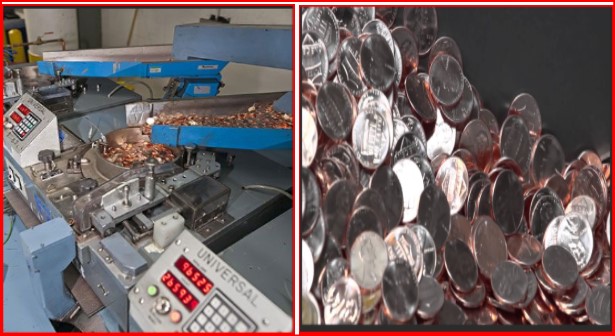
The era of penny production in the United States is slowly coming to an end, but Americans will still be seeing one-cent coins in their change for the foreseeable future.
The U.S. Treasury Department announced on May 22 that it will begin phasing out the minting of pennies after more than two centuries of production.
Despite this change, the penny will remain legal tender, and retailers will continue to use them in cash transactions until supplies run low.
- CNN: US to Discontinue Penny Production
- WSJ: Treasury to End Penny Minting by 2026
- CNN: Trump-Era Policy to Halt Penny Production
Why the Penny Is Being Phased Out
According to the Treasury Department, the decision to wind down penny production is driven by economics. The department stated that pennies are “severely underutilized,” with an estimated 114 billions of them sitting idle in jars, drawers, or forgotten containers across the country.
That stockpile could theoretically form a 13-story-high cube of copper and zinc.
“There’s a saying in retail, ‘Never lose a customer over a penny,’” said Jeff Lenard, spokesperson for the National Association of Convenience Stores. “I never really thought of it in these terms, but it applies even more here.”
Retailers Are Preparing
Retailers don’t expect the disappearance of new pennies to cause any chaos. Many anticipate transitioning to rounding cash transactions to the nearest nickel once penny supplies dwindle at banks.
Even after minting halts, the penny will still be accepted as payment. As Jeff Lenard noted, “If someone wants to pay with pennies, most retailers will err on the side of making those customers happy.”
What It Means for Consumers
Most consumers are unlikely to notice a significant difference right away. Electronic payments (credit or debit cards) will continue to be processed to the penny, while only cash transactions may be rounded.
Canada, which halted penny production in 2012, offers a preview of what the U.S. can expect. “For the first year after they stopped making pennies, there’s really no change in transactions,” Lenard told CNN.
Penny Production Bills
Several U.S. states had previously introduced legislation related to penny usage, rounding, or alternatives. Here are a few:
-
Illinois – Proposed commemorative penny series to preserve legacy
-
California – Rounding regulations to avoid consumer disadvantage
-
New York – Prohibition on rounding up without visible notice to consumers
-
Texas – Bill to keep pennies in use for tax-exempt transactions
-
Florida – Legislation aimed at banning penny production entirely
-
Vermont – Study bill on rounding’s impact on low-income consumers
What's Next?
The Treasury Department expects to fully cease penny production by 2026, allowing time for retailers and consumers to adapt. Until then, the penny remains in circulation, and Americans are encouraged to bring their coins back into use—or spend them.
As the process unfolds, the message is clear: the penny is fading but not forgotten.


















































 No comments yet. Be the first to comment!