

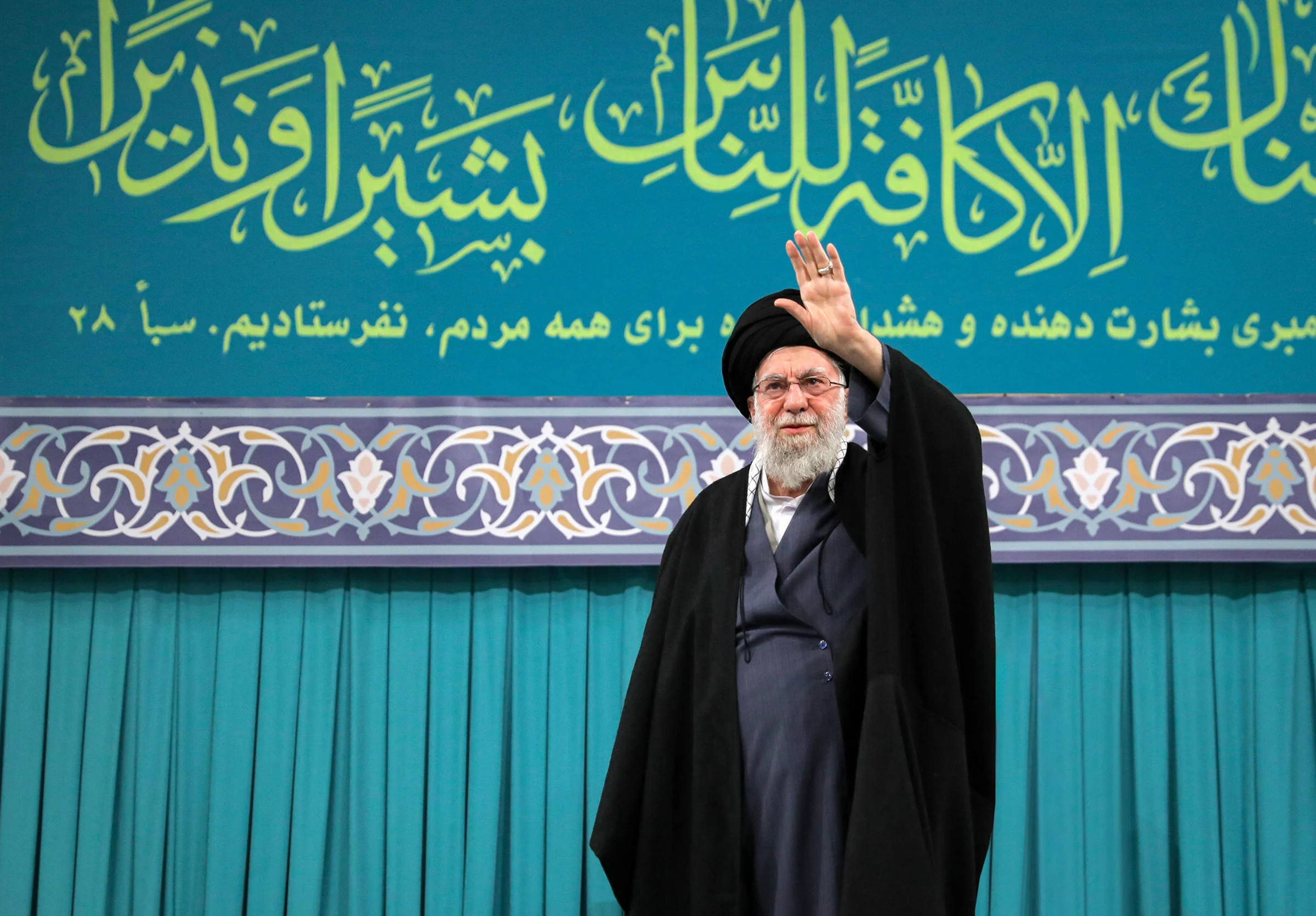
WASHINGTON — President Donald J. Trump announced today that Iran’s Supreme Leader Ayatollah Ali Khamenei has been killed during coordinated military operations conducted by the United States in partnership with Israel, marking what the administration describes as a decisive turning point in the ongoing confrontation with Tehran.
In a forceful statement released from the White House, the president framed the development as both a strategic and symbolic moment, arguing that the removal of Iran’s top authority presents “the single greatest chance for the Iranian people to take back their country.”
Administration officials have not yet released detailed operational specifics, but senior defense sources indicate the strike was the culmination of extensive intelligence coordination and surveillance efforts conducted jointly with Israeli counterparts.
If confirmed through independent channels, the death of Iran’s long-serving Supreme Leader would represent one of the most consequential geopolitical events in the modern Middle East.
Khamenei, who assumed leadership in 1989, oversaw Iran’s regional military posture, nuclear program expansion, and the strengthening of the Islamic Revolutionary Guard Corps (IRGC). U.S. officials have long accused Tehran of supporting proxy groups throughout the region, including Hezbollah and other armed factions.
The president characterized the operation as the result of “highly sophisticated tracking systems” and close military coordination with Israel.
“This is a defining moment,” one senior administration official said. “The objective has always been to reduce threats against the United States and our allies while opening the door for long-term regional stability.”
The immediate impact inside Iran remains uncertain. Analysts warn that the removal of a centralized authority could trigger internal power struggles within the IRGC, clerical establishment, and military command structures.
Some unconfirmed reports suggest elements within Iran’s security apparatus may be reassessing their posture. U.S. officials stated that channels are being monitored for signs of internal fracture or transition.
Foreign policy scholars caution that regime destabilization can unfold unpredictably. While some argue that leadership removal may weaken hardline control structures, others warn of possible retaliatory actions by remaining factions.
President Trump indicated that military operations would continue “as long as necessary” to achieve stated objectives of deterrence and regional security.
Defense officials described recent strikes as targeted and precision-based, emphasizing operational coordination with Israeli forces. Pentagon representatives reiterated that force protection measures remain elevated worldwide in anticipation of possible retaliation.
International observers are closely monitoring whether Iranian-aligned proxy groups will attempt reprisals in neighboring regions.
World capitals reacted swiftly. European leaders called for restraint and de-escalation while acknowledging the gravity of the development. Gulf states emphasized the need for stability and internal security preparedness.
China and Russia urged diplomatic channels to prevent broader regional destabilization.
Israel’s leadership praised the coordination and described the operation as a milestone in neutralizing strategic threats.



