

Iran War Nearly Drains Key U.S. Long-Range Missiles
America ı By Michallie Harrison
0 Comments
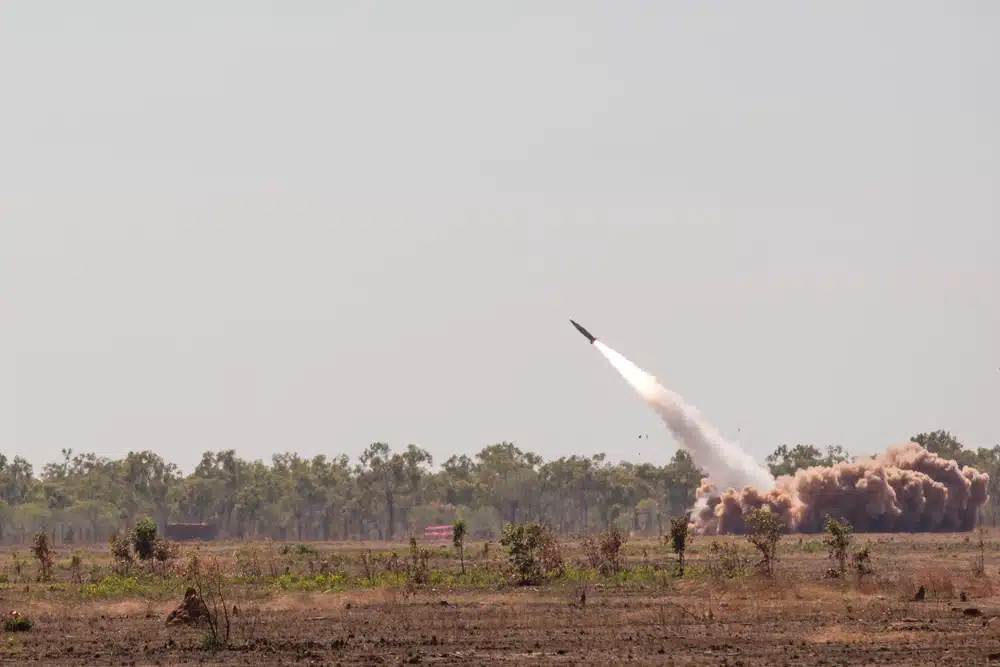
U.S. long-range missiles are under new scrutiny after two sources said the Army used virtually all its ATACMS and Precision Strike Missile inventories during more than five months of war with Iran. One source separately said the military fired a little less than half its global Tomahawk supply. The Pentagon has not disclosed how many of the weapons remain.
The reported drawdown does not mean the United States has exhausted every long-range weapon in its arsenal. The “virtually all” claim applies to two ground-launched Army systems, while the Tomahawk figure remains a separate estimate that Reuters could not independently verify. CBS News later reported the same ATACMS and PrSM claim through two sources with direct knowledge.
President Donald Trump rejected the reports again Thursday, saying the country possesses “massive amounts” of munitions. He said additional weapons are being manufactured and shipped to the United States as needed. Trump also called the anonymous disclosures treasonous and threatened long prison sentences for the people responsible.
Sources Say Key Army Missile Stocks Are Nearly Gone
Three people familiar with internal military data described the decline in U.S. long-range missiles to Reuters. Two said the military had used virtually all its global ATACMS and PrSM inventories during Operation Epic Fury. The sources spoke anonymously because the government has not publicly released the classified stockpile figures.
ATACMS stands for Army Tactical Missile System. The surface-to-surface missile can strike targets approximately 190 miles away and launch from HIMARS or larger Multiple Launch Rocket System vehicles. The long-range weapons cost more than $1 million each.
The Precision Strike Missile, commonly called PrSM, is the newer replacement for ATACMS. Current Pentagon documents place its range above 310 miles, and its launchers can carry two PrSM rounds in the space required for one ATACMS missile. Deliveries began in 2023, leaving the military with a relatively small inventory when the Iran war started.
Neither the Pentagon nor Lockheed Martin, which produces both weapons, has released remaining totals. An April analysis from the Center for Strategic and International Studies estimated that perhaps as many as 800 shorter-range ATACMS missiles remained at that point. The analysis also found disagreement among officials over whether the entire PrSM inventory had been expended.
Those public estimates may involve different missile variants, ranges and points in the conflict. The military also resumed operations after the April assessment, potentially reducing the remaining supply further. Until officials release system-specific figures, claims that the inventories are nearly exhausted must remain clearly attributed.
Why U.S. Long-Range Missiles Matter
ATACMS and PrSM allow forces to attack missile launchers, command centers, radar systems and other protected targets from a distance. Their range and accuracy reduce the need to send pilots directly into heavily defended airspace. That advantage becomes more important against countries with advanced air-defense systems.
One source said the Trump administration relied heavily on U.S. long-range missiles to avoid riskier bombing missions over Iran. That decision reduced the immediate danger to American aircrews. However, it also consumed weapons that commanders would need during another major conflict.
The same capabilities would be important during a confrontation involving China or Russia. Geography and China’s extensive missile network make long-range weapons especially valuable in the Western Pacific. U.S.-supplied ATACMS have also helped Ukraine strike military targets beyond its front lines.
Tomahawk and Defensive Missile Supplies Also Fell
The Army systems represent only part of the broader inventory problem. One Reuters source said the United States used a little less than half its worldwide Tomahawk cruise missile supply after the Iran war began. The Navy has not released an official count, and Reuters could not independently verify the estimate.
The Navy launches Tomahawks from ships and submarines to strike defended targets without placing pilots in danger. Years of relatively low production have limited how quickly manufacturers can replace the missiles. Even major increases in future orders will not produce immediate replacements.
Defensive missile inventories have also fallen. CSIS estimated that the United States had approximately 2,330 Patriot interceptors before the war but only 759 to 827 by the end of July. The same analysis estimated that THAAD interceptor inventories fell from approximately 452 to between 234 and 278 by July 27.
Those figures are open-source estimates rather than official Pentagon totals. However, sources told Reuters that the estimates closely matched internal military data. U.S. officials also told CBS News that Patriot and THAAD interceptors may represent a more urgent concern than the declining offensive missile supply.
Patriot and THAAD systems destroy incoming missiles rather than attack ground targets. Their reduced inventories affect the military’s ability to protect American troops, bases and allies from retaliation. Unlike offensive weapons, those interceptors cannot be replaced by sending pilots on bombing missions.
Trump and Pentagon Dispute Readiness Concerns
Trump has repeatedly said the United States possesses more munitions than it needs. He said defense companies are expanding plants and producing weapons at record levels. His latest response did not provide figures for ATACMS, PrSM, Tomahawk, Patriot or THAAD inventories.
Pentagon spokesperson Sean Parnell said the military maintains a deep arsenal and can act whenever the president orders it. Defense Secretary Pete Hegseth has also dismissed reports of dangerous shortages as a manufactured media story. Neither official directly disputed the reported system-specific figures with publicly available numbers.
Another source told Reuters that U.S. Central Command has continued resupplying its forces with weapons drawn from military stores around the world. That process can keep operations moving in the Middle East. Transferring weapons from other commands, however, may reduce the supply available for emergencies elsewhere.
Reports that declining inventories influenced Trump’s decision to postpone another major attack also remain disputed. Military advisers reportedly warned the president about defensive missile supplies before he paused the offensive. A U.S. official told Reuters that pressure from Gulf countries, rather than the stockpile warnings, drove the decision.
Missile Production Cannot Increase Overnight
The Pentagon and major defense contractors have announced plans to expand missile production substantially. Lockheed Martin plans to increase annual THAAD production capacity from approximately 96 interceptors to 400. RTX has set a goal of producing more than 1,000 Tomahawks annually, although recent output has remained below 200.
Those numbers describe future manufacturing capacity, not weapons immediately entering military storage. Companies must expand facilities, hire specialized workers and secure rocket motors, guidance systems and other components. Existing orders for allies also compete with the Pentagon’s effort to rebuild American inventories.
CBS News reported that CSIS estimates involving Patriot and THAAD interceptors show those inventories may not return to prewar levels until at least mid-2029. Tomahawk replacements could take even longer under current delivery schedules. Manufacturing lead times for complex missile systems can extend beyond three years after Congress provides funding.
The Army has also shifted production away from the aging ATACMS and toward PrSM. Lockheed Martin has targeted annual PrSM production of at least 400 missiles, while the Army has scheduled larger orders for 2027. Those future deliveries cannot immediately replace the weapons used during the current conflict.
Missile Drawdown Could Limit U.S. Options
The United States still possesses aircraft, bombs, naval weapons and other missile systems capable of striking distant targets. Low ATACMS and PrSM inventories therefore do not leave the military defenseless. They reduce the number of lower-risk options available for attacking heavily protected targets.
If Trump resumes large-scale strikes against Iran, commanders may need to rely more heavily on piloted aircraft. That shift could expose aircrews to greater danger and increase demand for tankers, electronic-warfare aircraft and rescue forces. Continuing to use scarce missiles could instead deepen the inventory shortage.
Military planners must also preserve weapons for possible crises involving China, Russia or North Korea. A force can remain capable of fighting while lacking enough munitions to sustain several conflicts. The concern centers on how long the United States could maintain high-intensity operations before commanders face increasingly difficult choices.
War Enters Sixth Month as Diplomacy Continues
Operation Epic Fury entered its sixth month after Trump launched the campaign alongside Israel on February 28. Trump initially predicted that the conflict would end quickly. Instead, repeated attacks, temporary pauses and failed diplomatic efforts consumed specialized weapons faster than manufacturers could replace them.
Trump has paused another major attack while Iran and Oman negotiate a new shipping arrangement through the Strait of Hormuz. Iran said Thursday that the talks concern a new traffic-management model rather than a full reopening of the waterway. Trump said the broader negotiations appeared to be progressing well, but no final agreement has been announced.
The administration has not requested a declaration of war or a new authorization for military force against Iran. Lawmakers continue debating Trump’s authority to conduct the conflict without congressional approval. The reported missile drawdown adds military readiness, replacement costs and the sustainability of the campaign to that debate.
What Happens to U.S. Long-Range Missiles Next
The largest unanswered question remains how many ATACMS, PrSM and Tomahawk missiles are still available. The Pentagon could preserve the remaining weapons, transfer more supplies from other regions or continue using them if strikes resume. Each option carries consequences for other military priorities.
Future production reports will show whether defense companies can meet the administration’s ambitious targets. Congress may also receive additional requests for money to replace expended weapons and expand manufacturing. Funding alone cannot eliminate the time required to build and test complex missile systems.
The Iran war has not left the United States incapable of defending itself. It has consumed key U.S. long-range missiles faster than industry can replace them. The immediate question is no longer simply whether the military can continue striking Iran, but how many lower-risk options would remain if another crisis began before American factories caught up.

Discussion
No comments yet. Be the first to join the discussion!
FOLLOW US

Recent Posts

Russian Lab Worker’s Mystery Pneumonia Death Revives Questions Gabbard Raised…

CIA Officer Stealing Gold Bars: David Rush Pleads Guilty in…

Vehicle Touching Occupying Suit Puts Michigan Uninsured Coverage Under Scrutiny

Emera, ATCO CA$72B Canadian Utility Merger Targets Historic Scale

Energy Transfer $2.6B Vaquero Deal Expands West Texas Energy Footprint

Uber’s $2.3B EzCater Buy Targets the Booming Catering Market

ICE Fines: Judge Halts Rule Behind $1.8 Million Penalties
Don’t Miss It
SIAA Acquires Canopy in Specialty Insurance Expansion
By – Tyler BrooksDiesel Tax Relief: Trump’s Order Could Leave a Later Bill
By – Michallie HarrisonWhy Did I Get $90 From Social Security? Millions Receive Medicare Payment
By – Tyler BrooksFreddie Jackson Died at 70: R&B Singer Remembered for Soulful Classics
By – Tyler BrooksWorld Space Week 2026 Celebrates a “Rocket Revolution” in Orbit
By – Tyler BrooksNASA Pushes Permanent Moon Base as Pentagon Moon-Tunneling Paper Suddenly Looks Less Far-Fetched
By – Samuel Lopez‘We are all Jane Doe’ Cornell protestors demand president resign over alleged fraternity gang rape
By – Jackie AllenMore Than 20 Groups Organized Massive Cornell Jane Doe Rally As Pressure Campaign Expands
By – Samuel Lopez
Influencer Sara Gilson Murder-Suicide: 911 Call…
Influencer Sara Gilson was fatally shot by her estranged husband…
By – Jackie Allen
Starbucks Sued Over ‘Sugar-Free’ Protein Drinks…
What the Starbucks Sugar Fight Comes Down To Starbucks is…
By – Samuel Lopez
OpenAI Sued Over Astra Name As…
What Readers Need to Know TradeSun says it used ASTRA…
By – Samuel Lopez
Shark Tank Boosted Teaspressa Sales —…
Key Takeaways Teaspressa, the Phoenix beverage company that appeared onShark…
By – Samuel Lopez
Trump’s Harvard Funding Fight Hits Appeals…
What the First Circuit Is Really Deciding The First Circuit…
By – Samuel Lopez
Gatorade Recall Hits 122,000 Cases Over…
A missing word on an ingredient label might seem minor…
By – Tyler Brooks
Gatorade Recall Hits 122,000 Cases Over…
A missing word on an ingredient label might seem minor…
By – Tyler Brooks
DOJ Weaponization Report Exposes How Biden…
Inside the Bureaucracy Internal DOJ and FBI records prove career…
By – Samuel Lopez
Cornell Rape Investigation Reopened As Netflix’s…
Key Takeaways New York Attorney General Letitia James has been…
By – Samuel Lopez
Letitia James Takes Over Cornell 7…
New York Attorney General Letitia James is facing criticism over…
By – Jackie Allen
Two Dead, 35 Hurt As Gunfire…
VIENNA, Ga. — Two men are dead and dozens more…
By – Derek Johnson
Russia Plague Scare Follows Lab Worker’s…
A Russia plague scare has prompted medical monitoring and reported…
By – Michallie Harrison
Russia Plague Scare Follows Lab Worker’s…
A Russia plague scare has prompted medical monitoring and reported…
By – Michallie Harrison
UFO Whistleblower David Grusch Makes Explosive…
A UFO whistleblower has made some of the most extraordinary…
By – Jackie Allen
UFO Waiver: Pentagon Opens Door for…
The new UFO Waiver issued by the Pentagon creates a…
By – Jackie Allen
Firerose Claims She Was Kept a…
Firerose is speaking publicly about her turbulent marriage to country…
By – Jackie Allen
Missing Children: Long Island Operation Rescues…
Missing children were at the center of a major three-day…
By – Jackie Allen
California Woman Charged After Video Allegedly…
What the Blackey Case Shows Prosecutors say Hanh Minh Nguyen…
By – Samuel Lopez
OSHA Wants Overdose Reversal Kits at…
Inside OSHA’s Overdose Playbook for Employers OSHA wants naloxone kept…
By – Samuel Lopez
Dollar Tree Wins Major Ruling in…
Key Takeaways A federal judge on Friday denied an attempt…
By – Samuel Lopez
Coast Guard Finds Debris From Boston-Bound…
What We Know Right Now The Coast Guard has confirmed…
By – Samuel Lopez
Angelina Jolie’s Viral Handwriting Reveals Why…
Three Reasons Cursive Still Matters Government archives need people who…
By – Samuel Lopez
South Carolina Seeks Emergency Control of…
What Policyholders Need to Know South Carolina regulators want a…
By – Samuel Lopez
California Sends Cease and Desist Letter…
What Matters in This Fight California regulators have reportedly ordered…
By – Samuel Lopez
Google Told Investors Gemini 3.5 Pro…
Key Takeaways A proposed securities class action filed Friday in…
By – Samuel Lopez
California Sends Cease and Desist Letter…
What Matters in This Fight California regulators have reportedly ordered…
By – Samuel Lopez
Tennessee Prison Chief Resigns After Christa…
What the Failed Execution Changes Frank Strada will step down…
By – Samuel Lopez
Costco Faces $5 Million Sugar-Free Lawsuit…
By Samuel López | USA Herald Costco Wholesale Corporation is…
By – Samuel Lopez
Amazon Faces Potential 30 Million-Reader Antitrust…
What Kindle Buyers Need to Know More than 30 million…
By – Samuel Lopez
China Launches Anti-Dumping Probe Into EU…
BEIJING — China has opened a new anti-dumping investigation into…
By – Derek Johnson
NFL Concussion Claims Count as Separate…
What the Coverage Ruling Means Each former player’s claim counts…
By – Samuel Lopez
Halle Berry Hit with Temporary Restraining…
What the Court Order Signals A Los Angeles judge granted…
By – Samuel Lopez
Arnold Schwarzenegger Heads to Jury Trial…
What the Jury Will Decide Schwarzenegger has conceded negligence in…
By – Samuel Lopez
Trump Launches America.gov AI Portal That…
What Americans Need to Know gov is now an AI-powered…
By – Samuel Lopez
Pope Leo XIV Condemns France’s New…
What Readers Should Know Pope Leo XIV used his visit…
By – Samuel Lopez
Strangers Collected $30 Million In ‘Illegal…
What You Need to Know 1. George A. Neukom Jr.’s estate…
By – Samuel Lopez
JJ McCarthy Trade Sends Former First-Rounder…
Two years ago, a franchise spent a top-10 pick on…
By – Tyler Brooks
New York Sues Polymarket Claiming Prediction…
What This Fight Is Really About New York says Polymarket…
By – Samuel Lopez
New York Sues Polymarket Over Alleged…
What’s Riding on the Bet New York says Polymarket’s sports…
By – Samuel Lopez
Roblox widow alleges $6 million scam,…
The Roblox widow says a former companion took $6 million…
By – Jackie Allen
Network Traffic Challenges May be Reshaped…
Network traffic has traditionally moved in one dominant direction: from…
By – Jackie Allen
Gilbert Goons Defendant Arrested Again for…
A Gilbert Goons defendant awaiting trial in the 2023 death…
By – Jackie AllenNo posts found.
No posts found.


Join the Discussion
Share your thoughts, ask questions, and engage with
other readers. Sign in or create a free account to
comment.