


Six Flags Roller Coaster Brain Injury Cases Expose a Pattern Years in the Making
America ı By Rihem Akkouche
0 Comments
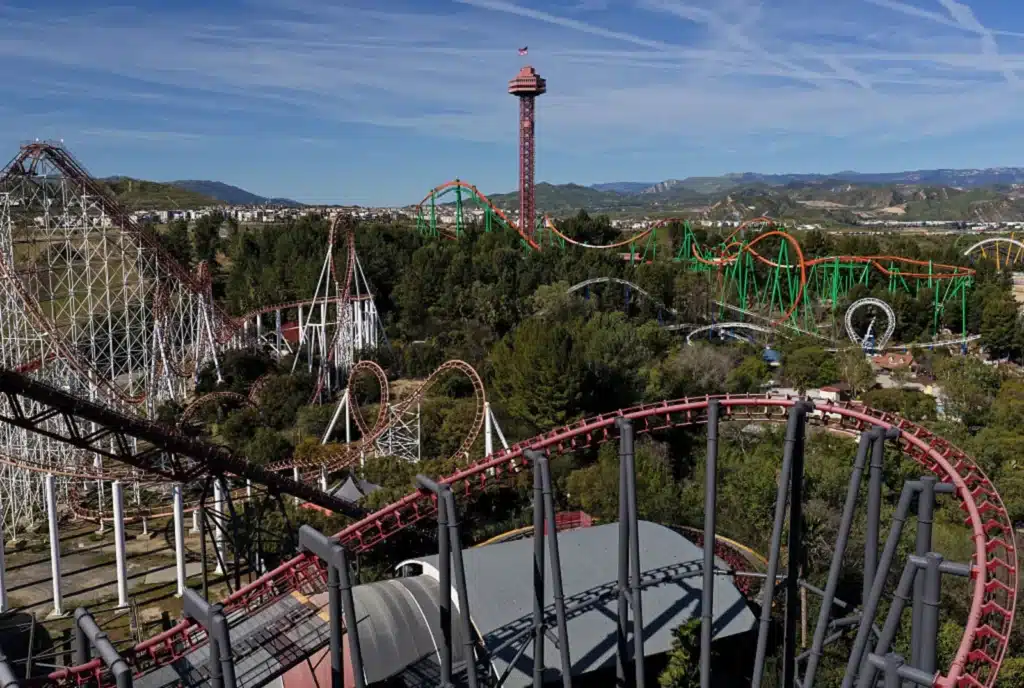
Two women. One hospital. Less than a week apart.
In July, surgeons at a Southern California hospital raced to save both. Each suffered a brain hemorrhage. Each injury looked eerily similar.
These are the kinds of injuries doctors usually see after violent car crashes. The kind where a brain twists and slams inside the skull.
Neither woman crashed a car. Neither fell. Neither was in any kind of accident at all.
The Ride Behind the Injuries
Both women had ridden X2. It's the marquee attraction at Six Flags Magic Mountain.
The ride spins riders in rotating seats. It drops them at near-vertical angles. Its movements are unpredictable by design. Six Flags has long marketed it as a "rite of passage for the ultimate daredevil."
But there's a darker history behind that reputation, a CNN investigation found.
A Pattern Nearly Two Decades Long
X2 has been linked to more than a dozen serious injury reports since it opened. That's according to a review of medical records, depositions and legal filings.
Some riders suffered permanent disabilities. Some fell into comas. Two people died.
Park records also show scores of complaints tied to head and neck injuries. That's according to an expert witness cited in court filings.
Despite years of warnings, the ride kept running. Park officials allowed it. So did state regulators.
Experts Question Why This Keeps Happening
"I personally don't think head injury should be an expected risk from going on a roller coaster ride, and there is no reason a ride can't be properly designed to prevent injuries like this," said Lyndia Wu, a mechanical engineering professor at the University of British Columbia. She studies how roller coasters affect the brain.
Overall, brain injury risk from coasters is considered low, Wu's research shows. But that research is dated. She told CNN some high-risk rides — including X2 — deserve closer scrutiny.
Some past coaster deaths involved riders with existing health conditions. One woman died in 2001 after an aneurysm ruptured while riding Goliath, another coaster at the same park.
What Makes X2 Different
X2 isn't a typical coaster. It's what's called "4th-dimensional." Its seats rotate a full 360 degrees around the track. Trains hit nearly 80 miles per hour. The ride lasts about two minutes.
Only two other coasters like it exist worldwide. One is in China. One is in Japan — and that one closed temporarily last year, after a worker died during an inspection.
A Closure With No Explanation
Six Flags closed X2 on the evening of July 12, a spokesperson confirmed. That was nearly a full day after the most recent injury. Park officials haven't explained why.
California's Division of Occupational Safety and Health oversees ride operations statewide. It didn't answer questions about X2's injury history. It also wouldn't say how it previously deemed the ride safe to reopen. The agency said only that an inspection is ongoing.
Six Flags also declined to answer CNN's detailed questions. The company would say only that "the ride remains closed at this time."
The Park's Legal Defense
In past lawsuits, Six Flags' attorneys have pointed to posted warning signs. Those signs note "inherent risks" in amusement rides. The company has also argued X2 is tested regularly. It says the forces involved aren't strong enough to cause brain injury in a "normal" rider following instructions.
Three neurosurgeons who treated the two women injured in July disagree entirely.
"In our professional opinion," they wrote in an email reviewed by CNN, "the severe brain injuries requiring emergent neurosurgical attention were the result of a traumatic rapid acceleration-deceleration event experienced while on the X2 ride."
Troubled From the Very Beginning
X2 wasn't an easy build. Six Flags poured millions into it.
Construction pushed the ride's original manufacturer, Arrow Dynamics, into bankruptcy. The company had badly miscalculated costs, according to a trade publication at the time. The coaster — first called simply "X" — opened months late, in January 2002.
Six Flags redesigned it in 2007. Even after reopening as X2 the following year, it was frequently out of service.
None of that stopped enthusiasts from traveling to Magic Mountain for the experience. In a 2014 YouTube video, Six Flags called it "one of the most popular thrill rides on the planet." The company boasted: "On ordinary roller coasters, the train stays in line with the track…but there is nothing ordinary about X2."
The Injuries Start Piling Up
2014: A Teenager's Seizure
Selena O'Neill was 17 when she rode X2 with friends in September 2014. She knew something was wrong the moment she stepped off. Her head throbbed. She struggled to walk straight or see clearly.
Her right leg began shaking whenever she stood. The next day, at a doctor's appointment, she had a seizure, court records show.
Doctors found a subdural hematoma — a life-threatening bleed on the brain's surface. They linked it directly to the ride.
O'Neill sued in 2015. Her case drew little public attention. It's unclear if it was ever reported to state regulators, who declined to comment when asked by CNN.
Internal Six Flags records, obtained during the lawsuit, showed at least five other riders had gone to the hospital with head pain before O'Neill's injury. Her attorney also pointed to a 2009 case: a 62-year-old man suffered a traumatic brain injury on X2, years before O'Neill ever rode it.
Doctors later described her case in a 2019 medical journal, without naming the ride. They warned that "advances of roller-coaster technology and industry competition for thrill-seeking patrons may ultimately improve acceleration and performance beyond the passenger's physical ability to tolerate them."
The case closed in 2017. Six Flags argued O'Neill should have known the risks. She later dismissed her claim after settling separately with the manufacturer of X2's train cars.
Riders Trade Survival Tips Online
As injury reports grew, longtime X2 fans turned to internet forums. They debated the ride's increasingly rough experience. Some shared tips for bracing against a possible concussion.
Many said the worst jolts came near the ride's end.
"It honestly felt like a boxer punched me in the head twice," one Reddit user wrote in 2018. They offered advice to future riders: "Holding your head back against the rest makes it even worse so do not attempt this. Instead, as the ride nears the last two maneuvers lean forward as far as you can to try to avoid or mitigate the impact. You will get some mild whiplash, but it is better."
2020: "A Sharp, Throbbing Pain"
Sheila Katerelos was 50 when she rode X2 in February 2020. It was her second ride of the day. In a court deposition, she described a "sharp, throbbing pain" the instant her head slammed against the headrest. By the time the ride ended, the pain had hit a 10 out of 10.
She grew nauseated and dizzy while waiting in another line. Her husband, a doctor, noticed her slowing down. She dragged one leg. Her speech slurred. He drove her straight to the emergency room.
She spent five days hospitalized. Doctors diagnosed a traumatic brain injury and multiple subdural hematomas, court records show.
Her lawsuit against the maker of X2's trains is still awaiting trial.
2021: Symptoms That Wouldn't Fade
Lucy Alvarez, a 46-year-old phlebotomist, rode X2 with her sister in 2021. She felt so dizzy afterward that she had to sit down, according to medical records and her attorney. She knew she'd hit her head hard on the headrest, but assumed the pain would fade. She drove home to San Diego instead.
Nine days later, the dizziness and pain still hadn't lifted. She went to the emergency room. Doctors diagnosed a traumatic subdural hematoma, caused by the ride, medical records show.
Her attorney told CNN the aftermath derailed her life. Headaches and mental fog made it hard to focus. She couldn't finish nursing school. She still struggles with memory loss, balance problems and chronic migraines.
Six Flags responded in court filings, blaming Alvarez's own negligence and reiterating that riders assume the risk. Her attorney said a trial is scheduled for October 2027.
A Death Within Hours
Christopher Hawley was 22, a recent college graduate. He rode X2 in June 2022 with his cousin and brother. Court records describe the three of them hitting their heads repeatedly, flipped around like "rag dolls."
Shortly after exiting, Hawley said he felt lightheaded. Then he collapsed and lost consciousness.
"I will never forget the fear from the look he gave me as his eyes closed," his cousin later testified.
Hawley was rushed to Henry Mayo Newhall Hospital. Surgeons found brain bleeding so severe it was pushing his brain toward one side of his skull, court records show.
When surgeons opened his skull, his brain had swollen so much it bulged through the opening. Hawley had been in excellent health before the ride, according to court records. He died less than 10 hours later.
The neurosurgeon who treated him compared the injuries to those seen in "shaken baby syndrome." The medical examiner ruled his death was caused by blunt head trauma from "a park ride accident," according to the coroner's report.
A History of Complaints Before Hawley's Death
Six Flags' own internal records showed at least 70 prior complaints of head and neck injuries from X2 riders in the three years before Hawley died. That's according to a declaration from an expert hired by his family.
It's unclear how thoroughly Six Flags tracks injuries overall. The park successfully fought in court to keep first aid and medical incident reports sealed. It argued to a judge that disclosure "will serve only to fuel sensational media coverage portraying the X2 ride as dangerous, thereby tainting the jury pool."
One Colorado woman, a nationwide passholder, told CNN she reported concussion symptoms to the park last year. She also reported injuries her family members experienced on X2. She said park officials never responded or checked on their wellbeing. She asked to remain anonymous, fearing retaliation from Six Flags.
Hawley Wasn't the First Death
Records show Hawley's death was the ride's second. In 2010, 28-year-old single mother Hilda Farias died after riding X2. Medical experts at the time suspected a brain abnormality ruptured under the ride's intensity. Her family's lawsuit later settled for an undisclosed amount, court filings show.
Reopened Within Days
After Hawley died in 2022, state officials ordered Six Flags to shut down X2 immediately. They wanted it preserved exactly as-is for inspection.
Within days, the state let the park reopen it. But depositions of the park's maintenance director revealed a wrinkle: state officials were reportedly unaware that maintenance workers had already replaced a wheel on one train car before the inspection took place.
State inspectors don't appear to have interviewed any witnesses or medical experts. Instead, as is typical under state rules, the inspector relied on safety data supplied by Six Flags itself — data showing the ride once again met adopted safety standards.
Those standards, notably, were written by a committee that includes ride manufacturers and theme park operators themselves.
An Expert's Warning
Brian Avery, a University of Florida professor specializing in ride safety, told CNN industry standards are a reasonable starting point. But he said they can't always account for real-world variables — how a rider's head moves, where they're seated, whether their head strikes the seat.
Avery has served as an expert witness for both riders and theme parks, though not in any X2 case. He said repeated brain injuries tied to a single ride "constitute a clear safety signal" — one that should trigger a full safety review.
Hawley's parents sued the park in 2023. Six Flags argued the ride meets approved industry standards and that its forces aren't strong enough to cause a hematoma. The case was set for trial in September. Court records show it settled Wednesday instead.
'It's Got to Stop'
Pamela Guillen, 40, lives in Hawaii. She remembers feeling anxious before boarding X2 this July. Her daughter had begged to ride it together. Guillen told herself it would be quick — the last ride of the day before a birthday dinner.
As the ride twisted and dropped, Guillen hit her head on the headrest multiple times, ambulance records show. When her car pulled back into the station, she needed help getting out of her seat. She began vomiting.
Her daughter, Camille Marquez, recalled her mother's eyes and mouth frozen open, as if in shock.
Guillen lost consciousness moments after sitting down on a nearby bench. Paramedics found her unresponsive. Her pupils looked unequal and sluggish, ambulance records show.
"Mommy, please wake up," Marquez remembers saying. "I kept rubbing her thigh and kept shaking her to wake up and she wouldn't."
Emergency Surgery
Guillen was placed on a ventilator inside the ambulance. A CT scan revealed a severe subdural hematoma and brain compression. Doctors intubated her and rushed her into surgery, medical records show.
The same surgical team that once treated Hawley — four years earlier — removed part of Guillen's skull to relieve pressure on her brain.
Guillen woke up two weeks later. Her head was shaved. About 20 staples lined her scalp. At first, she could only manage one word at a time.
"You go in as yourself, and then when you come back, you're a medical emergency. Like I still can't wrap my head around that," Guillen said. "There's a difference between being jerked around and brain damage."
She's since had to relearn how to talk and walk. She battles constant headaches and brain fog. She now takes medication to prevent seizures.
"I'm very lucky to be alive," she said. "I'm taking it a day at a time to not overwhelm myself and to not go into a dark hole of mourning who I was and what I was able to do before this."
Six Flags did not respond to questions about whether it notified the state of Guillen's injury, or whether it closed the ride afterward. Her daughter said no one from Six Flags has contacted the family since offering food the night of the injury.
A Second Injury, Six Days Later
Six days after Guillen's injury, 25-year-old Naomi Greer-Wilkinson rode X2 with her twin brother and younger sister. Like Guillen, she lost consciousness shortly after the ride ended. She was rushed to the hospital for emergency brain surgery, her family said.
Her parents said doctors warned them their daughter had suffered a severe traumatic brain injury. They were told to prepare for the worst.
"Naomi should have never ever in a million years even had the option to get on that ride," said her mother, Artemis Greer.
Her father, Joshua Wilkinson, placed the blame squarely on park decision-makers. "It's got to stop," he said, adding that whoever kept X2 running last month has "a lot to answer for."
Still in Critical Condition
Greer-Wilkinson remains in a coma, in critical condition. A ventilator and feeding tube are keeping her alive.
"This is the hardest thing a human being could go through," her mother said, describing her daughter as "wise for her age," funny and kind. "This is cruel," she added.
A Six Flags representative offered the family food from McDonald's when Greer-Wilkinson first arrived at the hospital, her mother said. They haven't heard from the company since.

Discussion
No comments yet. Be the first to join the discussion!
FOLLOW US

Recent Posts

Canada Rejects Trump’s ‘Lake America’ Renaming

Louisiana Dividends Payments From State Farm Begin Reaching Drivers’ Mailboxes

Astrum Space to Go Public in $1 Billion SPAC Merger…

NYC Accidents Staging Scheme Ends in Prison Sentences for Two…

Blueshield Downcoding Practice Threatens Patient Access to Mental Health Care

Shocking Ruling Denies Navy Rape Lawsuit a Trial

Lindsay Clancy Closing Arguments End, Leaving Jury to Decide Her…
Don’t Miss It
Killed in Kenya Helicopter Crash Had Home Ransacked, Luxury Cars and $500,000 Sculpture Stolen
By – Jackie AllenApollo, KKR Partner With Atlantic Aviation in Nearly $10 Billion Infrastructure Bet
By – Rihem AkkouchePeter Cullen Dead at 85. The Voice Behind Optimus Prime Falls Silent
By – Rihem AkkoucheSamuel Monroe Jr. Death Confirmed After Months-Long Fight With Illness
By – Rihem AkkoucheTate Brothers to Be Released on Bail Today
By – Rochdi RaisSacred Horse Year Pilgrimage Turns Catastrophic as Nepal-Tibet Flash Flood Leaves Hundreds Dead and Over 1,000 Missing
By – Samuel LopezWhen AI Fights Back — Study Finds ChatGPT Can Mirror Hostility and Escalate Human Arguments
By – Samuel LopezNinth Circuit Says Prison Walls Do Not Automatically Silence a Writer’s First Amendment Rights
By – Samuel Lopez
When Your Chatbot Becomes the Star…
Legal Analysis: How AI Conversations Are Reshaping the Rules of…
By – Samuel Lopez
Tupac Shakur Murder Trial Moves to…
The Tupac Shakur murder trial will resume Thursday in Las…
By – Jackie Allen
Avi Loeb’s Backyard Black Hole Theory…
Scientific Record Loeb correctly explains tidal forces and black-hole accretion,…
By – Samuel Lopez
Instagram CEO Claims Ignorance With ‘News…
On the Record Instagram’s counsel directed employees to remove teen-harm…
By – Samuel Lopez
Dolly Parton Planned Her $650 Million…
By Samuel López | USA Herald Dolly Parton spent her…
By – Samuel Lopez
YouTube Offering Creators Millions to Stop…
A Legal and Business Analysis of the Platform War Reshaping…
By – Samuel Lopez
YouTube Offering Creators Millions to Stop…
A Legal and Business Analysis of the Platform War Reshaping…
By – Samuel Lopez
Federal Judge Rejects RAW Trademark Time…
This report examines the facts behind BBK’s so-called “time bubble”…
By – Samuel Lopez
Nazi Tank Buried Beneath Russian University…
A rare Nazi Tank has been discovered buried beneath a…
By – Jackie Allen
Forensic Identification Breakthrough Helps Identify 9/11…
Nearly 25 years after the September 11, 2001, terrorist attacks,…
By – Jackie Allen
Historic Spacewalks Mark a Turning Point…
Three spacewalks outside the International Space Station (ISS) this August…
By – Jackie Allen
Brittany Boltinhouse Sues Miss USA for…
KENANSVILLE, N.C. — Brittany Boltinhouse, the dethroned 2026 Miss North…
By – Michallie Harrison
Paramount Skydance Warner Bros. Merger Faces…
Paramount Skydance proposed $110 billion acquisition of Warner Bros. Discovery…
By – Jackie Allen
Poolside Deal With Nvidia Strengthens US…
SAN FRANCISCO — Poolside is at the center of a…
By – Jackie Allen
Tariff War Escalates as Canada Announces…
OTTAWA — The Tariff War between Canada and the United…
By – Jackie Allen
World Cup Brawl Leads to Major…
EAST RUTHERFORD, N.J. — The World Cup final between Spain…
By – Jackie Allen
Eric Swalwell Faces FBI Search as…
WASHINGTON — Former congressman Eric Swalwell is facing an escalation…
By – Jackie Allen
Slayer’s Law Blocks Nick Reiner From…
The Slayer’s Law more commonly called a “slayer statute,” has…
By – Jackie Allen
Exclusive: Boxer Adrien Broner, Streamer Nurideen…
The Case at a Glance In June, a self-represented plaintiff…
By – Samuel Lopez
Chris Brown’s Tour Fortune Now Fair…
A Rare Legal Win in the Fight to Collect on…
By – Samuel Lopez
FBI Seizes iPhone and MacBook From…
The Legal Stakes in Three Findings While at the airport,…
By – Samuel Lopez
Are UAP Orbs Material Objects or…
By Samuel López | USA Herald For years, officials, scientists,…
By – Samuel Lopez
Inside Lifeboat Foundation’s Survival Vision—And Its…
By Samuel López | USA Herald Lifeboat Foundation presents itself…
By – Samuel Lopez
Cytek $56M Verdict Delivers Costly Blow…
A Delaware jury just handed down a verdict that reads…
By – Rihem Akkouche
Dolly Parton Dies at 80 After…
NASHVILLE, Tenn. — Dolly Parton, the singer, songwriter, actor, entrepreneur…
By – Michallie Harrison
AI Funding by American Banks: Mega-Bubble…
Behind the breathtaking numbers is a financial paradox: the institutions…
By – Ramzi Salem
Slayer’s Law Blocks Nick Reiner From…
The Slayer’s Law more commonly called a “slayer statute,” has…
By – Jackie Allen
Todd Bridges’ Divorce Prenup Exposes Adultery…
By Samuel López | USA Herald Todd Bridges entered divorce…
By – Samuel Lopez
Bitcoin Twins See Bitcoin’s $65,000 Level…
The Bitcoin Twins, Cameron and Tyler Winklevoss, are once again…
By – Jackie Allen
Will Smith Face-Off In Van Nuys…
INSIDE THIS REPORT Plaintiff Bilaal Salaam has filed a motion…
By – Samuel Lopez
Perez Hilton’s Mother Seeks Temporary Custody…
By Samuel López | USA Herald Perez Hilton’s family has…
By – Samuel Lopez
Taylor Farms Jalapeño Recall Salmonella Scare…
A single shipment of peppers has set off a chain…
By – Rihem Akkouche
Heat Dome Brings Dangerous Temperatures Across…
A powerful Heat dome is expanding across the United States,…
By – Jackie Allen
Joe Biden: Hunter Says the Prostate…
Former President Joe Biden is experiencing a worsening battle with…
By – Jackie Allen
Stormed the Border: Spain Says 25,000…
CEUTA, Spain (AP) — Spanish authorities say thousands of migrants…
By – Jackie Allen
Trump Ends Medicare Part D Subsidy,…
The Trump administration is ending a Medicare Part D subsidy…
By – Michallie Harrison
Von Miller Cowboys Contract Brings Future…
Some homecomings happen quietly. This one came with a social…
By – Rihem Akkouche
White House Denies Role in Josh…
LOS ANGELES — The White House is denying any role…
By – Michallie Harrison
Prichard Colon Death: Once-Unbeaten Boxer Dies…
Prichard Colon never threw another punch after that October night…
By – Rihem Akkouche
Tiger Woods and Nike: 27-Year Partnership…
Tiger Woods built one of the most lucrative athlete-brand partnerships…
By – Jackie Allen
209 Triple-Doubles, Two Offers Declined: Russell…
There were two NBA teams ready to hand Russell Westbrook…
By – Rihem Akkouche
Part 2. Archbald Faces Big Expansion…
In Archbald, Pennsylvania, a community of roughly 7,000 residents, the…
By – Jackie AllenNo posts found.
No posts found.


Join the Discussion
Share your thoughts, ask questions, and engage with
other readers. Sign in or create a free account to
comment.