

The Tate Brothers Case: What Is the US–UK Extradition Treaty?
The People's Voice ı By Rochdi Rais
0 Comments
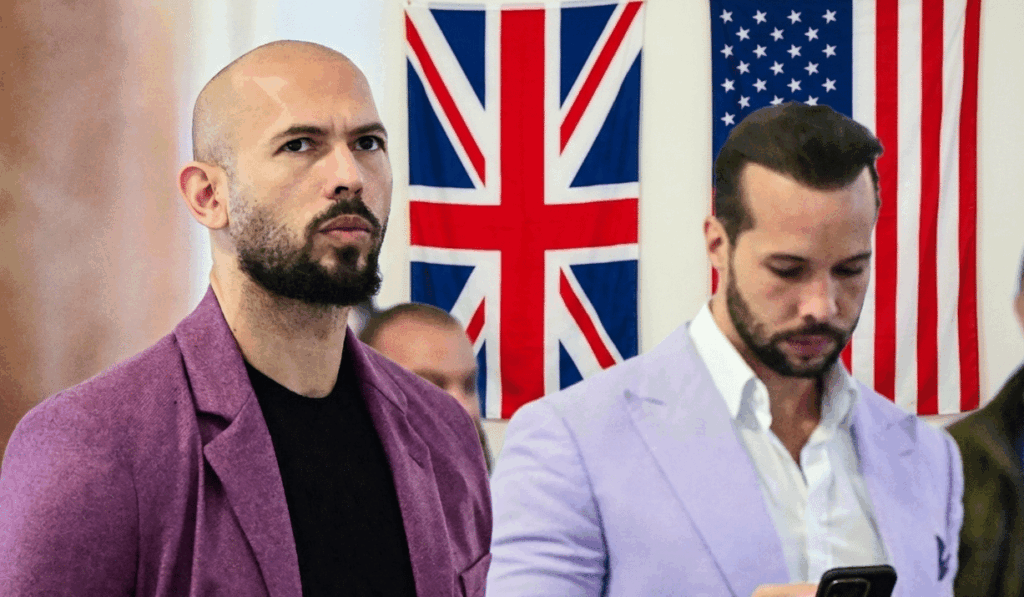
Signed in 2003, ratified in 2007, and reshaped by two decades of high-profile cases, the treaty that will decide the fate of the Tate brothers is one of the most heavily criticised bilateral agreements in modern Anglo-American law. What it does, what it does not do, and why it matters here.
The document under which Andrew and Tristan Tate are being held in Miami is not, strictly speaking, an American document. It is the Extradition Treaty between the Government of the United States of America and the Government of the United Kingdom of Great Britain and Northern Ireland, signed on 31 March 2003 and brought into force in April 2007. It replaced the previous 1972 treaty, and it has structured every significant extradition dispute between the two countries since. Understanding what it says is the difference between understanding the Tate case and following the coverage of it.
What the treaty does
The core function of the treaty is to establish a mutual obligation: each state agrees to extradite persons sought by the other for prosecution or the enforcement of a sentence, provided certain conditions are met. The conditions are set out in the treaty text and are narrower than most people assume.
The offence must be an extraditable offence, defined under Article 2 by reference to a modern dual criminality standard. This is the biggest change from the 1972 treaty, which listed specific offences and required the requested state to match them. Under the 2003 treaty, an offence is extraditable if the conduct it describes is punishable in both countries by imprisonment for at least one year. This shift matters. It means the two states no longer have to argue about whether "human trafficking" in Britain is precisely the same offence as "human trafficking" in the United States. It is enough that the conduct alleged — arranging the movement of a person for sexual exploitation, for example — is criminal in both.
The offence must not be a political offence, though the political offence exception was significantly narrowed by the 2003 text and by subsequent case law. It now applies almost exclusively to what lawyers call "pure" political offences, such as treason or espionage, and is unlikely to be relevant to any ordinary criminal charge, however politically charged the surrounding circumstances.
The rule of specialty applies: a person extradited under the treaty can be tried only for the offences specified in the extradition order, not for other offences discovered later. In the Tate case, this means that if the brothers are extradited on the fifty-nine counts now charged, the CPS cannot add unrelated charges after the fact without seeking further consent from the United States.
Statutes of limitation in the requesting state must be examined, but expired limitations in the requested state do not automatically bar extradition. This asymmetry is unusual and is one of the treaty's most-criticised features.
What the treaty does not do
The treaty does not create a duty to extradite anyone the requesting state names. It creates a structured process with multiple points at which extradition can be refused. And it does not decide guilt. Extradition proceedings are not trials, and nothing in the treaty authorises an American court to weigh whether the person is factually guilty of the offences charged.
The treaty also does not create parity between American and British defendants. This is the source of most of the political controversy that has surrounded the instrument since its ratification.
The asymmetry problem
The most persistent criticism of the treaty concerns what it requires each side to show. When the United States seeks the extradition of a person from Britain, American authorities must present reasonable suspicion that the person committed the offence — a lower standard than the traditional prima facie case. When Britain seeks extradition from the United States, British authorities must show probable cause, the American constitutional standard.
Defenders of the treaty argue these are functionally equivalent thresholds and that the difference is technical rather than substantive. Critics, including several British parliamentary committees and a series of high-profile defendants, have argued that the asymmetry is real and consistently favours American requests. The debate produced a review in 2011 by Sir Scott Baker, which concluded that the practical effect of the asymmetry was limited, and produced a series of amendments to the Extradition Act 2003 in 2013 aimed at addressing British concerns.
For the Tates, the direction of the asymmetry does not matter in the way most commonly discussed. Britain is seeking to bring them out of the United States, meaning British authorities must meet the American probable cause standard — the higher of the two thresholds. This cuts in the brothers' favour, marginally, at the certification stage.
The rule of non-inquiry
Alongside the treaty, one principle of American extradition law shapes what the brothers' defence can and cannot argue. The rule of non-inquiry holds that American courts will not investigate the fairness of the requesting country's justice system, the motives of its prosecutors, or the treatment awaiting the accused. Those questions are matters for the executive branch.
This is why the defence's strongest political arguments — that the timing of the charges was tactical, that the collapse of the Romanian case bears on the credibility of the British filings, that the transfer of decision-making to the Secretary of State at the final stage renders the whole proceeding structurally political — cannot be made in the extradition courtroom. They can be made at the diplomatic and political stage, before the Secretary of State makes the final decision. They cannot be made to the magistrate deciding certification.
The Secretary of State's role
Where American courts stop, the American executive begins. Once a magistrate certifies an extradition case, the file goes to the Secretary of State for a final decision on surrender. The Secretary is not obliged to surrender the person. The Secretary may consider humanitarian factors, treaty relations, diplomatic consequences, and considerations that need never be published. The decision is essentially unreviewable.
This is the point in the process at which political considerations legitimately enter, and where the treaty explicitly contemplates that they will. It is also the point at which the Tate case will finally rest — assuming certification, and assuming any habeas corpus petition fails.
What this means for the Tates specifically
The treaty framework is favourable to the CPS on identity, on the extraditable nature of the offences, and on the political-offence bar, which will not apply. It is neutral on the timing questions — extradition treaties do not require the requesting state to explain why it waited. It is procedurally demanding on the content of the extradition package, which is why 16 September matters. And it is silent on the merits, which is why extradition will not resolve any factual dispute about the allegations.
If the treaty were being drafted today with the Tate case in mind, it would look very much like the treaty already in force. That is not a coincidence. The treaty is designed to move defendants efficiently between the two states while leaving all substantive questions to be resolved in the country of trial. Whether that is the correct balance — whether efficiency of transfer has been prioritised at the expense of scrutiny — is one of the oldest arguments in extradition law. It is not an argument that the Miami federal court is authorised to resolve.
Andrew and Tristan Tate deny all charges and allegations against them. No court has convicted either brother of any offence. This article describes the legal framework governing extradition between the United States and the United Kingdom and does not assert the truth of any allegation.

Discussion
No comments yet. Be the first to join the discussion!
FOLLOW US

Recent Posts







Don’t Miss It

Lying to Congress: Two Former FBI…
WASHINGTON — Lying to Congress is at the center of…
By – Jackie Allen
Cybersecurity Experts Warn Users to Strengthen…
Cybersecurity experts are urging consumers and businesses to strengthen their…
By – Jackie Allen
Air Force Tech. Sgt. Ian Patterson…
Friends, family and fellow service members are remembering Air Force…
By – Jackie Allen
Evanston $1M Settlement Dispute Ends With…
An Alabama daycare negligence case that produced a $1 million…
By – Tyler Brooks
Anthony Richardson Marijuana Possession Charge Follows…
Indianapolis Colts backup quarterback Anthony Richardson is facing a misdemeanor…
By – Rachel Moore
SpaceX, Tesla Merger: Boards Launch Review…
The possibility of a SpaceX, Tesla merger has moved beyond…
By – Rachel Moore
Steve McBee $7.1M Insurance Fraud Case:…
Steve McBee Sr., the patriarch of the reality television series…
By – Tyler Brooks
Connor Hellebuyck Traded to New Jersey…
The New Jersey Devils have made a major move to…
By – Tyler Brooks
Education Department Drops PSLF Challenge, Delivering…
Federal student loan borrowers have secured a significant victory after…
By – Tyler Brooks
Humana and UnitedHealthcare Cancel Medicare Advantage…
Nearly 1 million Americans are facing a shake-up in their…
By – Tyler Brooks
Lawyers Could Collect $1.27 Billion in…
Outside lawyers in the Meta privacy case could collect up…
By – Michallie K Harrison
Plutonium Pit Production Faces Safety and…
WASHINGTON — The Energy Department has approved full construction of…
By – Michallie K Harrison
Pope Leo XIV Needs No Further…
VATICAN CITY — Pope Leo XIV will not require additional…
By – Jackie Allen
Six Women Testify in Russell Brand…
LONDON — Six women have testified in the Russell Brand…
By – Michallie K Harrison
Websites Go Dark as AI Uncovers…
The PHP security crisis has pushed government websites offline and…
By – Michallie K Harrison
El Nino Could Reach Historic Strength,…
GENEVA — El Nino, a powerful climate pattern that warms…
By – Jackie Allen
News Overload Can Fuel Anxiety and…
News keeps people informed about wars, political conflict, public safety…
By – Jackie Allen
Atlanta Rapper Indicted in Alleged $4.6…
ATLANTA — Shawtey Dred, the social media persona of Atlanta…
By – Jackie Allen
Intuitive Surgical $450M Settlement Targets Da…
Intuitive Surgical has agreed to pay $450 million to resolve…
By – Tyler Brooks
Getty Images Files Chapter 11 With…
Getty Images Holdings Inc., the visual content giant behind millions…
By – Tyler Brooks
Musk and Trump Have a Starlink…
Opinion | Starlink restrictions in Ukraine have exposed a problem Elon Musk…
By – Michallie K Harrison
Texas Trans Texts Spark Election Propaganda…
News Analysis | Texas voters began casting early ballots Monday,…
By – Michallie K Harrison
CBRE £760M Onnec Buy Targets Booming…
Real estate services giant CBRE Group Inc. has agreed to…
By – Rachel Moore
Kohen Wiley Is Dead. Mississippi Owes…
Kohen Wiley was 1 year old when police gunfire killed…
By – Michallie K Harrison
Wall Street Rattled: Nasdaq Plunges 2.6%…
NEW YORK — A fresh wave of doubt about the…
By – Derek Johnson
Meta Stock in Focus as Earnings,…
Meta delivered a powerful revenue performance in its third-quarter earnings…
By – Tyler Brooks
Pantheon $6B Secondaries Fund Marks Firm’s…
Private markets investor Pantheon has secured $6 billion in capital…
By – Rachel Moore
TDI Launches Insurance Fraud Task Force…
The Texas Department of Insurance has launched a coordinated push…
By – Rachel Moore
Children’s Mercy Insurance Coverage Changes: Kansas…
Children’s Mercy Hospital in Kansas City will no longer participate…
By – Rachel Moore
BioWare Closing: EA Shuts Down Legendary…
Electronic Arts is reshaping its videogame empire in a sweeping…
By – Rachel Moore
Extreme Heat Is Spreading and Lasting…
An extreme heat event lasting 367 days touched nearly 85%…
By – Michallie K Harrison
HealthSplash VP 18 Months Sentencing Rewards…
Cooperation can shave years off a prison term, but it…
By – Tyler Brooks
Daylight Saving Time Returns Nov. 1…
Americans will turn their clocks back one hour on Nov.…
By – Jackie Allen
California Identifies New York Life, Aetna,…
Key Takeaways California’s Department of Insurance maintains an official…
By – Samuel Lopez
Three Children, Teacher Killed in Oregon…
BEND, Ore. — An Oregon school shooting killed three children…
By – Michallie K Harrison
Trump Scraps Hegseth’s Execution Livestream After…
WASHINGTON — President Donald Trump canceled the planned execution livestream…
By – Michallie K Harrison
Information Ecosystem: Five Tools to Detect…
The information ecosystem is increasingly vulnerable to misinformation. There are…
By – Jackie Allen
An Airman Died After a Pregame…
By Michallie K. Harrison | Opinion Tech. Sgt. Ian Patterson’s…
By – Michallie K Harrison
NFL Player $300M Hip Surgery Lawsuit…
Athletes bet their bodies on surgeons the way pilots bet…
By – Tyler Brooks
Russian Drone Strikes Hit American Businesses…
Russian drone strikes against American-linked businesses in Ukraine are raising…
By – Jackie Allen
AP Poll Top 25: Georgia Claims…
Georgia has reclaimed the top spot in the AP Poll…
By – Rachel Moore
A.J. Armstrong: Former NFL Player’s Son…
HOUSTON — Antonio “A.J.” Armstrong Jr., the son of former…
By – Jackie AllenNo posts found.
No posts found.


Join the Discussion
Share your thoughts, ask questions, and engage with
other readers. Sign in or create a free account to
comment.