

Market Analysis: Strait of Hormuz Tensions Are Quietly Straining the U.S. Insurance Market — And the Pressure Is Building
America ı By Samuel Lopez
0 Comments
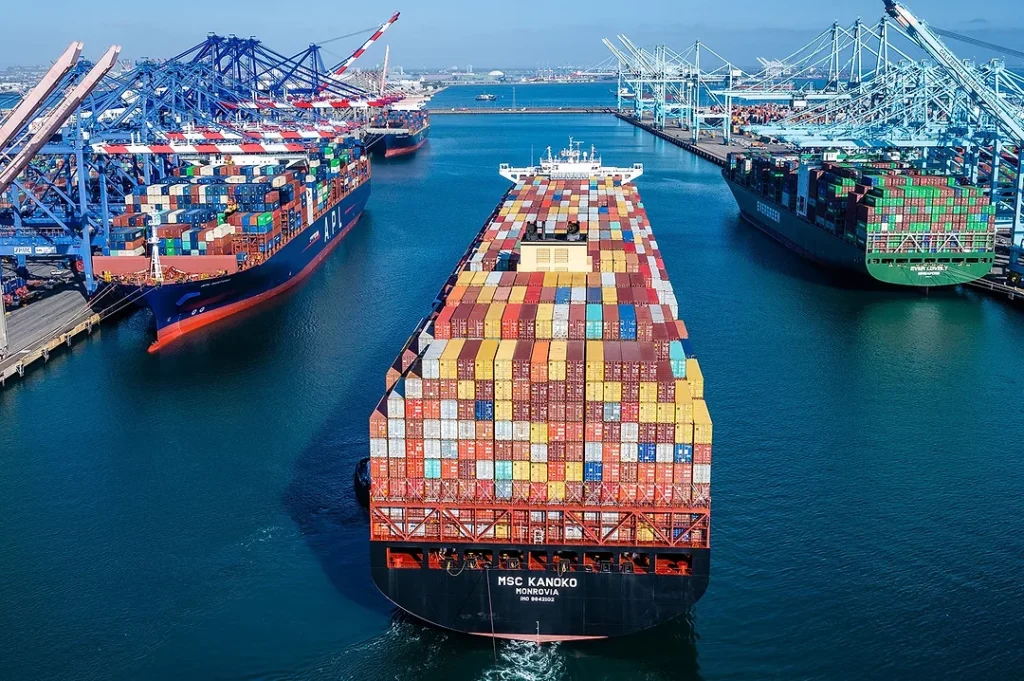
INSIDE THIS REPORT
- A narrow shipping lane in the Middle East is beginning to reshape risk calculations inside the American insurance sector.
- What appears to be a distant geopolitical conflict is already moving through underwriting desks, reinsurance treaties, and premium structures.
- If tensions with Iran escalate further, the consequences may not be gradual—they may be abrupt and systemic.
[WASHINGTON, D.C.] - The Strait of Hormuz is not simply a geographic feature—it is a pressure point that carries a significant portion of the world’s energy supply. Any instability in this corridor immediately introduces risk into global markets, but nowhere is that risk more quietly absorbed than in the insurance sector.
For U.S.-linked insurers and reinsurers, the issue is not abstract. It is quantifiable, immediate, and increasingly difficult to model.
Insurance does not wait for conflict—it prices anticipation. As tensions involving Iran intensified, insurers had already begun recalibrating exposure before a single shot was fired.
What follows now, is a rapid reassessment of maritime risk. War risk premiums rise, underwriting becomes more restrictive, and reinsurers begin tightening capacity. These shifts do not occur in isolation. They ripple through global insurance networks, many of which are deeply intertwined with U.S. carriers.
The effect is subtle at first. Policies are rewritten. Rates are adjusted. Coverage terms become more selective. But beneath those adjustments is a more serious development: a growing recognition that the risk environment is no longer stable.
The American insurance sector does not operate in isolation from global maritime risk. It is embedded within it.
When insurers raise the cost of covering vessels moving through the Strait of Hormuz, that increase does not stay confined to shipping companies. It moves through the supply chain, into energy markets, and ultimately into the broader U.S. economy.
Fuel becomes more expensive to transport. Shipping becomes more expensive to insure. Those costs compound, and they do not disappear—they are transferred.
From a legal and financial standpoint, this is where the issue becomes more concerning. U.S. insurers are often exposed through layered reinsurance agreements, meaning that a loss event in the Persian Gulf can trigger financial consequences that extend directly into American balance sheets.
The Escalation Problem
The risk profile of the region is not driven by steady conditions—it is driven by escalation.
A single incident involving Iranian naval forces, a seized tanker, or a targeted strike can immediately alter how insurers classify the region. Once that classification shifts, pricing follows. Once pricing shifts, access to coverage can tighten. And once coverage tightens, commercial activity begins to slow.
This is the feedback loop that concerns insurers most. It is not just the likelihood of conflict, but the speed at which financial consequences can cascade once a threshold is crossed.
If tensions continue to move beyond posturing, and light munition attacks, into more sustained disruption, the insurance implications become far more severe.
Markets begin to harden. Reinsurance capacity contracts. Insurers seek to limit exposure not just in the region, but across entire portfolios. This is how a localized geopolitical issue evolves into a broader insurance correction.
In a worst-case scenario—such as a partial closure of the Strait—coverage would become prohibitively expensive or unavailable altogether. At that point, governments have historically stepped in, either through military protection of shipping lanes, which has already been discussed by the Trump administration, or financial backstops to stabilize markets.
But those interventions come after disruption, not before.
Insurance, at its core, is built on the ability to predict risk within reasonable margins. The Strait of Hormuz challenges that premise.
The current trajectory suggests a growing disconnect between traditional actuarial modeling and the realities of geopolitical volatility. When risk becomes difficult to quantify, insurers respond conservatively. They raise prices. They restrict coverage. They reduce exposure.
For the United States, this translates into a slow but measurable tightening of the insurance environment—one that may not be immediately visible to consumers, but is already underway behind the scenes.
What to Watch Next
- Any escalation involving Islamic Revolutionary Guard Corps naval activity
- Changes in war risk classifications by global insurers
- U.S. or allied naval escort operations in the region
- Sudden spikes in oil tanker insurance rates
The Bottom Line
The Strait of Hormuz is no longer just a geopolitical concern. It is an emerging fault line within the global insurance system—one that directly implicates U.S. carriers, reinsurers, and policyholders.
If tensions with Iran escalate, the impact will not be confined to oil markets or foreign policy headlines. It will move through insurance pricing, into supply chains, and ultimately into the economic realities facing American businesses and families.
The warning signs are already there. The question now is whether the system absorbs the pressure—or fractures under it.
About the Author
Samuel Lopez is an investigative journalist and legal analyst for USA Herald, focusing on the legal and insurance sectors, litigation trends, and financial risk exposure. His reporting emphasizes evidence-driven analysis and the real-world consequences of global instability on U.S. markets.
USA Herald Newsletter
If you’re looking for reporting that connects global conflict to real financial impact—insurance, litigation, and economic risk—USA Herald delivers it with precision and depth. Stay informed where it matters most.

Discussion
No comments yet. Be the first to join the discussion!
FOLLOW US

Recent Posts





Don’t Miss It

Texas Trans Texts Spark Election Propaganda…
News Analysis | Texas voters began casting early ballots Monday,…
By – Michallie Harrison
Auto-Owners Insurers Verdict: Jury Awards Warehouse…
A North Carolina federal jury has awarded nearly $2 million…
By – Tyler Brooks
NJ $10M Car Insurance Fine: Geico…
New Jersey insurance regulators have accused Geico of overcharging motorists…
By – Tyler Brooks
Ara Partners $2.5B Energy Fund Reaches…
Ara Partners has secured $2.5 billion in capital commitments for…
By – Tyler Brooks
DXC Sell Insurance Software Division in…
DXC Technology is in advanced discussions to sell its insurance…
By – Tyler Brooks
Burger King Hello Kitty Meal Arrives…
Few pairings feel as inevitable as a kids’ meal and…
By – Rachel Moore
Kyle Kennedy Death at 42 Mourned…
Some people inherit a famous name. Fewer spend it on…
By – Rachel Moore
Christina Applegate Misdiagnosed: Five Years Treating…
Most people would celebrate hearing they don’t have a chronic…
By – Rachel Moore
Prudential’s $4B Brazil Mexico Sale Hands…
Big companies sometimes grow by letting go, the way a…
By – Rachel Moore
CBRE £760M Onnec Buy Targets Booming…
Real estate services giant CBRE Group Inc. has agreed to…
By – Rachel Moore
California Ballots: DOJ Cites Charges Against…
WASHINGTON — The Justice Department is citing charges against 28…
By – Michallie Harrison
Richard Riehle Dies at 78, Leaving…
Richard Riehle, the character actor whose memorable roles included “Office…
By – Michallie Harrison
Extreme Heat Is Spreading and Lasting…
An extreme heat event lasting 367 days touched nearly 85%…
By – Michallie Harrison
Information Ecosystem: Five Tools to Detect…
The information ecosystem is increasingly vulnerable to misinformation. There are…
By – Jackie Allen
Kohen Wiley Is Dead. Mississippi Owes…
Kohen Wiley was 1 year old when police gunfire killed…
By – Michallie Harrison
AP Fact Check Examines Online Claims…
AP Fact Check reviews disputed claims, examines evidence and helps…
By – Jackie Allen
Skywatchers: Meteor Season Brings Orionid and Taurid…
The Autumn Meteor Season is underway,. Skywatchers will have two…
By – Jackie Allen
Patriot Missiles Delayed Despite Payment, Zelenskyy…
WASHINGTON — The United States is delaying deliveries of Patriot…
By – Michallie Harrison
Chubb And GKN Race To Opposite…
What’s Driving the Insurance Battle ACE American, a Chubb unit,…
By – Samuel Lopez
Recently Obtained FOIA Records Reveal AARO…
What the Pentagon Records Now Show AARO arranged a private…
By – Samuel Lopez
Trump Fires Katie Zacharia After Five…
What You Need to Know Zacharia was dismissed after only…
By – Samuel Lopez
Katie Zacharia Says She Is A…
WASHINGTON – President Donald Trump’s new White House press secretary,…
By – Samuel Lopez
California’s New Mojave Steel Mill Brings…
What Matters in Mojave 1. Pacific Steel Group’s Mojave Micro Mill…
By – Samuel Lopez
Ilhan Omar MIA as Husband Flips…
What Readers Need to Know Federal agents seized Rep. Ilhan…
By – Samuel Lopez
Trump’s Russia Policy: Cornyn Shares Investigation…
WASHINGTON — Republican Sen. John Cornyn has amplified a call…
By – Michallie Harrison
Human Genome Project Legacy Advances Research…
The Human Genome Project transformed scientists’ understanding of human DNA.…
By – Jackie Allen
An Airman Died After a Pregame…
By Michallie K. Harrison | Opinion Tech. Sgt. Ian Patterson’s…
By – Michallie Harrison
Hunter’s Moon Illuminates October Skies
The Hunter’s Moon will light up the autumn sky in…
By – Jackie Allen
Alleged Chinese Agent Has Ties to…
A Federal investigation into California realtor Wanying “Heather” Zhang reveals…
By – Jackie Allen
Protests in Paris: Macron to Address…
PARIS, France — October 18, 2026 — Protests in Paris…
By – Jackie Allen
HealthSplash VP 18 Months Sentencing Rewards…
Cooperation can shave years off a prison term, but it…
By – Tyler Brooks
Daylight Saving Time Returns Nov. 1…
Americans will turn their clocks back one hour on Nov.…
By – Jackie Allen
California Identifies New York Life, Aetna,…
Key Takeaways California’s Department of Insurance maintains an official…
By – Samuel Lopez
Three Children, Teacher Killed in Oregon…
BEND, Ore. — An Oregon school shooting killed three children…
By – Michallie Harrison
Trump Scraps Hegseth’s Execution Livestream After…
WASHINGTON — President Donald Trump canceled the planned execution livestream…
By – Michallie Harrison
Pope Leo XIV’s Surgery Exposes Gap…
By Samuel López | USA Herald VATICAN CITY — As…
By – Samuel Lopez
NFL Player $300M Hip Surgery Lawsuit…
Athletes bet their bodies on surgeons the way pilots bet…
By – Tyler Brooks
Russian Drone Strikes Hit American Businesses…
Russian drone strikes against American-linked businesses in Ukraine are raising…
By – Jackie Allen
AP Poll Top 25: Georgia Claims…
Georgia has reclaimed the top spot in the AP Poll…
By – Rachel Moore
A.J. Armstrong: Former NFL Player’s Son…
HOUSTON — Antonio “A.J.” Armstrong Jr., the son of former…
By – Jackie Allen
NFL Pro Tyreek Hill Takes the…
What the Jury Is Hearing Lakeeta “Keeta” Vaccaro Hill testified…
By – Samuel Lopez
Terrell Owens Sued By Nolan Wells’…
What Readers Need to Know Three young men who were…
By – Samuel LopezNo posts found.
No posts found.


Join the Discussion
Share your thoughts, ask questions, and engage with
other readers. Sign in or create a free account to
comment.