

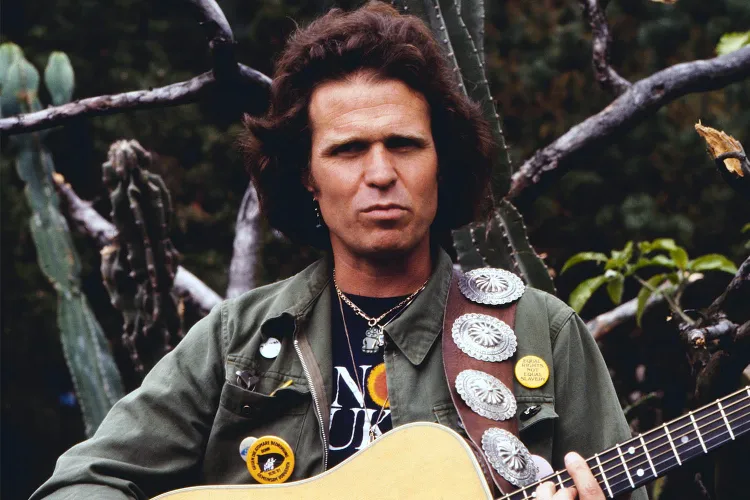
The music world is mourning as Country Joe McDonald died at the age of 84, closing the chapter on a voice that once echoed across a generation of protest and psychedelic rebellion.
McDonald, born Joseph Allen McDonald, died Saturday, March 7, in Berkeley, California, due to complications from Parkinson’s disease, according to a statement shared by the band Country Joe and the Fish on its official Facebook page.
The band said it was saddened by the loss and noted that McDonald was surrounded by his family at the time of his passing.
No additional details were immediately released. Representatives for the musician have been contacted for further information.
Voice of Protest in the Vietnam War Era
Songwriter Behind a Defining Anti-War Anthem
McDonald helped define the soundtrack of the 1960s as lead singer and co-founder of the psychedelic folk-rock group Country Joe and the Fish.
He wrote many of the band’s most memorable songs, including the biting Vietnam War protest anthem “I-Feel-Like-I’m-Fixin’-to-Die Rag.”
The song cut through the political fog of the era with satirical lyrics that mocked the U.S. government’s involvement in Vietnam.
“Well, come on all of you big strong men / Uncle Sam needs your help again,” McDonald sang in the now-iconic track.
“Got himself in a terrible jam / Way down yonder in Vietnam.”
The song’s biting humor and rebellious spirit quickly turned it into a rallying cry for anti-war demonstrators.
Woodstock Moment That Echoed Through History
Infamous Cheer Became Cultural Flashpoint
McDonald’s most legendary moment arrived in 1969 at the Woodstock Festival, when he performed the protest anthem before a sea of hundreds of thousands of music fans.
During the performance, he led the crowd in an infamous “F-word cheer” that became one of the most unforgettable moments of the historic concert.
The raw spontaneity of the moment captured the rebellious energy of the counterculture movement — like lightning striking the cultural landscape of America.
But the notoriety came with complications.
In a 2019 interview with Rolling Stone, marking the 50th anniversary of the performance, McDonald acknowledged that the moment created difficulties for him professionally.
“Of course, you couldn’t play it on the radio,” he said of the famous chant. “So my most famous song couldn’t be played on the radio.”
He added that some radio hosts even lost their jobs for airing it.
Still, McDonald embraced the moment.
“It’s a great moment,” he said. “I’m happy and proud that I could represent the Vietnam War and Vietnam veterans in that moment. It was very powerful.”
Reflecting on Woodstock’s Lasting Legacy
Looking back decades later, McDonald said he never initially grasped the historical magnitude of his Woodstock performance.
At the time, it was simply another show.
But with hindsight, he came to see the event as a cultural turning point.
“I never thought about the historic significance of it,” he told Rolling Stone. “But I do believe that the Woodstock Festival, film and album changed everything in America.”
He described an enduring cultural clash between the values of the World War II generation and the emerging ideals of the Woodstock generation, a tension he believed still existed decades later.
A Cultural Revolution in Music and Style
Despite those generational battles, McDonald believed the festival permanently reshaped American culture.
According to him, Woodstock’s influence seeped into nearly every corner of modern society — from fashion and music to art and personal expression.
“Everything else got ingrained into society,” McDonald said.
“We take for granted all the things that Woodstock brought us. Colors, sound, fashion, music.”
He described the festival as a foundation for modern rock ’n’ roll.
“It was the basis for modern rock ’n’ roll as we know it,” he said.
A Voice That Defined an Era
With Country Joe McDonald gone, the music world loses one of the defining voices of the 1960s counterculture.
His songs didn’t just entertain; they challenged authority, fueled protest and captured the restless spirit of a generation questioning war, politics and tradition.
Like the echoes of a guitar chord fading across a summer field, his voice may have fallen silent — but the cultural reverberations he helped create continue to ripple through music and history.


























Join the Discussion
Share your thoughts, ask questions, and engage with
other readers. Sign in or create a free account to
comment.