

Monopoly Wars 2025: How DOJ, Vitamin Energy, and Live Nation-Ticketmaster Could Be Shaped by a Billion-Dollar Precedent
America ı By Samuel Lopez
0 Comments
Hello, everyone! I’m Samuel Lopez, legal analyst and journalist at the USA Herald. I've been in the trenches of legal journalism long enough to know when history repeats itself. And right now, we're seeing echoes of the past in the courtroom with two high-profile antitrust cases that could reshape industries.
Today, I’m diving headfirst into the recent wave of high-stakes antitrust battles—from the U.S. Department of Justice’s major lawsuit against Live Nation-Ticketmaster to Vitamin Energy, Inc.’s billion-dollar suit against 5-Hour Energy. But here’s the twist: many eyes are on a 2002 appellate ruling, Conwood Co., L.P. v. U.S. Tobacco Co., as a precedent that could tip the scales in these modern showdowns. Buckle up, for this legal analysis.
The Power of Legacy
A 2002 appellate decision—Conwood v. U.S. Tobacco—still looms large in shaping legal strategies for antitrust lawsuits. Courts have demonstrated a willingness to award massive damages when dominant players cross the line from vigorous competition into exclusionary or monopolistic tactics.
High-Stakes Antitrust Battles
May 2024 saw the DOJ sue Live Nation-Ticketmaster, alleging monopolistic control over the live concert market. In November 2024, Vitamin Energy, Inc. unleashed a $1 billion lawsuit against 5-Hour Energy, Manoj Bhargava, et al, asserting a parallel claim of exclusionary practices and false advertising in the 2-ounce energy shot market.
Impact on Consumers and Competitors Alike
Whether it’s losing prime shelf space in retail stores or being forced out of concert venues, these cases underscore how alleged monopolists can choke competition and limit consumer choices. The outcome of these suits could redefine industry norms and tilt the competitive landscape for years to come.
Setting the Stage: DOJ Takes Aim at Live Nation-Ticketmaster
Back in May 2024, the Department of Justice fired a powerful shot at one of the music industry’s most dominant forces—Live Nation-Ticketmaster. The complaint paints a picture of a corporation leveraging its near-ubiquitous platform to stifle rival ticketing services, squeeze out smaller promoters, and corner the live event market. Ticketmaster’s exclusivity deals, coupled with alleged punitive measures for those who dare to partner with competitors, have fueled the DOJ’s claims of monopolistic behavior.
A longtime music promoter I spoke with, who asked to remain anonymous for fear of retaliation, told me, “It’s nearly impossible to book a major artist without dealing with Live Nation. You play ball with them, or you get shut out.”The DOJ, citing its commitment to preserving fair competition and protecting consumers from exorbitant fees, has thrown down the gauntlet. Now it’s a race to see if Live Nation-Ticketmaster can justify its business model as standard competitive fare or if it stands on the brink of antitrust liability.
Shots Fired in the Energy Drink Aisle: Vitamin Energy, Inc. vs. 5-Hour Energy
In November 2024, Vitamin Energy, Inc. lodged a lawsuit seeking $1 billion in damages against 5-Hour Energy. This development, which I recently reported on in detail, made headlines under the banner “Shots Fired: Vitamin Energy’s $1B Suit Accuses 5-Hour Energy of Monopolistic Practices & False Ads.” (Check out my original reporting here:
Shots Fired — Vitamin Energy’s $1B Suit…
According to the complaint, 5-Hour Energy has allegedly orchestrated an elaborate scheme to hog retail shelf space, misrepresent competitor data, and even run misleading advertisements. One particularly striking accusation references a 2008 ad purportedly drafted by Defendant, claiming that “all energy shots with ‘6 Hour’ on the bottle had been recalled by a court order.” Vitamin Energy contends that the “court order” actually applied to just one specific rival, making the ad a misleading assault on every competitor using the “6 Hour” descriptor.
Mirroring the accusations in the Conwood case, Vitamin Energy says these tactics are designed to starve them out of prime retail positions and effectively block consumer access to alternative brands. If that sounds familiar, it should. Allegations of tampering with product racks, exclusive deals, and spreading falsehoods to retailers are practically Conwood 2.0, only this time in the high-octane world of 2-ounce energy shots.
Enter Conwood v. U.S. Tobacco: A $1 Billion Bombshell
- Parties:
-
- Conwood Company, L.P. (Plaintiff): A competitor in the moist snuff (smokeless tobacco) market.
- United States Tobacco Company (Defendant): The dominant firm in the MST industry at the time.
Industry Context:
MST products are sold in retail settings where display racks and product placement can greatly influence consumer choice. In the 1990s, U.S. Tobacco commanded a significant share of the MST market, aided by control over in-store shelf space and point-of-sale displays.
So, why does a 20-plus-year-old case still command so much attention? Because in 2002, Conwood Co., L.P. v. U.S. Tobacco Co. delivered a legal bombshell:
- A $1+ billion damages award, trebled under federal antitrust laws.
- A stark message that courts will not tolerate blatant exclusionary or monopolistic conduct.
Let’s break it down:
The Court’s Synopsis: Manufacturer of moist snuff brought suit alleging that another manufacturer had used its monopoly position to exclude competitors from moist snuff market. The United States District Court for the Western District of Kentucky, Thomas B. Russell, J., rendered judgment on jury verdict for plaintiff, and defendant appealed. The Court of Appeals, Clay, Circuit Judge, held that: (1) there was sufficient evidence for jury to find willful maintenance of monopoly power; (2) there was sufficient evidence showing that plaintiff's injury flowed from defendant's anti-competitive activity; (3) district court did not abuse its discretion in determining that plaintiff's expert's methodology was sufficiently reliable or relevant; and (4) there was sufficient evidence to support jury's award of damages.
The Allegations: Conwood, a smaller smokeless tobacco manufacturer, accused U.S. Tobacco (UST) of systematically removing or hiding Conwood’s product racks in stores, lying to retailers about sales data, and tying up valuable shelf space through exclusive contracts.
The Jury Verdict: After absorbing reams of evidence, and expert testimony, the jury concluded that UST had crossed the line from normal competitive hustle into outright sabotage. The district court entered judgment for over $1 billion—and then bumped that figure up by trebling the damages, a standard practice under antitrust law.
The Sixth Circuit Speaks: On appeal, the Sixth Circuit Court of Appeals upheld the verdict. The judges confirmed that if a dominant market player actively destroys a rival’s product displays, misleads retailers, and uses exclusive arrangements to foreclose competition, that’s exclusionary conduct forbidden by Section 2 of the Sherman Act.
Treble Damages Demystified: Think of it like this—if a candy store competitor cheats you out of $100 in profits, antitrust law doesn’t just reimburse you the $100. It multiplies that sum by three as both a deterrent and a punitive measure. In the Conwood case, damages were trebled to $1.05 billion.
Why Conwood Still Matters
Conwood isn’t just a dusty relic; it’s a living precedent showing that courts can and do punish monopolistic strategies with seven-figure (or more) verdicts. For modern antitrust litigation—whether it’s a sprawling suit against an entertainment behemoth like Live Nation-Ticketmaster or a more narrowly focused claim in the 2-ounce energy shot market—it provides a road map on how courts evaluate the difference between fierce competition and illegal monopolies:
Proving Monopolistic Tactics:
- Exclusionary Tactics
Removing or hiding rival products, using deceptive ads, and pressuring retailers to limit competitor access remain top-tier examples of anticompetitive behavior. - Causation & Harm
Plaintiffs must show a clear link between the defendant’s conduct and real harm—lost sales, suppressed market share, or a ding to brand reputation. - Dominant Market Power
If you’re the big fish (like U.S. Tobacco was in the moist snuff sector, or 5-Hour Energy in the “energy shot” arena), you have an extra burden not to abuse that power. - Financial Consequences
Treble damages can yield enormous judgments that not only compensate victims but also deter other companies from venturing down the same path.
The Road Ahead:
Both the DOJ and Vitamin Energy may look to Conwood for legal and strategic guidance:
- Proving “Willful Maintenance of Monopoly Power”: They’ll have to show that the defendants (Live Nation-Ticketmaster or 5-Hour Energy) aren’t just big by default, but that they abused their dominance to choke off competition.
- Documenting the Harm: In court, raw numbers talk. Just as Conwood’s expert used regression analysis to illustrate how U.S. Tobacco’s actions led to lost sales, Vitamin Energy might do the same with anecdotal and statistical evidence that 5-Hour Energy’s alleged acts directly harmed their bottom line.
- Public Policy Angle: The DOJ suit against Live Nation-Ticketmaster resonates with fans, artists, and promoters who feel the concert giant’s stranglehold is inflating ticket prices and restricting concert choices. Public outcry often applies extra pressure on courts (and juries), much like it did in Conwood.
- Monopolization: At its core, section 2 of the Sherman Act makes it illegal to acquire or maintain monopoly power through improper means. The long-standing requirement for monopolization is both "(1) the possession of monopoly power in the relevant market and (2) the willful acquisition or maintenance of that power as distinguished from growth or development as a consequence of a superior product, business acumen, or historic accident."(4)
- The Conwood case clarified what constitutes "exclusionary conduct" under Section 2 of the Sherman Act. It's not just about having market power but how you use it — or abuse it — to keep others out. This ruling has been a beacon for cases like the ones we're seeing now, where market control is allegedly used to bend the rules of fair play.
In the Vitamin Energy lawsuit, there's a direct parallel to Conwood. They allege tactics like those used by U.S. Tobacco — controlling shelf space, exclusive agreements, and misleading ads. It's like history on repeat, but with energy shots instead of snuff. The Conwood case also set a precedent for the admissibility and reliability of expert testimonies on damages, which could play a crucial role in both current litigations.
Will we see a record-shattering verdict in either case? That remains to be seen. But if Conwood v. U.S. Tobacco taught us anything, it’s that courts have no qualms about awarding astronomical damages against a company caught rigging the competitive landscape.
Fact-Check Section
- Official DOJ Announcement on Live Nation-Ticketmaster
S. Departmentof Justice Press Release
Confirms the May 2024 filing date and outlines key allegations against Live Nation-Ticketmaster. - My Previous Reporting on Vitamin Energy vs. 5-Hour Energy
ShotsFired: Vitamin Energy’s $1B Suit
Provides an in-depth look at the allegations and potential legal strategies. - Conwood Co., L.P. v. U.S. Tobacco Co., 290 F.3d 768 (6th Cir. 2002)
FullText of the Sixth Circuit Opinion
Offers the appellate court’s reasoning and details on exclusionary conduct, monopoly power, and treble damages. - Alternate Perspective
Ticketmaster’sOfficial Response
Contains statements from the company defending its market practices and refuting allegations of monopolistic control. - Public Statements on Monopolization
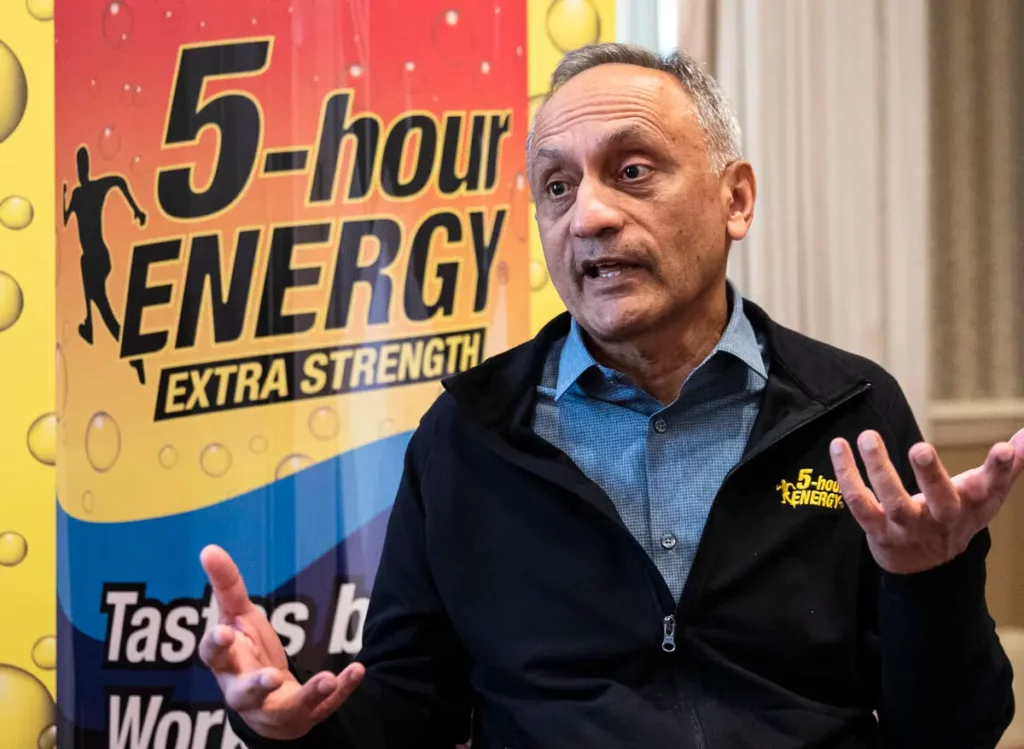
California Attorney General’s comments on broader antitrust enforcement: “We must safeguard fair competition so that consumers, musicians, and smaller businesses have an even playing field,” available via the CaliforniaDepartment of Justice - The Defendant, Bhargava (5-Hour Energy CEO) points at the gravestone of one of his late competitors and says with a chuckle, “Rest in peace.” https://www.forbes.com/sites/clareoconnor/2012/02/08/manoj-bhargavathe-mystery-monk-making-billions-with-5-hour-energy/
- In an interview, the Defendant, Bhargava admits “In this shot area we have about 92 or 93% and the next guy has just 1.5%. So it’s not really a category, it’s a brand” (5 Hour Energy) - confirming their dominance in the shot market. YouTube

Discussion
No comments yet. Be the first to join the discussion!
FOLLOW US

Recent Posts





Don’t Miss It

Pope Leo XIV Needs No Further…
VATICAN CITY — Pope Leo XIV will not require additional…
By – Jackie Allen
Six Women Testify in Russell Brand…
LONDON — Six women have testified in the Russell Brand…
By – Michallie K Harrison
Websites Go Dark as AI Uncovers…
The PHP security crisis has pushed government websites offline and…
By – Michallie K Harrison
El Nino Could Reach Historic Strength,…
GENEVA — El Nino, a powerful climate pattern that warms…
By – Jackie Allen
News Overload Can Fuel Anxiety and…
News keeps people informed about wars, political conflict, public safety…
By – Jackie Allen
Atlanta Rapper Indicted in Alleged $4.6…
ATLANTA — Shawtey Dred, the social media persona of Atlanta…
By – Jackie Allen
Intuitive Surgical $450M Settlement Targets Da…
Intuitive Surgical has agreed to pay $450 million to resolve…
By – Tyler Brooks
Getty Images Files Chapter 11 With…
Getty Images Holdings Inc., the visual content giant behind millions…
By – Tyler Brooks
Meta Stock in Focus as Earnings,…
Meta delivered a powerful revenue performance in its third-quarter earnings…
By – Tyler Brooks
Pantheon $6B Secondaries Fund Marks Firm’s…
Private markets investor Pantheon has secured $6 billion in capital…
By – Rachel Moore
Spartanburg Woman $8K Insurance Fraud Case…
A South Carolina woman is behind bars after investigators accused…
By – Rachel Moore
TDI Launches Insurance Fraud Task Force…
The Texas Department of Insurance has launched a coordinated push…
By – Rachel Moore
Musk and Trump Have a Starlink…
Opinion | Starlink restrictions in Ukraine have exposed a problem Elon Musk…
By – Michallie K Harrison
Texas Trans Texts Spark Election Propaganda…
News Analysis | Texas voters began casting early ballots Monday,…
By – Michallie K Harrison
California Ballots: DOJ Cites Charges Against…
WASHINGTON — The Justice Department is citing charges against 28…
By – Michallie K Harrison
Richard Riehle Dies at 78, Leaving…
Richard Riehle, the character actor whose memorable roles included “Office…
By – Michallie K Harrison
Extreme Heat Is Spreading and Lasting…
An extreme heat event lasting 367 days touched nearly 85%…
By – Michallie K Harrison
Information Ecosystem: Five Tools to Detect…
The information ecosystem is increasingly vulnerable to misinformation. There are…
By – Jackie Allen
CBRE £760M Onnec Buy Targets Booming…
Real estate services giant CBRE Group Inc. has agreed to…
By – Rachel Moore
Kohen Wiley Is Dead. Mississippi Owes…
Kohen Wiley was 1 year old when police gunfire killed…
By – Michallie K Harrison
Chubb And GKN Race To Opposite…
What’s Driving the Insurance Battle ACE American, a Chubb unit,…
By – Samuel Lopez
Recently Obtained FOIA Records Reveal AARO…
What the Pentagon Records Now Show AARO arranged a private…
By – Samuel Lopez
Trump Fires Katie Zacharia After Five…
What You Need to Know Zacharia was dismissed after only…
By – Samuel Lopez
Katie Zacharia Says She Is A…
WASHINGTON – President Donald Trump’s new White House press secretary,…
By – Samuel Lopez
Children’s Mercy Insurance Coverage Changes: Kansas…
Children’s Mercy Hospital in Kansas City will no longer participate…
By – Rachel Moore
BioWare Closing: EA Shuts Down Legendary…
Electronic Arts is reshaping its videogame empire in a sweeping…
By – Rachel Moore
Auto-Owners Insurers Verdict: Jury Awards Warehouse…
A North Carolina federal jury has awarded nearly $2 million…
By – Tyler Brooks
NJ $10M Car Insurance Fine: Geico…
New Jersey insurance regulators have accused Geico of overcharging motorists…
By – Tyler Brooks
Ara Partners $2.5B Energy Fund Reaches…
Ara Partners has secured $2.5 billion in capital commitments for…
By – Tyler Brooks
Burger King Hello Kitty Meal Arrives…
Few pairings feel as inevitable as a kids’ meal and…
By – Rachel Moore
HealthSplash VP 18 Months Sentencing Rewards…
Cooperation can shave years off a prison term, but it…
By – Tyler Brooks
Daylight Saving Time Returns Nov. 1…
Americans will turn their clocks back one hour on Nov.…
By – Jackie Allen
California Identifies New York Life, Aetna,…
Key Takeaways California’s Department of Insurance maintains an official…
By – Samuel Lopez
Three Children, Teacher Killed in Oregon…
BEND, Ore. — An Oregon school shooting killed three children…
By – Michallie K Harrison
Trump Scraps Hegseth’s Execution Livestream After…
WASHINGTON — President Donald Trump canceled the planned execution livestream…
By – Michallie K Harrison
Pope Leo XIV’s Surgery Exposes Gap…
By Samuel López | USA Herald VATICAN CITY — As…
By – Samuel Lopez
An Airman Died After a Pregame…
By Michallie K. Harrison | Opinion Tech. Sgt. Ian Patterson’s…
By – Michallie K Harrison
NFL Player $300M Hip Surgery Lawsuit…
Athletes bet their bodies on surgeons the way pilots bet…
By – Tyler Brooks
Russian Drone Strikes Hit American Businesses…
Russian drone strikes against American-linked businesses in Ukraine are raising…
By – Jackie Allen
AP Poll Top 25: Georgia Claims…
Georgia has reclaimed the top spot in the AP Poll…
By – Rachel Moore
A.J. Armstrong: Former NFL Player’s Son…
HOUSTON — Antonio “A.J.” Armstrong Jr., the son of former…
By – Jackie Allen
NFL Pro Tyreek Hill Takes the…
What the Jury Is Hearing Lakeeta “Keeta” Vaccaro Hill testified…
By – Samuel LopezNo posts found.
No posts found.


Join the Discussion
Share your thoughts, ask questions, and engage with
other readers. Sign in or create a free account to
comment.