

NASA Astronaut Heading to Space Station Plans to Run a Real Test for Alien Life and Will Tell Us Everything
America ı By Tyler Brooks
0 Comments
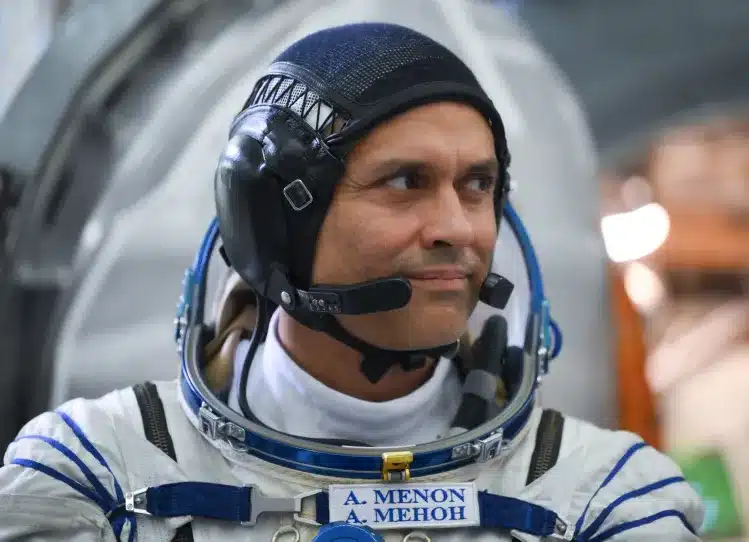
For decades, the question of whether life exists beyond Earth has been the domain of science fiction writers and late-night conspiracy forums. But one NASA astronaut about to spend eight months orbiting our planet says he is going to run an actual, controlled scientific experiment to find out and he has promised to share every result publicly.
Dr. Anil Menon, an emergency medicine physician, U.S. Space Force colonel, and newly minted NASA astronaut, is preparing for the most ambitious chapter of his already extraordinary career. Scheduled to launch aboard the Soyuz MS-29 mission on July 14 from the Baikonur Cosmodrome in Kazakhstan, Menon will join Russian cosmonauts Pyotr Dubrov and Anna Kikina as a flight engineer on Expedition 75 aboard the International Space Station.
The mission is expected to last approximately eight months. And during that time, Menon has confirmed he will conduct a search for microbial extraterrestrial life during a series of spacewalks.
What Exactly Is the Experiment?
The idea sounds almost too simple: check the outside of the space station for bacteria. But the science behind it is anything but simple, and the implications could be world-changing.
"What we're looking to see is if there is any bacteria that can survive on the external side of the space station," Menon told Newsweek.
The external surface of the ISS is one of the most hostile environments imaginable. Objects on the outside of the station are exposed to unfiltered cosmic radiation, extreme ultraviolet light from the sun, and temperature swings that can range from roughly 250 degrees Fahrenheit in direct sunlight to negative 250 degrees in shadow. For any biological organism to survive out there would be extraordinary.
But previous reports have suggested it might not be impossible. The problem, Menon explained, is that earlier experiments lacked rigorous scientific controls, raising the possibility that the station itself could have contaminated the samples.
"Past reports made us think perhaps it's possible, but it wasn't clear if we had a really good control, like we might have potentially contaminated it," Menon said. "So I think we're going back. We're going to do a good job of having a very controlled experiment and that'll be some more exciting science to follow in terms of just other things living in space."
In other words, this time they are doing it right. A controlled experiment means cleaner data, more trustworthy results, and potentially a much clearer answer to one of humanity's oldest questions: are we alone?
An Astronaut Who Has Promised to Tell You the Truth
What makes Menon's mission especially compelling in 2026 is the broader political and cultural context surrounding extraterrestrial life. The U.S. government has been releasing batches of previously classified Unidentified Anomalous Phenomena records, a category that includes what were historically called UFO sightings.
The releases include military reports, videos, photographs, audio recordings, witness statements, and investigative documents from agencies such as the Department of Defense, NASA, the FBI, and various intelligence organizations. Reports describe objects seen by military pilots, astronauts, law enforcement officers, and civilians -- discs, spheres, orbs, and lights exhibiting flight characteristics that defy conventional explanation. Some of the sensor footage included in the releases is newly declassified and dates back decades.
Neither the Pentagon nor NASA has stated that any of this material constitutes evidence of alien spacecraft or extraterrestrial technology. Many of the cases remain unexplained simply because the available data is limited, and "unexplained" is not a synonym for "alien." But the releases have dramatically intensified public curiosity about what is really happening in the skies and beyond.
Menon acknowledged that context directly, and made a pledge worth paying attention to.
"Now that it's declassified, I could totally tell you if I encounter them. So I for sure will follow up with this if I have any interaction with extraterrestrials. I give you that solemn promise," he said.
The Bigger Mission: Preparing the Human Body for Mars
While the extraterrestrial life experiment may be generating headlines, Menon's core scientific focus during Expedition 75 is squarely on human physiology. He will be studying what happens to the human body during long-duration spaceflight, and in a twist that delights him personally, he will be studying what happens to his own body.
"I am most excited about the opportunity to just be in space and experience the changes that happen to the human body up there," Menon told Newsweek. "I've spent most of my life studying through medicine, health, and disease. And then I spent all my special time, like specialization in space medicine. And so it's just such a unique thing to actually see how that happens."
He described the experience with a kind of self-aware humor: "It's actually like you usually don't want this to happen, but it's like the doctor becoming the patient. But in these unique cases, it's really worthwhile because there's just so much to learn and so much nuance to it."
The research Menon conducts will directly inform humanity's plans for eventual crewed missions to Mars. The ISS exists, in large part, as a laboratory to identify and solve the physiological problems that deep space travel would impose on human beings.
One of the most well-documented challenges is bone density loss. Astronauts in microgravity lose roughly three percent of their bone mass every month. Left unchecked, that rate would leave a Mars-bound traveler catastrophically fragile by the time they arrived.
"Imagine that compounding over time. You would just be susceptible to fractures from anything," Menon said. But research conducted on the ISS has already produced a workable solution: targeted resistance exercise. The station carries specialized exercise equipment designed to simulate the mechanical stress that gravity would normally place on bones.
Mars presents a different set of variables. The planet has approximately 38 percent of Earth's gravity, meaning that resistance exercises effective on the ISS would need to be recalibrated for the Martian environment.
"Instead of like lifting like 100 pounds on your shoulder, you can lift 300 pounds on your shoulder and it'll give you the same effect," Menon explained. "You can't do that on the space station. You need to have some sort of resistant exercise. But I think there's a lot more avenues on a place like Mars to getting those kind of Earth-like pressures and gravity-like impact that will affect your body positively."
He added that humans are "amazingly resilient" -- a phrase that, coming from an emergency medicine physician who has provided medical relief after earthquakes in Haiti and Nepal, carries real weight.
Beyond physiology, Mars poses other challenges that are not yet fully solved. The Martian soil contains perchlorates, highly toxic chemicals that would pose a serious risk to any humans attempting to work on or near the surface.
"That's why we're now using the Earth and Moon base as a platform to do those things and just open up even more doors for us," Menon said.
During his time on the ISS, he will also participate in experiments studying blood flow, vein structure, and blood composition in microgravity. He will help test methods for producing intravenous fluids from the station's water supply, a capability that could prove critical on missions where resupply from Earth is not an option.
The Man Behind the Mission
Anil Menon is not a typical astronaut in any sense of the word. Born and raised in Minneapolis to Indian and Ukrainian immigrant parents, he earned a degree in neurobiology from Harvard University, then went on to earn both a medical degree and a master's in mechanical engineering from Stanford University. Few people in any field carry that combination of credentials.
Before being selected as a NASA astronaut in 2021, Menon built a remarkable career at the intersection of medicine and aerospace. He served as a flight surgeon for NASA, working directly with ISS astronauts. He then became the first flight surgeon at SpaceX, where he played a key role in preparing crews for the company's early crewed missions, including the historic Demo-2 flight that returned American orbital launches to U.S. soil after nearly a decade.
He is also a colonel in the U.S. Space Force and has deployed on humanitarian missions following major natural disasters. He completed NASA astronaut training in 2024, and Expedition 75 marks his first spaceflight assignment.
On Elon Musk, Rocket Travel, and the Road to Mars
Menon was also asked during the Newsweek interview about Elon Musk's vision for using rockets as a means of city-to-city passenger transport on Earth, and for eventually sending humans to Mars. His answer was characteristically measured and optimistic.
"I don't doubt that he is capable and SpaceX is capable of getting there. They've shown that they can do a lot harder things, but in the process of getting there," Menon said. "I think what you do is you figure out some of those challenges. Just like going to Mars, we figure out some of the health challenges; doing point-to-point transfer, we figure out some of the technological challenges, and we figure out how to solve it."
He drew a parallel to the evolution of clean energy technology -- a field that seemed impractical for decades before incremental problem-solving made it viable.
"Think about just energy utilization. We've figured out how to make cleaner energies, to take energies that were existing for hundreds of years and figure out systems and plants that make them more sustainable and cleaner. So I think all of these processes, there is a way forward. We just need to thoughtfully move forward. And I have full confidence that that will be part of the process."
The One Thing He Says Will Be the Hardest
For all the scientific complexity of his mission, when asked what personal challenge looms largest, Menon's answer was immediate and entirely human.
"My wife and kids. I'm going to miss them a lot. But luckily we'll have the opportunity to do video calling and stuff," he said.
Eight months is a long time. But if the science Menon conducts during that period helps unlock the future of Mars colonization, and if the bacteria swabs he takes on his spacewalks produce results that upend our understanding of life in the universe, it may turn out to be eight of the most consequential months in the history of human spaceflight.

Discussion
No comments yet. Be the first to join the discussion!
FOLLOW US

Recent Posts







Don’t Miss It

Judge Orders Trump to Sit for…
MIAMI — President Donald Trump must sit for a sworn…
By – Derek Johnson
Pope Leo XIV Needs No Further…
VATICAN CITY — Pope Leo XIV will not require additional…
By – Jackie Allen
Six Women Testify in Russell Brand…
LONDON — Six women have testified in the Russell Brand…
By – Michallie K Harrison
Websites Go Dark as AI Uncovers…
The PHP security crisis has pushed government websites offline and…
By – Michallie K Harrison
El Nino Could Reach Historic Strength,…
GENEVA — El Nino, a powerful climate pattern that warms…
By – Jackie Allen
News Overload Can Fuel Anxiety and…
News keeps people informed about wars, political conflict, public safety…
By – Jackie Allen
Atlanta Rapper Indicted in Alleged $4.6…
ATLANTA — Shawtey Dred, the social media persona of Atlanta…
By – Jackie Allen
Intuitive Surgical $450M Settlement Targets Da…
Intuitive Surgical has agreed to pay $450 million to resolve…
By – Tyler Brooks
Getty Images Files Chapter 11 With…
Getty Images Holdings Inc., the visual content giant behind millions…
By – Tyler Brooks
Meta Stock in Focus as Earnings,…
Meta delivered a powerful revenue performance in its third-quarter earnings…
By – Tyler Brooks
Pantheon $6B Secondaries Fund Marks Firm’s…
Private markets investor Pantheon has secured $6 billion in capital…
By – Rachel Moore
Spartanburg Woman $8K Insurance Fraud Case…
A South Carolina woman is behind bars after investigators accused…
By – Rachel Moore
Musk and Trump Have a Starlink…
Opinion | Starlink restrictions in Ukraine have exposed a problem Elon Musk…
By – Michallie K Harrison
Texas Trans Texts Spark Election Propaganda…
News Analysis | Texas voters began casting early ballots Monday,…
By – Michallie K Harrison
California Ballots: DOJ Cites Charges Against…
WASHINGTON — The Justice Department is citing charges against 28…
By – Michallie K Harrison
Richard Riehle Dies at 78, Leaving…
Richard Riehle, the character actor whose memorable roles included “Office…
By – Michallie K Harrison
Extreme Heat Is Spreading and Lasting…
An extreme heat event lasting 367 days touched nearly 85%…
By – Michallie K Harrison
Information Ecosystem: Five Tools to Detect…
The information ecosystem is increasingly vulnerable to misinformation. There are…
By – Jackie Allen
CBRE £760M Onnec Buy Targets Booming…
Real estate services giant CBRE Group Inc. has agreed to…
By – Rachel Moore
Kohen Wiley Is Dead. Mississippi Owes…
Kohen Wiley was 1 year old when police gunfire killed…
By – Michallie K Harrison
Chubb And GKN Race To Opposite…
What’s Driving the Insurance Battle ACE American, a Chubb unit,…
By – Samuel Lopez
Recently Obtained FOIA Records Reveal AARO…
What the Pentagon Records Now Show AARO arranged a private…
By – Samuel Lopez
Trump Fires Katie Zacharia After Five…
What You Need to Know Zacharia was dismissed after only…
By – Samuel Lopez
Katie Zacharia Says She Is A…
WASHINGTON – President Donald Trump’s new White House press secretary,…
By – Samuel Lopez
TDI Launches Insurance Fraud Task Force…
The Texas Department of Insurance has launched a coordinated push…
By – Rachel Moore
Children’s Mercy Insurance Coverage Changes: Kansas…
Children’s Mercy Hospital in Kansas City will no longer participate…
By – Rachel Moore
BioWare Closing: EA Shuts Down Legendary…
Electronic Arts is reshaping its videogame empire in a sweeping…
By – Rachel Moore
Auto-Owners Insurers Verdict: Jury Awards Warehouse…
A North Carolina federal jury has awarded nearly $2 million…
By – Tyler Brooks
NJ $10M Car Insurance Fine: Geico…
New Jersey insurance regulators have accused Geico of overcharging motorists…
By – Tyler Brooks
Ara Partners $2.5B Energy Fund Reaches…
Ara Partners has secured $2.5 billion in capital commitments for…
By – Tyler Brooks
HealthSplash VP 18 Months Sentencing Rewards…
Cooperation can shave years off a prison term, but it…
By – Tyler Brooks
Daylight Saving Time Returns Nov. 1…
Americans will turn their clocks back one hour on Nov.…
By – Jackie Allen
California Identifies New York Life, Aetna,…
Key Takeaways California’s Department of Insurance maintains an official…
By – Samuel Lopez
Three Children, Teacher Killed in Oregon…
BEND, Ore. — An Oregon school shooting killed three children…
By – Michallie K Harrison
Trump Scraps Hegseth’s Execution Livestream After…
WASHINGTON — President Donald Trump canceled the planned execution livestream…
By – Michallie K Harrison
Pope Leo XIV’s Surgery Exposes Gap…
By Samuel López | USA Herald VATICAN CITY — As…
By – Samuel Lopez
An Airman Died After a Pregame…
By Michallie K. Harrison | Opinion Tech. Sgt. Ian Patterson’s…
By – Michallie K Harrison
NFL Player $300M Hip Surgery Lawsuit…
Athletes bet their bodies on surgeons the way pilots bet…
By – Tyler Brooks
Russian Drone Strikes Hit American Businesses…
Russian drone strikes against American-linked businesses in Ukraine are raising…
By – Jackie Allen
AP Poll Top 25: Georgia Claims…
Georgia has reclaimed the top spot in the AP Poll…
By – Rachel Moore
A.J. Armstrong: Former NFL Player’s Son…
HOUSTON — Antonio “A.J.” Armstrong Jr., the son of former…
By – Jackie Allen
NFL Pro Tyreek Hill Takes the…
What the Jury Is Hearing Lakeeta “Keeta” Vaccaro Hill testified…
By – Samuel LopezNo posts found.
No posts found.


Join the Discussion
Share your thoughts, ask questions, and engage with
other readers. Sign in or create a free account to
comment.