


The Warning That Came True: Trump’s Disclosure Order Triggers The Exact Financial Risk Scenario USA Herald Reported 31 Days Ago
America ı By Samuel Lopez
683 0 Comments
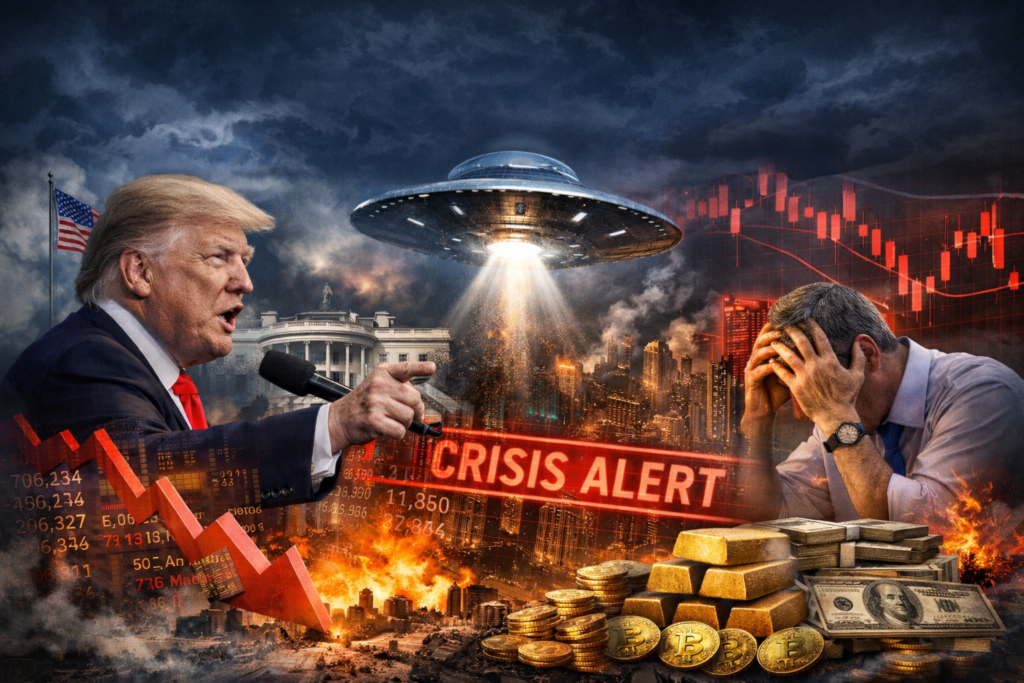
On January 19, USA Herald published a Bank of England analyst's warning that an authoritative U.S. government announcement about alien intelligence would destabilize global markets. On February 19, President Trump issued that directive. The clock is now running.
USA Herald | On January 19, 2026, USA Herald published an investigation that financial and national security analysts at the time largely treated as a thought experiment. Helen McCaw, a former senior financial security analyst at the Bank of England, had warned in formal correspondence to Governor Andrew Bailey that a confirmed, authoritative U.S. government announcement related to alien or extraterrestrial intelligence could trigger catastrophic market disruption — within hours.
Thirty-one days later, at 5:13 PM on February 19, 2026, President Donald J. Trump posted to Truth Social the most sweeping directive ever issued by a sitting U.S. president on the subject. He directed the Secretary of Defense and all relevant agencies to begin identifying and releasing government files related to alien and extraterrestrial life, unidentified aerial phenomena, and UFOs. He called the matters "highly complex, but extremely interesting and important." The post received nearly 36,000 likes within hours.
McCaw's theoretical scenario had become executive policy.
"Even if you feel it's very unlikely, it's madness not to consider it and plan accordingly." — Helen McCaw, former Bank of England analyst, January 2026
This report does not argue that Trump's directive constitutes confirmation of extraterrestrial life. It does not. What it does is re-examine the structural financial warning McCaw issued — now that the first of her outlined trigger conditions has been formally activated by the President of the United States. The question McCaw asked in January was whether institutions were prepared. That question is now materially more urgent.
TIMELINE: FROM WARNING TO WHITE HOUSE DIRECTIVE
The following timeline documents the progression from USA Herald's original reporting to Trump's February 19 announcement.
Jan. 16, 2026 - The Sunday Times reports Helen McCaw's formal letter to Bank of England Governor Andrew Bailey urging contingency planning for alien confirmation.
Jan. 19, 2026 - USA Herald publishes exclusive investigation: "Markets On Edge As Central Bank Insider Warns Alien Confirmation Made By The U.S. Could Trigger Global Financial Shock."
Feb. 2026 (early) - Former President Barack Obama makes podcast remarks broadly interpreted as suggesting aliens are real. The comment goes viral globally.
Feb. 19, 2026 - Trump criticizes Obama for the remarks, suggesting they may have disclosed classified information. Hours later, Trump reverses course and issues his own sweeping disclosure directive on Truth Social.
Feb. 20, 2026 - White House press secretary Karoline Leavitt describes Trump's announcement as "OUT OF THIS WORLD NEWS." Pentagon chief spokesman Sean Parnell confirms the department "looks forward to working with the interagency to fulfill the president's directive."
WHAT MCCAW ACTUALLY WARNED — AND WHY IT NOW MATTERS MORE
It is worth revisiting the precise structure of McCaw's argument, because popular coverage has tended to reduce it to sensationalism. McCaw is not, and was not, predicting alien invasion or interstellar war. Her argument is financial and structural, grounded in more than a decade of central bank risk modeling.
McCaw's core thesis is that modern financial systems operate on confidence, shared assumptions, and predictive pricing models. Any event powerful enough to fundamentally destabilize those assumptions — whether pandemic, nuclear incident, or now, confirmed non-human intelligence — can trigger cascading institutional failure faster than central banks can intervene. She cited the specific risk that markets could react in simultaneously contradictory ways: a rush into gold and government bonds as safe havens on one side, while those same assets became suspect on the other, because advanced extraterrestrial technology could theoretically render existing resource scarcity models obsolete overnight.
McCaw was explicit that the payment system itself was her greatest concern — not abstract asset prices. If confidence collapses and banks begin to fail, the consequences arrive in physical terms: fuel shortages, food access disruption, and civil unrest. She argued that even a low-probability scenario of this magnitude required formal contingency planning, and that failing to undertake such planning was "institutional negligence."
Trump's directive does not confirm alien intelligence. But it does three things McCaw identified as preliminary conditions for volatility: it places the subject at the center of U.S. executive authority; it signals that previously classified or withheld government information may enter the public record; and it creates an indefinite window of uncertainty during which markets, institutions, and the public will operate without knowing what the files actually contain.
Uncertainty itself — not confirmation — is the first stage of the financial risk McCaw described. That stage has now begun.
THE DIRECTIVE: WHAT WAS SAID AND WHAT REMAINS UNKNOWN
Trump's Truth Social post was expansive in its scope and sparse in its specifics. He directed the "Secretary of War" — Pete Hegseth — and all relevant departments and agencies to begin identifying and releasing government files on alien and extraterrestrial life, UAPs, and UFOs.
Notably absent from the directive: any timeline for release, any specification of classification levels to be declassified, any identification of which agencies are covered, or any indication of what the files actually contain. The Pentagon acknowledged the directive and said it looks forward to working with the interagency process. No operational details have been provided.
CBS News reported that the Pentagon's own 2024 report found no evidence that any government investigation into UAPs had confirmed the existence of extraterrestrial life. CNN confirmed that it was not immediately clear what information the records contain or when they would be released. DefenseScoop quoted Christopher Mellon, former deputy assistant secretary of defense for intelligence, who noted that "this might be a consequential moment, but the impact will depend on the follow-through."
That gap between sweeping directive and operational detail is itself a market variable. Financial systems do not price certainty — they price probability distributions. A presidential directive acknowledging that meaningful UFO and alien files exist, without specifying their content, creates a sustained information asymmetry of unknown duration. Traders and institutions must now factor that asymmetry into risk assessments without having any ability to resolve it.
3I/ATLAS: THE UNRESOLVED SCIENTIFIC VARIABLE
USA Herald's January report also addressed the interstellar object designated 3I/ATLAS, the third known interstellar object to pass through our solar system and one that has generated persistent scientific anomalies. Astrophysicist Avi Loeb disclosed that McCaw contacted him directly following his late-2025 study of 3I/ATLAS, after he submitted a white paper to the United Nations on the potential risks posed by interstellar objects that could carry technological payloads.
That contact between a Bank of England financial risk analyst and a leading Harvard astrophysicist, initiated over a formally submitted UN document, represents an unusual convergence. McCaw's outreach was not casual — she included a comprehensive analytical paper. The exchange underscored that her concerns were not rooted in speculation, but in documented scientific uncertainty being taken seriously at the institutional level.
Among the anomalies researchers have noted in 3I/ATLAS: a trajectory through the planetary plane assessed as unusually fine-tuned, highly collimated sunward jets unlike natural comet behavior, gas compositions rich in nickel relative to iron described as carrying an industrial rather than cosmic signature, and extreme brightness behavior near perihelion that has not been reconciled with conventional comet models. None of these findings individually confirms artificial origin. None has yet been formally resolved.
As of the publication of this report, 3I/ATLAS remains an open scientific question. Trump's disclosure directive does not directly reference 3I/ATLAS. But the context in which McCaw's warning was issued — and the context in which USA Herald first reported it — makes the ongoing status of that object part of the broader risk picture now in motion.
SYSTEMIC IMPLICATIONS: FIVE PRESSURE POINTS TO MONITOR
McCaw's framework identifies five structural pressure points that would be activated by the disclosure process now underway. None of these requires actual confirmation of extraterrestrial intelligence. Each becomes operationally relevant the moment a credible disclosure process begins.
The first is confidence erosion in sovereign information. Markets price government transparency as a positive. A process that acknowledges withheld files exist — but does not yet reveal them — creates what risk modelers call an information event horizon. Institutions cannot rationally price what they do not know. The longer the gap between directive and actual disclosure, the more that uncertainty compounds.
The second is digital currency volatility. Bitcoin and other decentralized assets are frequently cited as beneficiaries of sovereign trust erosion. If the disclosure process leads to public perception that governments have concealed material information for decades, demand for non-sovereign stores of value could spike. McCaw identified this explicitly in her January warning, and the mechanism remains intact.
The third is commodity and resource sector disruption. If released files contain any suggestion that recovered or studied extraterrestrial technology bears on energy production, materials science, or propulsion, the downstream pricing implications for oil, metals, and defense sectors would be immediate and difficult to contain. McCaw described this as the channel through which existing resource scarcity models could be invalidated.
The fourth is institutional credibility. The Bank of England, the Federal Reserve, the IMF — all are institutions whose authority depends on their perceived command of complete information. A disclosure process that reveals decades of withheld government knowledge on any subject of this scale raises foundational questions about what else those institutions may not have factored into their models. That erosion does not require scandal. It requires only the demonstration that the information environment was less complete than assumed.
The fifth is geopolitical synchronization risk. Trump's directive is a unilateral U.S. action. If the files released suggest joint programs, shared intelligence, or competing nation-state acquisition of UAP-related technology, the cascading diplomatic and market effects would be impossible to sequence in advance. Allied nations and adversaries alike would face simultaneous information shocks without coordinated response frameworks.
THE REQUEST THAT HAS NOT BEEN ANSWERED
McCaw's January letter to Governor Andrew Bailey had a specific ask: that the Bank of England begin formal contingency planning for the financial fallout of alien intelligence confirmation. She did not request public panic. She did not request policy change. She requested exactly what central banks do routinely for pandemics, cyberattacks, and sovereign debt crises — a stress test.
As of this report's publication, the Bank of England has not publicly acknowledged McCaw's letter, confirmed receipt, or indicated whether any such planning has been initiated. Governor Bailey has not responded to the request on record. McCaw's argument was that failing to plan — not the event itself — constituted the institutional failure.
In the thirty-one days since USA Herald first reported that warning, the probability threshold for the scenario McCaw described has increased materially. The President of the United States has now formally directed government agencies to surface and release files on exactly the subject McCaw identified as a systemic financial risk. The question she posed — whether institutions designed to manage risk are willing to confront the unimaginable before it arrives — has been answered for the executive branch of the U.S. government. The financial system's answer remains formally unknown.
The Bank of England has not yet confirmed whether it is planning for the scenario its own former analyst formally warned it about — the scenario now set in motion by the President of the United States.
WHAT COMES NEXT: THE INDICATORS TO WATCH
This investigation is ongoing. USA Herald will continue to monitor and report on the following developments as the disclosure process unfolds.
On the government side: whether Defense Secretary Hegseth issues a formal implementation order; what classification review process is initiated; whether AARO — the Pentagon's All-Domain Anomaly Resolution Office — is designated as the lead coordinating body; and whether Congress receives classified briefings before public disclosure. Representative Anna Paulina Luna, chair of the congressional UAP task force, has already signaled active engagement following Trump's post.
On the financial side: whether any central bank, sovereign wealth fund, or systemic financial institution acknowledges the disclosure process as a variable in risk modeling; whether commodity or cryptocurrency markets show measurable volatility correlated with disclosure-related news cycles; and whether any institutional investor communication references the UAP files as a material uncertainty.
On the scientific side: updated observational data on 3I/ATLAS and whether any government disclosure files reference or overlap with ongoing research on interstellar objects.
The scenario Helen McCaw warned about is no longer a matter of contingency planning. It is a matter of sequencing. What has begun cannot be easily reversed. The files will either confirm little of consequence — or they will not. Both outcomes carry implications financial institutions have not yet formally modeled.
EDITOR'S NOTE
This report re-examines USA Herald's January 19, 2026 investigation in light of President Trump's February 19, 2026 Truth Social directive. All quotations from Trump's post are reproduced verbatim from the original. All quotations attributed to McCaw, Mellon, and other named individuals are sourced from previously published statements on record. This investigation is ongoing. Readers with information relevant to UAP disclosure, financial contingency planning, or 3I/ATLAS research are invited to submit confidential tips to USA Herald.

FOLLOW US

Recent Posts
NASA Launches Artemis II Mission, First Crewed Moon Flight Since…

Trump Fires Pam Bondi Amid Epstein Files Controversy

Plane Crashes in Philadelphia Park, Two Injured

Baby Fatally Shot in Brooklyn in Broad Daylight

US Lifts Sanctions on Delcy Rodríguez Amid Venezuela Diplomatic Shift

Cold Case Breakthrough: Ted Bundy Linked to 1974 Utah Murder

Coral Springs Vice Mayor Found Dead, Husband Arrested
Don’t Miss It
Magnitude 4.6 Earthquake Strikes Near Boulder Creek, Shakes Bay Area
By – Rihem AkkoucheChristina Marie Plante Found Alive After 32-Year Mystery
By – Rihem AkkoucheSpaceX, Led by Elon Musk, Prepares for $1 Trillion Public Offering
By – Tyler BrooksDecomposed Body Found in San Jose Vehicle Linked to Missing Man
By – Tyler BrooksU.S. Unleashes Iranian-Inspired Drone in Strike Campaign
By – Tyler BrooksNew York at Risk: 20% of the City Built on Water
By – Tyler BrooksIs X down? Thousands of Users Report Access Problems
By – Tyler BrooksJudge Allows Tiger Woods to Travel Abroad for Medical Treatment
By – Tyler Brooks
Kelly Warner Law Firm Blames USA Herald for Arizona Bar Investigation
In what appears as a desperate attempt to defend multiple allegations of fraud on the courts, the Kelly Warner Law…
By – USA Herald
Aaron Kelly Law Firm Resorts To Attacking Former Client Again On KellyWarnerLaw.com – Pattern Recognized
Attorney Aaron Kelly and his law partner Daniel Warner are currently under investigation by the Arizona Bar for legal misconduct.…
By – Jeff Watterson
Arizona Bar Opens Investigation on Attorney Aaron Kelly
USA Herald recently reported on a developing story involving Attorneys Daniel Warner and Aaron Kelly. Both Warner and Kelly have…
By – Paul O'Neal
Artemis II Crew Begins 10-Day Journey Around Moon After Successful Launch
NASA has launched its Artemis II mission, ushering in the first crewed flight to the vicinity of the moon since…
By – Tyler Brooks
Trump Threatens NATO Exit, Tells Europe to ‘Go Get Your Own Oil’
President Donald Trump intensified his criticism of European allies this week, warning that the United States could abandon long-standing security…
By – Tyler Brooks
Trump Considers Replacing Pam Bondi with Lee Zeldin Amid Epstein Controversy Pressure
President Donald Trump has privately weighed the possibility of removing Attorney General Pam Bondi and installing Environmental Protection Agency Administrator…
By – Tyler Brooks
Trump Defends Iran War in Address but Leaves Key Questions Unanswered
President Donald Trump delivered a nationally televised address Wednesday night seeking to justify the ongoing war with Iran, but his…
By – Tyler Brooks
“NEARING COMPLETION” — But The War Goes On
WHAT MATTERS NOW President Trump delivered his first prime-time address on the Iran war — 33 days after it began.…
By – Samuel Lopez
HUMANITY RETURNS TO THE MOON: NASA’s Artemis II Lifts Off — First Crewed Lunar Mission In 53 Years
WHAT MATTERS NOW Four astronauts are en route to the Moon for the first time since 1972. History is being…
By – Samuel Lopez
HUMANITY RETURNS TO THE MOON: NASA’s Artemis II Lifts Off — First Crewed Lunar Mission In 53 Years
WHAT MATTERS NOW Four astronauts are en route to the Moon for the first time since 1972. History is being…
By – Samuel Lopez
When Allegations Become Weapons How Lawfare Is Being Used In Personal Conflicts
WHAT MATTERS NOW In courtrooms across the country, allegations are not just claims—they are leverage. When the legal system is…
By – Samuel Lopez
Alien Intelligence vs. Artificial Intelligence Who Would Win The Ultimate Unknown Battle
WHAT MATTERS NOW Two of the most powerful unknowns confronting humanity—non-human intelligence and artificial intelligence—are no longer theoretical conversations happening…
By – Samuel Lopez
JD Vance’s Comments That UFOs Might Be Demons Ignites Debate Over Spiritual Threat vs. Extraterrestrial Theory
INSIDE THIS REPORT A sitting Vice President suggests UFOs may not be extraterrestrial—but something far older and more ominous. A…
By – Samuel Lopez
Psychological Warfare At Home – How Alien Narratives Could Be Used To Influence Civilian Populations
INSIDE THIS REPORT Something more sophisticated than rumor may be at play when highly provocative, unverified narratives begin surfacing from…
By – Samuel Lopez
When Speculation Turns Inward – How Alien Narratives Could Reshape Trust In Everyday Life
WHAT MATTERS NOW There is a line between curiosity and destabilization. Recent statements circulating in political and online spaces have…
By – Samuel Lopez
Goliath Ventures Filed for Chapter 11 as Alleged $328M Crypto Scheme Unravels
A Florida crypto firm once promising sky-high returns has collapsed under the weight of federal scrutiny and investor outrage. Goliath…
By – Rihem Akkouche
Ohio State Suspends Fraternity After Student Hospitalization
The case now drawing attention under the headline Ohio State suspends Fraternity has cast a spotlight on campus safety, as…
By – Rachel Moore
Senate Vote on DHS Shutdown Ends Weeks-Long Standoff
The Senate vote on DHS shutdown unfolded in the early hours of Friday, bringing a dramatic pause to a 42-day…
By – Rihem Akkouche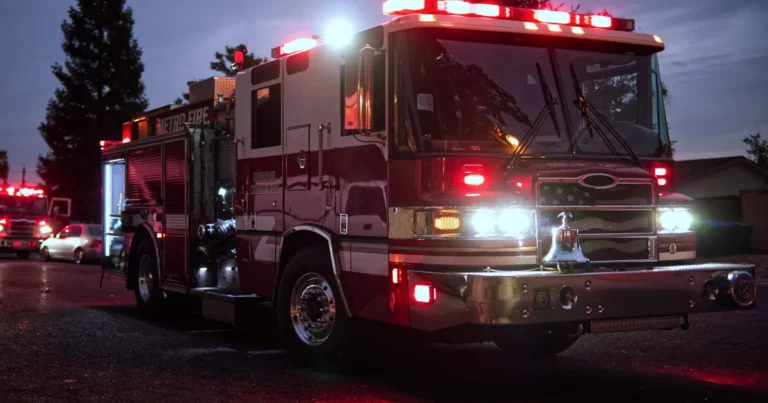
7 Year-Old Girl Dies in Modesto Duplex Fire, Family Devastated
The 7 year-old girl dies in Modesto duplex fire tragedy has left a California community reeling after flames tore through…
By – Rachel Moore
Namibia Blocks Elon Musk’s Starlink in Licensing Setback
In a move that underscores the collision between global ambition and local policy, Namibia blocks Elon Musk’s Starlink, denying the…
By – Rachel Moore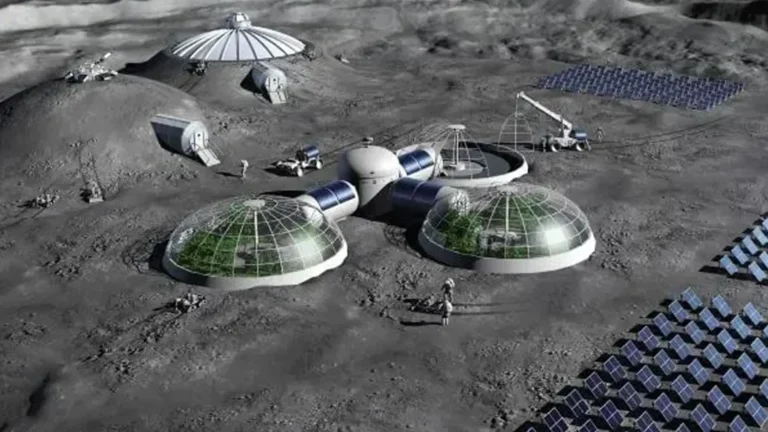
NASA Plan for Moon Base Shifts Course in $20 Billion Lunar Pivot
In a dramatic strategic overhaul, the NASA plan for moon base is taking center stage as the agency abandons its…
By – Rachel Moore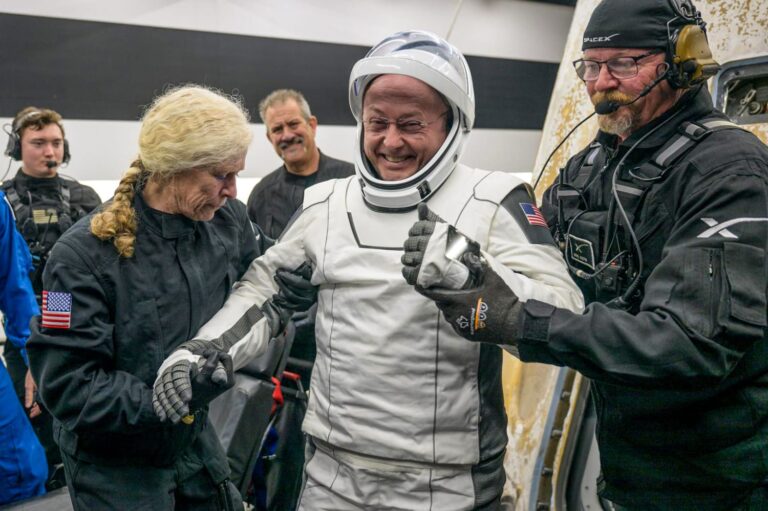
Mike Fincke Space Medical Incident Stuns NASA as Mystery Illness Strikes in Orbit
A routine evening aboard the International Space Station turned into a moment of high-stakes uncertainty when the Mike Fincke space…
By – Rihem Akkouche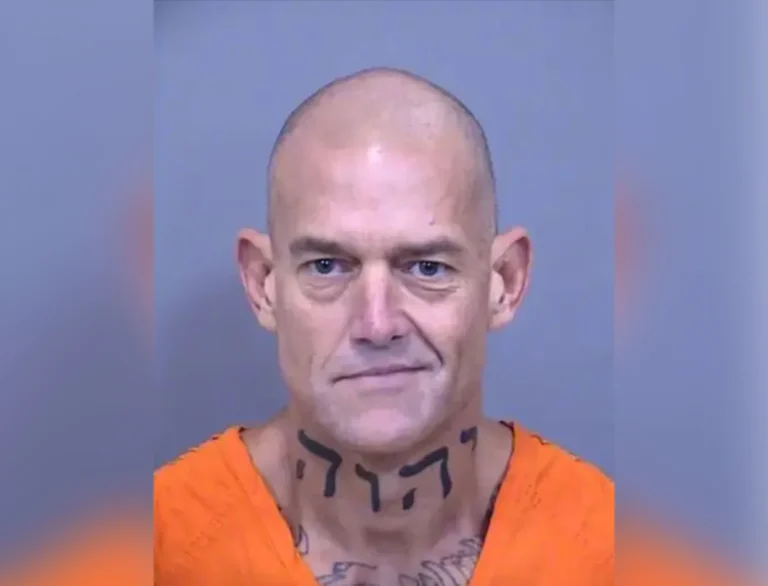
Arizona Man Accused of Crucifying Pastor Pushes Judge For A Quick Death Sentence
By Samuel A. Lopez | USA Herald – An Arizona courtroom is now the center of a deeply disturbing case…
By – Samuel Lopez
Trump’s Laser Talk Sparks New Questions About America’s Secret Arsenal
President Donald Trump has once again done what he often does best in moments of war and tension: he dropped…
By – Samuel Lopez
The Northern Lights Return
The Northern Lights have a chance to be visible from several northern U.S. states on Tuesday night, forecasters at the…
By – Jackie Allen
February Unemployment Up as Job Losses Surprise Economists
February Unemployment Up as the latest labor market data revealed weaker-than-expected job growth and a slight increase in the national…
By – Jackie Allen
Late-Night Attack by Venezuelan National at Florida Beach
A Late-night attack by a Venezuelan National has left a Florida community shaken after authorities say a 26-year-old man ambushed…
By – Jackie Allen
When Speculation Turns Inward – How Alien Narratives Could Reshape Trust In Everyday Life
WHAT MATTERS NOW There is a line between curiosity and destabilization. Recent statements circulating in political and online spaces have…
By – Samuel Lopez
Lawmakers Fuel New Disclosure Speculation As Alien Claims Surface In Political Circles
WHAT MATTERS NOW A fresh wave of disclosure speculation is building after explosive remarks attributed to an Australian senator suggested…
By – Samuel Lopez
China Steps Into Iran Conflict as Potential Peacemaker Amid Rising Oil Prices
As the conflict in the Middle East enters its second month, disrupting global energy markets and pushing oil prices higher,…
By – Tyler BrooksINSIDE THIS REPORT A Los Angeles judge has rejected an attempt by Kim Kardashian and Kris Jenner to shield a…
By – Samuel Lopez
Crowds Gather on Florida’s Space Coast as Artemis II Launch Nears
“People going up to the Moon is kind of cool,” eight-year-old Isiah says. He is one of an estimated 400,000…
By – Tyler Brooks
Oracle Announces Major Layoffs Amid Expanding AI Investments
Oracle carried out what employees described as “significant” job cuts on Tuesday, as the technology company continues to ramp up…
By – Tyler Brooks
Health Insurers 19% Claims Refusal Raises Alarm Across ACA Marketplace
A new analysis reveals a striking reality: health insurers 19% claims refusal has become a defining feature of coverage on…
By – Rachel Moore
Hospitals Threatened by Medicaid Cuts Face Growing Crisis Nationwide
A sweeping new analysis warns that hospitals threatened by Medicaid cuts are edging toward a breaking point, with hundreds of…
By – Rachel Moore
Isometric Workouts Gain Attention as Time-Efficient Path to Better Health
For many people, fitness conjures images of long hours spent running on treadmills, powering through burpees or lifting heavy weights.…
By – Tyler Brooks
How Much Screen Time Is Safe for Kids Under Five?
New government guidance recommends that children under five should spend no more than one hour a day on screens, while…
By – Tyler Brooks
New Therapies Offer Hope for Lasting Relief From Hay Fever
A new generation of treatments is renewing hopes that seasonal allergies could one day be controlled at their source, rather…
By – Tyler Brooks
Five Practical Ways Parents Can Curb Kids’ Endless Scrolling
A recent U.S. court decision finding that Meta and Google deliberately engineered addictive social media platforms has resonated with many…
By – Tyler Brooks
Italy Misses Third Consecutive World Cup After Shootout Loss to Bosnia-Herzegovina
Italy, four-time World Cup champions, will not feature at this year’s tournament after a heartbreaking penalty shootout defeat to Bosnia-Herzegovina,…
By – Tyler Brooks
Men’s March Madness Elite 8 Delivers High-Stakes Drama as Title Race Tightens
The madness is reaching its boiling point. The Men’s March Madness Elite 8 has arrived, trimming the 2026 NCAA Tournament…
By – Rihem Akkouche
The World Cup Security Reckoning: Trump Warns Iran Soccer Team About Safety As War Tensions Spill Into Global Sports
By Samuel A. Lopez | USA Herald – A short Truth-Social post from President Donald Trump on Thursday morning is now…
By – Samuel Lopez
Late-Night Attack by Venezuelan National at Florida Beach
A Late-night attack by a Venezuelan National has left a Florida community shaken after authorities say a 26-year-old man ambushed…
By – Jackie Allen
Trump’s War in Iran: Congress Confronts Escalation After U.S. Strikes
Trump’s War in Iran was triggered open conflict, casualties, and renewed constitutional debate in Washington. The crisis intensified following reports…
By – Jackie Allen
Cadillac Names Inaugural Formula 1 Car MAC-26 in Tribute to Mario Andretti Ahead of 2026 Australian Grand Prix Debut
Cadillac has officially revealed the name of its first Formula 1 challenger, confirming that its 2026 car will be called…
By – Ahmed BoughallebNo posts found.
No posts found.
 No comments yet. Be the first to comment!
