

Trump Opens Saudi Path to Uranium Enrichment
Breaking News ı By Michallie Harrison
0 Comments
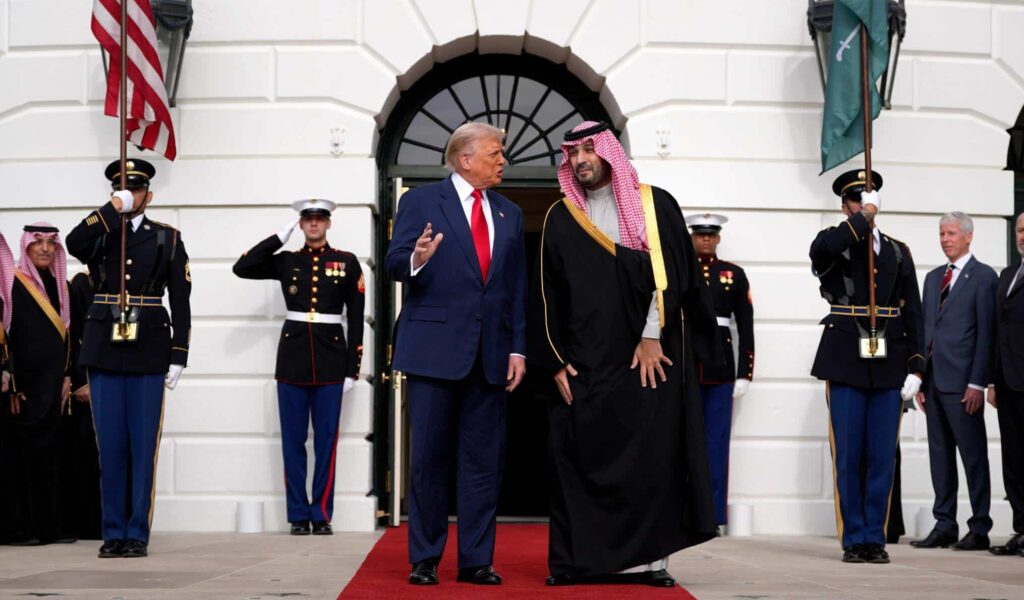
The Trump administration has signed a nuclear cooperation agreement that could open a path to Saudi uranium enrichment, even as the United States continues demanding that Iran surrender its enriched material and abandon enrichment altogether.
Energy Secretary Chris Wright and Saudi Energy Minister Prince Abdulaziz bin Salman signed the 30-year nuclear cooperation agreement Wednesday alongside a separate bilateral safeguards pact. The 30-year arrangement creates the legal framework for American companies to build and support a civilian nuclear-energy program in Saudi Arabia.
The agreement does not immediately give Saudi Arabia an operating enrichment plant. However, it omits the categorical ban on domestic enrichment that the United States required in its landmark nuclear agreement with the United Arab Emirates.
That omission gives Saudi Arabia something Iran has been told it cannot have: a potential future route to producing nuclear fuel on its own soil.
Saudi Uranium Enrichment Is Now on the Table
The agreement is known as a Section 123 agreement, named for the part of the Atomic Energy Act that governs major transfers of American nuclear materials, equipment and technology to foreign countries.
Such agreements do not approve every reactor, fuel shipment or technical transfer in advance. They establish the legal foundation that allows those projects to move forward under later approvals and oversight.
In the Saudi agreement, that foundation could eventually include a domestic enrichment facility. The current framework reportedly calls for a joint U.S.-Saudi study to determine whether enrichment inside the kingdom is necessary for its civilian program.
Should the study support that step, one unresolved question is whether the facility would operate under a restricted “black box” model controlled by American personnel. Such an arrangement could provide Saudi Arabia with reactor fuel while limiting Saudi access to the most sensitive enrichment technology.
The details matter because Saudi uranium enrichment is not yet a completed project or an unconditional authorization. It is a possibility the administration deliberately chose not to prohibit.
That distinction may satisfy supporters of the agreement. It is unlikely to satisfy lawmakers and nonproliferation experts who believe the safest enrichment facility in Saudi Arabia is no facility at all.
The Agreement Rejects the UAE Gold Standard
When the United States signed a nuclear cooperation agreement with the United Arab Emirates in 2009, Abu Dhabi agreed not to enrich uranium or reprocess spent nuclear fuel domestically. That pledge became known as the nuclear “Gold Standard.”
Instead of producing its own reactor fuel, the UAE agreed to purchase enriched uranium from outside suppliers. It also accepted more intrusive international oversight intended to reassure neighboring countries that its civilian program could not quietly shift toward weapons production.
Saudi Arabia refused to accept the same restrictions.
The new Saudi agreement does not contain the UAE-style prohibition on enrichment or reprocessing. It also omits the International Atomic Energy Agency’s Additional Protocol, which gives inspectors expanded access and more tools to identify undeclared nuclear activities.
The administration says its separate bilateral safeguards agreement will provide additional verification for sensitive activities. Until the full terms become public, Congress and outside experts cannot independently determine how those protections compare with the standardized international framework Saudi Arabia declined to adopt.
Trump Demands a Different Standard From Iran
The timing makes the Saudi agreement especially difficult to separate from the war with Iran.
Trump has repeatedly argued that Iran cannot be allowed to maintain an enrichment program that could move the country closer to a nuclear weapon. His administration demanded that Tehran give up enrichment and remove or surrender highly enriched uranium produced before and during the conflict. USA Herald previously reported that Trump and Israeli officials wanted Iran’s enrichment sites dismantled and its enriched-uranium stockpile “taken out.”
The White House has presented preventing an Iranian nuclear weapon as a central justification for military action, sanctions and continued pressure on Tehran. In June, the administration promoted an interim agreement by asserting that Iran would never possess a nuclear weapon or enriched uranium under Trump’s terms.
Iran and Saudi Arabia are not identical cases. Iran enriched uranium to as much as 60 percent purity, far beyond the level generally required for civilian power reactors and approaching weapons-grade levels.
Saudi Arabia does not currently operate a comparable enrichment program. Any future facility contemplated through the U.S. agreement would initially be presented as a source of low-enriched fuel for civilian reactors, with American participation and safeguards.
Those differences are real, but they do not erase the central contradiction. Washington is arguing that enrichment presents an unacceptable strategic risk in Iran while treating Saudi uranium enrichment as a manageable commercial and diplomatic opportunity.
Saudi Arabia Has Already Raised the Weapons Question
Concerns about the agreement are not based only on the technical ability to enrich uranium. Saudi Crown Prince Mohammed bin Salman has publicly connected the kingdom’s nuclear decisions to Iran’s.
In a 2023 interview, the crown prince said Saudi Arabia would pursue a nuclear weapon if Iran obtained one. The remark was framed as regional deterrence, but it established that Riyadh’s nuclear planning cannot be viewed solely through the lens of electricity generation.
Uranium enrichment is a dual-use technology. The same basic process that creates low-enriched fuel for a power reactor can be expanded or reconfigured to produce material suitable for a weapon.
A civilian program does not automatically become a weapons program. The risk comes from creating the expertise, infrastructure and fuel-cycle capabilities that could shorten the time needed to make that transition during a future crisis.
Once a country possesses enrichment technology, later leaders can alter policies, restrict inspectors or withdraw from previous commitments. Nonproliferation agreements are therefore designed around what a state could do with the technology, not only what its current government promises to do.
The Administration Sees a Commercial Prize
The Trump administration argues that the agreement will keep Saudi Arabia’s nuclear program aligned with the United States rather than Russia or China.
Saudi Arabia wants nuclear power to reduce the oil and natural gas it burns for domestic electricity, water desalination and air conditioning. Using reactors at home could leave more Saudi oil available for export.
The agreement could also place American companies in a strong position to win contracts for Saudi nuclear facilities, while giving Washington greater visibility into the kingdom’s program. China, Russia, South Korea and France remain potential alternatives if U.S. cooperation fails.
Administration supporters contend that refusing Saudi demands would not stop the kingdom from pursuing nuclear power. Riyadh could instead turn to China, Russia, South Korea or France, potentially leaving Washington with less influence over the program and fewer opportunities to impose safeguards.
That argument presents the agreement as a choice between an American-guided Saudi program and one built by a strategic competitor. Critics reject the premise that the United States must accept Saudi uranium enrichment to remain commercially relevant.
Safeguards Will Determine the Actual Risk
The administration describes the bilateral safeguards agreement as a central protection against diversion of nuclear material. Officials say the arrangement will supplement Saudi Arabia’s existing commitments and provide verification for the most sensitive parts of the program.
However, the safeguards text has not been fully released to the public. It remains unclear what access American or international inspectors would receive, how undeclared facilities would be detected and what penalties would follow if Saudi Arabia violated the agreement.
The absence of the IAEA Additional Protocol is particularly important. The IAEA Additional Protocol provides broader access to nuclear information and physical locations, giving inspectors more tools to investigate possible activity beyond facilities a government has formally declared.
A bilateral system may impose meaningful controls, but it also places more responsibility on the political relationship between Washington and Riyadh. A future administration could face pressure to overlook violations to preserve arms sales, oil cooperation or regional security agreements.
The strongest safeguards are designed to function even when political leaders would prefer not to enforce them.
Congress Will Review the Saudi Agreement
The administration submitted the agreement to Congress on Wednesday, beginning a formal review period lasting 90 days of continuous congressional sessions.
Lawmakers can attempt to block the pact through a joint resolution. However, overriding a presidential veto would likely require a two-thirds majority in both the House and Senate, making the agreement difficult to stop without broad bipartisan opposition.
Congress will need to decide whether the bilateral safeguards are strong enough to justify abandoning the UAE model. Members should also demand the full enrichment study process, inspection provisions and conditions governing any future transfer of sensitive technology.
The review should not become a simple referendum on whether Saudi Arabia is an American ally. Nuclear agreements are written to outlast individual presidents, crown princes and diplomatic partnerships.
A 30-year agreement must account for what the technology could enable long after the officials signing it have left office.
The Deal Could Reshape the Middle East
Allowing one Arab state to develop domestic enrichment could encourage others to seek the same capability. Turkey, Egypt and the UAE may question why Saudi Arabia received terms unavailable to them.
Israel is also likely to examine the arrangement through the region’s long-term balance of power. Although Israel and Saudi Arabia share concerns about Iran, an independent Saudi fuel cycle could create a new strategic uncertainty.
The danger is not necessarily that Saudi Arabia will build a weapon tomorrow. It is that several regional powers may begin seeking the infrastructure needed to produce one quickly if the security environment deteriorates.
That is how a civilian nuclear competition can become a threshold arms race. Countries remain formally non-nuclear while steadily acquiring the materials, facilities and expertise needed to cross the line.
Saudi Uranium Enrichment Tests Trump’s Logic
The Trump administration can argue that Saudi Arabia is an ally, that American firms will control sensitive technology and that bilateral safeguards will prevent misuse. It can also correctly point out that a monitored civilian facility is not the same as Iran’s advanced enrichment program.
But the administration cannot pretend the underlying technology carries a completely different risk depending on which government possesses it.
Trump has treated Iranian enrichment as a threat serious enough to justify military action and demands for total surrender. His administration is now opening a possible path to Saudi uranium enrichment because the kingdom is a strategic partner and a lucrative customer.
That may be a calculated distinction, but it is still a double standard.
The agreement’s ultimate danger will depend on terms the public has not yet seen, safeguards that have not yet been tested and an enrichment facility that may never be built. Congress must evaluate those uncertainties before the United States helps establish another nuclear fuel cycle in the most volatile region in the world.
The question is not whether Saudi Arabia wants peaceful nuclear power. The question is why peaceful nuclear power requires a technology Washington insists is too dangerous for its regional rival to possess.

Discussion
No comments yet. Be the first to join the discussion!
FOLLOW US

Recent Posts

Austin ICE Shooting Raises Questions Over Care in Custody

Gilbert Goons Defendant Arrested Again for Alleged Drag Racing While…

Egyptian Archeologists Discover Rare Rock-Cut Tombs and Roman Camp in…

TikTok to Pay $400 Million to Settle Justice Department Child…

Caleb Williams Injury Ends Bears QB’s Day in Rain-Soaked Loss

Trump Announces AI Force as Debate Over Artificial Intelligence Safety…

Elon Musk $1M McLaren Totaling Reveals Costly Gaps Even Billionaires…
Don’t Miss It
California Home Insurance Crisis Creeps Into Suburbs Once Thought Safe
By – Tyler BrooksNew Jersey Restaurant Crash Kills One, Injures Seven During Brunch Rush
By – Tyler BrooksGeorgetown Hunting Incident Turns Fatal After Mistaken Shot in Open Field
By – Tyler BrooksSaquon Barkley Injury Sidelines Eagles Star After Brutal First Carry
By – Tyler BrooksMeta Connect 2026: AI Glasses, Mixed Reality Headset and Meta AI Expected at Zuckerberg Keynote
By – Jackie AllenStrait of Hormuz Oil Shipments Reach Six-Month High as U.S.-Iran War Continues
By – Jackie AllenKelsey Mitchell Breaks WNBA Scoring Record as Caitlin Clark Helps Power Fever Offense
By – Jackie AllenTrump’s Press Ban Puts His Ego Above Your Rights
By – Michallie Harrison
Charged with Murder: Ohio Father Indicted…
An Ohio father has been charged with murder in connection…
By – Jackie Allen
Iranian Government Holds Rally as War…
The Iranian Government organized its allegedly largest rally since the…
By – Jackie Allen
Texas Shuts Down Houston-Area ‘Birth Tourism’…
Key Takeaways Texas Attorney General Ken Paxton announced that De’Ai…
By – Samuel Lopez
Acquitted Michigan Brothers Sue FBI Agents…
Factual Background Michael and William Null, acquitted in 2023 of…
By – Samuel Lopez
Businesses Face Rising ADA Lawsuits Over…
Key Takeaways Website-accessibility litigation is surging, with 432 new digital…
By – Samuel Lopez
Maurene Comey Wants Her Job Back…
Key Takeaways Maurene Comey is challenging DOJ’s argument that Assistant…
By – Samuel Lopez
Maurene Comey Wants Her Job Back…
Key Takeaways Maurene Comey is challenging DOJ’s argument that Assistant…
By – Samuel Lopez
Agreement Entered Into With Denmark And…
Key Takeaways The Trump administration announced a new Greenland agreement…
By – Samuel Lopez
DC Productions Narrow as HBO Chief…
DC Productions are entering a more selective phase, according to…
By – Jackie Allen
Princess Diana Wanted to End Engagement…
Princess Diana wanted to call off her engagement to then-Prince…
By – Jackie Allen
Pentagon Drops 6th Tranche of UAP…
Key Takeaways Among the most extraordinary documents in the Pentagon’s…
By – Samuel Lopez
Pentagon Recognized Religions List Sparks Debate…
A revised Pentagon list of recognized religions in the U.S.…
By – Jackie Allen
Pentagon Recognized Religions List Sparks Debate…
A revised Pentagon list of recognized religions in the U.S.…
By – Jackie Allen
Uber Ordered to Pay $40 Million…
Uber has been ordered to pay $40 million to the…
By – Jackie Allen
DEA Investigation Into Hayden Panettiere Death…
A DEA Investigation into the death of actress Hayden Panettiere…
By – Jackie Allen
Tyler Perry Plans Puerto Rico Move…
Key Takeaways Tyler Perry says he plans to move to…
By – Samuel Lopez
Blueface Livestream Drama Raises Family Court…
Key Takeaways Repeated livestreams involving Blueface and Nevaeh Akira have…
By – Samuel Lopez
Pentagon Admits Space Weapons Are Already…
Key Takeaways The U.S. has confirmed for the first time…
By – Samuel Lopez
Diddy’s Lawyers Seek To Exit $100…
Key Takeaways Attorneys representing Sean “Diddy” Combs have asked a…
By – Samuel Lopez
Nicki Minaj Fights Personal Liability In…
NEW YORK — Nicki Minaj is fighting to remove herself…
By – Samuel Lopez
Cher Wins Procedural Victory As Conservatorship…
Key Takeaways Cher secured a procedural victory in her renewed…
By – Samuel Lopez
Class-Action Lawsuit Claims Meta AI Glasses…
By Samuel López | USA Herald SAN FRANCISCO – A growing…
By – Samuel Lopez
Dua Lipa’s $15 Million Lawsuit Against…
By Samuel López | USA Herald CALIFORNIA – Pop superstar…
By – Samuel Lopez
Starbucks Settles Florida DEI Lawsuit For…
Key Takeaways Starbucks has settled Florida’s lawsuit challenging the company’s…
By – Samuel Lopez
Starbucks Settles Florida DEI Lawsuit For…
Key Takeaways Starbucks has settled Florida’s lawsuit challenging the company’s…
By – Samuel Lopez
New Balance Sues Decathlon Over Kiprun…
Key Takeaways New Balance claims Decathlon’s mirrored Kiprun “K” logo…
By – Samuel Lopez
OpenAI $1.2T Valuation Talk Headlines Week…
Numbers this large tend to blur into abstraction — until…
By – Tyler Brooks
Fed Rate Hike Adds to Americans’…
WASHINGTON — A Fed rate hike is adding to Americans’…
By – Michallie Harrison
AI Safety Debate Turns to Synthetic…
Key Takeaways OpenAI’s Hugging Face breach has intensified questions over…
By – Samuel Lopez
America’s Golden Dome Pushes U.S. Missile…
Key Facts The Space Force is developing low-Earth-orbit interceptors intended…
By – Samuel Lopez
Massachusetts AG Joins 21-State Coalition Suing…
Key Takeaways Massachusetts Attorney General Andrea Campbell has joined attorneys…
By – Samuel Lopez
TMZ Ties Itself to the Hayden…
Key Takeaways TMZ is reporting that law enforcement sources believe…
By – Samuel Lopez
Bayer’s $7.25 Billion Roundup Settlement Faces…
Key Takeaways Bayer’s Monsanto unit will ask a Missouri judge…
By – Samuel Lopez
Tylenol Maker and Pharmacy Chains Ask…
By Samuel López | USA Herald Tylenol maker Kenvue and…
By – Samuel Lopez
Lawyers Are Getting Burned by AI…
Key Takeaways Courts across the country have been sanctioning lawyers…
By – Samuel Lopez
41% of Lawyers Say Legal Careers…
Key Takeaways More than 41% of surveyed lawyers say the…
By – Samuel Lopez
Sydney Sweeney and Scooter Braun Celebrate…
Sydney Sweeney celebrated her 29th birthday with a public declaration…
By – Jackie Allen
Serena Williams’ Daughters Make History as…
Serena Williams has built one of the most decorated careers…
By – Jackie Allen
KJ Biermann Faces Seven Felony Charges…
KJ Biermann, the 15-year-old son of “Real Housewives of Atlanta”…
By – Jackie Allen
Team USA Reaches Women’s Basketball World…
BERLIN — Team USA advanced to the FIBA Women’s Basketball…
By – Jackie Allen
Bears and RB Swift $33.75M Extension…
Sometimes the best deals get done before the clock even…
By – Tyler Brooks
Skywatchers: Moonshadow Creates Dramatic Blood Moon…
A Moonshadow transformed the night sky Aug. 27 as the…
By – Jackie AllenNo posts found.
No posts found.


Join the Discussion
Share your thoughts, ask questions, and engage with
other readers. Sign in or create a free account to
comment.