

Toy Story 5 Shatters Box Office Records With $300 Million Opening Weekend: Is Disney Finally Back?
Business ı By Tyler Brooks
0 Comments
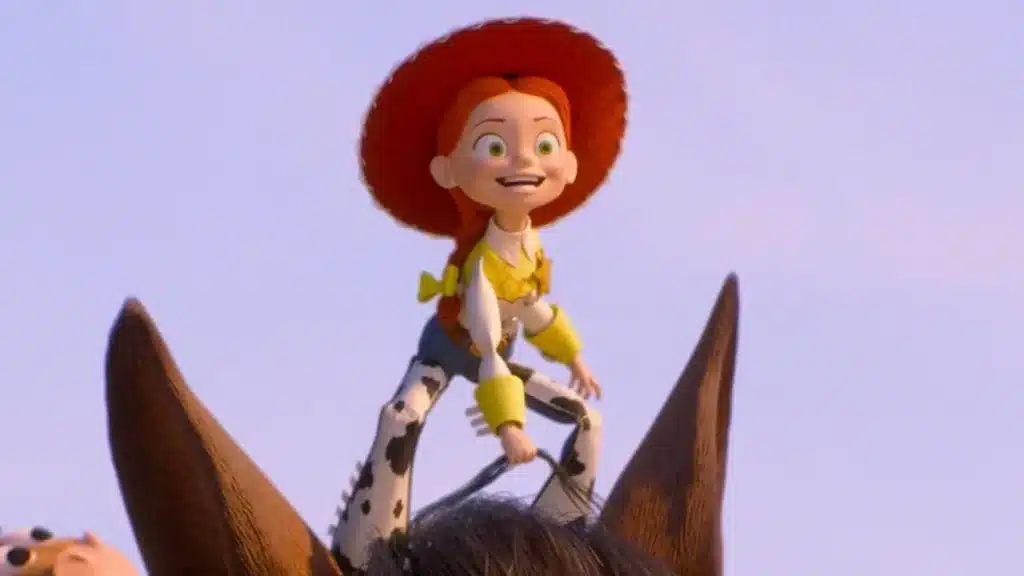
When the lights dimmed and the familiar Pixar lamp bounced across the screen on June 19, 2025, audiences around the world leaned forward with a mix of nostalgia and anticipation. Toy Story 5 had arrived. And if its opening weekend numbers are anything to go by, Woody, Buzz, and Jessie have never been more relevant, more beloved, or more profitable.
The fifth installment of Disney and Pixar's iconic animated franchise has pulled off something remarkable: scoring the best opening weekend in Toy Story history, raking in over $300 million globally in just its first few days in theaters. For a franchise that has been entertaining families for three decades, that is not just a milestone. It is a statement.
A $300 Million Opening: Breaking Down the Numbers
Let's put those numbers into perspective. Toy Story 5 earned over $160 million in North America alone during its opening weekend, with an additional $150 million-plus coming from international markets. That global combined total of more than $300 million officially makes it the strongest debut the franchise has ever seen.
For context, the film comes with an estimated production budget of around $250 million. In Hollywood, the general rule of thumb is that a film needs to earn at least twice its production budget just to break even, once you factor in marketing costs, distribution fees, and other overhead expenses. That means Toy Story 5 needs to hit somewhere in the neighborhood of $500 million worldwide before it truly begins turning a profit for Disney.
But based on the trajectory of this opening weekend, and the franchise's extraordinary history of sustained box office performance, that number looks very achievable. The bigger question being asked in Hollywood boardrooms right now is not whether Toy Story 5 will be profitable. It is whether it can crack the elusive $1 billion mark.
What Is Toy Story 5 Actually About?
The story picks up with the beloved gang of toys, including Woody the cowboy, Buzz Lightyear the space ranger, and Jessie the cowgirl, facing what may be their toughest challenge yet. This time, the threat is not a greedy toy collector or a daycare center with a traumatized bear running the show. The villain, in a very 21st-century twist, is a tablet computer.
It is a clever and timely premise. In a world where children increasingly spend their time swiping through apps rather than playing with physical toys, the existential crisis facing our plastic heroes feels genuinely poignant. The fifth film appears to be leaning into themes of obsolescence, relevance, and the question of what it means to be loved in a digital age.
Pixar has always had a knack for wrapping profound emotional themes inside colorful animated adventures, and early buzz from critics and audiences suggests Toy Story 5 continues that tradition admirably.
The Second Biggest Opening Weekend of 2025
Toy Story 5 did not have the biggest opening weekend of 2025. That honor currently belongs to The Super Mario Galaxy Movie, which stormed into theaters earlier this year and has already crossed the $1 billion mark globally, making it the highest-grossing film of the year so far.
But coming in as the second-biggest opening weekend of 2025 is no small feat, especially given how competitive the current theatrical landscape has become. The fact that an animated Pixar film is sitting comfortably in that elite company says a great deal about the enduring power of the Toy Story brand.
Disney and Pixar's Rocky Road to This Moment
To fully appreciate what this opening weekend means, you need to understand the context. Disney and Pixar have had a genuinely turbulent few years at the box office. Several high-profile releases failed to connect with audiences the way the studio's golden-era classics once did.
Elio, Pixar's alien adventure film, was a notable disappointment, struggling to find its footing both critically and commercially. Lightyear, the Toy Story spin-off that reimagined Buzz Lightyear as a live-action-style sci-fi epic, puzzled audiences and underperformed significantly at the box office.
Even outside of Pixar, Disney's broader theatrical slate has had its struggles. The Mandalorian and Grogu, the big-budget Star Wars theatrical spin-off featuring fan-favorite characters from the Disney+ series, has so far failed to double its $165 million production budget. For a franchise with the cultural weight of Star Wars, that is a sobering result.
These stumbles have fueled ongoing conversations about whether Disney has lost its magic touch, whether audiences are suffering from superhero and franchise fatigue, and whether the studio's aggressive push into streaming via Disney+ has cannibalized its own theatrical audience.
The Bigger Picture: Hollywood's Post-Pandemic Box Office Struggle
Disney and Pixar's recent challenges do not exist in a vacuum. The entire film industry has been grappling with a fundamental shift in audience behavior since the COVID-19 pandemic.
Overall global box office revenues have declined compared to pre-pandemic peaks. Studios across the board have struggled to consistently draw audiences back into theaters when so much content is available at home through streaming services like Netflix, Disney+, HBO Max, and others.
Big-budget blockbusters, which were once essentially guaranteed money-makers due to their spectacle value, have been among the hardest hit. Films with nine-figure production budgets are now regularly underperforming, and the risk calculus for studios has shifted dramatically.
In this environment, a $300 million-plus opening weekend is not just good news for Toy Story 5. It is genuinely encouraging news for the entire theatrical exhibition business. It proves that when the right film comes along, people will still show up in massive numbers to watch it together on a big screen.
Three Decades of Woody and Buzz: The Legacy of Toy Story
To understand why this franchise still commands such enormous audience loyalty, you need to go back to 1995. The original Toy Story was not just a good animated film. It was a revolution.
Released in November 1995, Toy Story became the first ever feature-length film to be entirely computer-generated. Pixar, which had been operating as a small animation division backed by Steve Jobs, used the film to prove to the world that CGI could do something hand-drawn animation could not: create a fully immersive, emotionally resonant world with depth, texture, and humor.
The gamble paid off spectacularly. The original Toy Story was a massive critical and commercial hit, and it launched Pixar into the upper tier of Hollywood studios virtually overnight.
The concept was deceptively simple: what if your toys came to life when you were not watching? Andy, a young boy, has a collection of beloved toys led by Woody, a pull-string cowboy doll who is his favorite. When Andy receives a Buzz Lightyear space ranger action figure for his birthday, Woody's position as the top toy is threatened, and a rivalry that soon turns into a friendship forms the heart of the film.
The storytelling was sharp, the animation groundbreaking, and the emotional core genuine. Audiences of all ages connected with themes of jealousy, friendship, identity, and the fear of being replaced.
The Franchise By the Numbers
Since that debut in 1995, the Toy Story franchise has become one of the most successful animated franchises in cinema history. The combined global box office take for the series now exceeds $3 billion, a figure that will climb considerably as Toy Story 5 continues its theatrical run.
The third and fourth installments each crossed the $1 billion mark worldwide. Toy Story 3, released in 2010, was particularly celebrated, earning nearly $1.07 billion globally and winning the Academy Award for Best Animated Feature. It was praised as a rare threequel that not only matched but arguably surpassed its predecessors, delivering an emotionally devastating finale that left audiences of all ages in tears.
Toy Story 4, released in 2019, earned over $1 billion globally as well, though it was met with slightly more mixed reactions from fans who had considered the third film a perfect ending to the story.
Toy Story 5 now enters this legacy with a franchise-record opening weekend. Whether it ultimately joins its predecessors in the billion-dollar club remains to be seen, but the early signs are extremely promising.
Pixar's Billion-Dollar Formula: What Makes a Franchise Last?
Not every Pixar sequel has struck gold. But the ones that have, particularly the Incredibles and Inside Out franchises, share certain qualities with the Toy Story films. They feature characters audiences genuinely love, explore themes that resonate across generations, and deliver emotional journeys that feel meaningful rather than manufactured.
The Incredibles 2 earned over $1.2 billion globally. Inside Out 2 crossed $1.7 billion, making it one of the highest-grossing animated films of all time. Both were sequels released years after their originals, relying on audience nostalgia combined with fresh, relevant storylines.
Toy Story 5 is following that same playbook. By grounding its story in the very real anxieties of a world increasingly dominated by technology, it gives audiences something to chew on beyond pure entertainment.
What a Record Opening Weekend Means for Disney's Future
For Disney as a company, the success of Toy Story 5 carries significance beyond just one film's box office performance. The studio has been under significant pressure from investors, analysts, and fans to demonstrate that its core animation and live-action franchises can still deliver at the theatrical level.
A franchise-record opening weekend sends a powerful message. It shows that audience loyalty to beloved characters and stories is not dead. It shows that Pixar, despite its recent stumbles, still knows how to connect with moviegoers. And it shows that families will still choose the cinema experience when the film is right.
It also bodes well for Disney's upcoming theatrical slate. When one film performs this well, it builds momentum and confidence, both within the studio and among theater chains that depend on big releases to keep audiences coming through the door.
Can Toy Story 5 Hit $1 Billion?
Based on everything we know about the franchise, the answer is a cautious but optimistic yes, it can. The film has the brand recognition, the emotional hook, and clearly the audience enthusiasm to sustain a long theatrical run.
Summer is typically the most lucrative time of year for animated films, as children are out of school and families are actively looking for entertainment. Toy Story 5's June release date positions it perfectly to capitalize on that summer audience.
The key will be how well it holds up in its second and third weekends. Films with massive openings sometimes drop sharply if word-of-mouth is mixed. But if audiences love it, and early reactions suggest they do, Toy Story 5 could be the film that truly signals Disney and Pixar's comeback.
The Bigger Takeaway: People Still Love Going to the Movies
Perhaps the most heartening aspect of Toy Story 5's record-breaking debut is what it says about cinema itself. For all the hand-wringing about the death of theatrical film, about streaming taking over, about audiences simply not showing up anymore, here is proof that the right movie can still cause something genuinely electric to happen.
Three hundred million dollars in a single weekend. Families piling into theaters together. Children experiencing Woody and Buzz for the first time, and parents experiencing them all over again through their children's eyes.
That is what cinema has always been at its best. Not just entertainment, but shared experience. And Toy Story 5, at least for now, has given us one of the best examples of that in years.
The toys are back. And they are bigger than ever.

Discussion
No comments yet. Be the first to join the discussion!
FOLLOW US

Recent Posts







Don’t Miss It

Judge Orders Trump to Sit for…
MIAMI — President Donald Trump must sit for a sworn…
By – Derek Johnson
Pope Leo XIV Needs No Further…
VATICAN CITY — Pope Leo XIV will not require additional…
By – Jackie Allen
Six Women Testify in Russell Brand…
LONDON — Six women have testified in the Russell Brand…
By – Michallie K Harrison
Websites Go Dark as AI Uncovers…
The PHP security crisis has pushed government websites offline and…
By – Michallie K Harrison
El Nino Could Reach Historic Strength,…
GENEVA — El Nino, a powerful climate pattern that warms…
By – Jackie Allen
News Overload Can Fuel Anxiety and…
News keeps people informed about wars, political conflict, public safety…
By – Jackie Allen
Atlanta Rapper Indicted in Alleged $4.6…
ATLANTA — Shawtey Dred, the social media persona of Atlanta…
By – Jackie Allen
Intuitive Surgical $450M Settlement Targets Da…
Intuitive Surgical has agreed to pay $450 million to resolve…
By – Tyler Brooks
Getty Images Files Chapter 11 With…
Getty Images Holdings Inc., the visual content giant behind millions…
By – Tyler Brooks
Meta Stock in Focus as Earnings,…
Meta delivered a powerful revenue performance in its third-quarter earnings…
By – Tyler Brooks
Pantheon $6B Secondaries Fund Marks Firm’s…
Private markets investor Pantheon has secured $6 billion in capital…
By – Rachel Moore
Spartanburg Woman $8K Insurance Fraud Case…
A South Carolina woman is behind bars after investigators accused…
By – Rachel Moore
Musk and Trump Have a Starlink…
Opinion | Starlink restrictions in Ukraine have exposed a problem Elon Musk…
By – Michallie K Harrison
Texas Trans Texts Spark Election Propaganda…
News Analysis | Texas voters began casting early ballots Monday,…
By – Michallie K Harrison
California Ballots: DOJ Cites Charges Against…
WASHINGTON — The Justice Department is citing charges against 28…
By – Michallie K Harrison
Richard Riehle Dies at 78, Leaving…
Richard Riehle, the character actor whose memorable roles included “Office…
By – Michallie K Harrison
Extreme Heat Is Spreading and Lasting…
An extreme heat event lasting 367 days touched nearly 85%…
By – Michallie K Harrison
Information Ecosystem: Five Tools to Detect…
The information ecosystem is increasingly vulnerable to misinformation. There are…
By – Jackie Allen
CBRE £760M Onnec Buy Targets Booming…
Real estate services giant CBRE Group Inc. has agreed to…
By – Rachel Moore
Kohen Wiley Is Dead. Mississippi Owes…
Kohen Wiley was 1 year old when police gunfire killed…
By – Michallie K Harrison
Chubb And GKN Race To Opposite…
What’s Driving the Insurance Battle ACE American, a Chubb unit,…
By – Samuel Lopez
Recently Obtained FOIA Records Reveal AARO…
What the Pentagon Records Now Show AARO arranged a private…
By – Samuel Lopez
Trump Fires Katie Zacharia After Five…
What You Need to Know Zacharia was dismissed after only…
By – Samuel Lopez
Katie Zacharia Says She Is A…
WASHINGTON – President Donald Trump’s new White House press secretary,…
By – Samuel Lopez
TDI Launches Insurance Fraud Task Force…
The Texas Department of Insurance has launched a coordinated push…
By – Rachel Moore
Children’s Mercy Insurance Coverage Changes: Kansas…
Children’s Mercy Hospital in Kansas City will no longer participate…
By – Rachel Moore
BioWare Closing: EA Shuts Down Legendary…
Electronic Arts is reshaping its videogame empire in a sweeping…
By – Rachel Moore
Auto-Owners Insurers Verdict: Jury Awards Warehouse…
A North Carolina federal jury has awarded nearly $2 million…
By – Tyler Brooks
NJ $10M Car Insurance Fine: Geico…
New Jersey insurance regulators have accused Geico of overcharging motorists…
By – Tyler Brooks
Ara Partners $2.5B Energy Fund Reaches…
Ara Partners has secured $2.5 billion in capital commitments for…
By – Tyler Brooks
HealthSplash VP 18 Months Sentencing Rewards…
Cooperation can shave years off a prison term, but it…
By – Tyler Brooks
Daylight Saving Time Returns Nov. 1…
Americans will turn their clocks back one hour on Nov.…
By – Jackie Allen
California Identifies New York Life, Aetna,…
Key Takeaways California’s Department of Insurance maintains an official…
By – Samuel Lopez
Three Children, Teacher Killed in Oregon…
BEND, Ore. — An Oregon school shooting killed three children…
By – Michallie K Harrison
Trump Scraps Hegseth’s Execution Livestream After…
WASHINGTON — President Donald Trump canceled the planned execution livestream…
By – Michallie K Harrison
Pope Leo XIV’s Surgery Exposes Gap…
By Samuel López | USA Herald VATICAN CITY — As…
By – Samuel Lopez
An Airman Died After a Pregame…
By Michallie K. Harrison | Opinion Tech. Sgt. Ian Patterson’s…
By – Michallie K Harrison
NFL Player $300M Hip Surgery Lawsuit…
Athletes bet their bodies on surgeons the way pilots bet…
By – Tyler Brooks
Russian Drone Strikes Hit American Businesses…
Russian drone strikes against American-linked businesses in Ukraine are raising…
By – Jackie Allen
AP Poll Top 25: Georgia Claims…
Georgia has reclaimed the top spot in the AP Poll…
By – Rachel Moore
A.J. Armstrong: Former NFL Player’s Son…
HOUSTON — Antonio “A.J.” Armstrong Jr., the son of former…
By – Jackie Allen
NFL Pro Tyreek Hill Takes the…
What the Jury Is Hearing Lakeeta “Keeta” Vaccaro Hill testified…
By – Samuel LopezNo posts found.
No posts found.


Join the Discussion
Share your thoughts, ask questions, and engage with
other readers. Sign in or create a free account to
comment.