

JPMorgan Executive Fires Back: She’s Countersuing Her Accuser — But Legal Experts Say It Could Backfire Spectacularly
America ı By Samuel Lopez
0 Comments
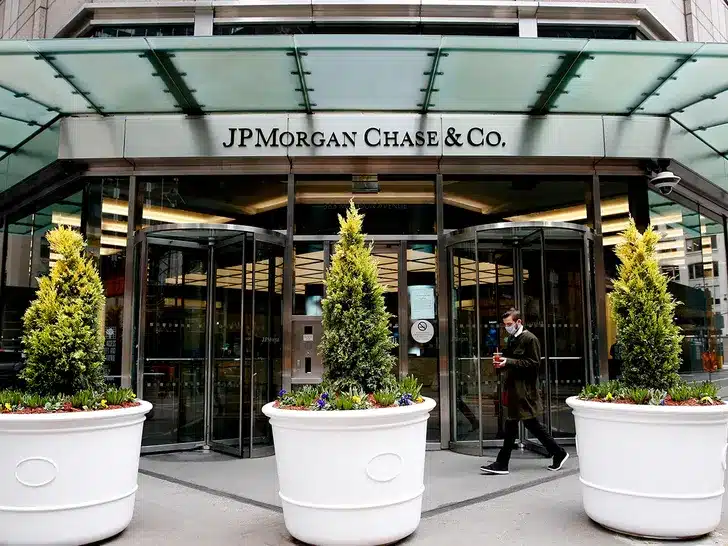
JPMorgan exec Lorna Hajdini fires back in court, claiming fabricated allegations destroyed her life. But her legal gambit may be doing exactly that.
By Samuel López | USA Herald
She says her life has become a "living nightmare."
Lorna Hajdini — the JPMorgan Chase executive who found herself at the center of one of the most explosive workplace harassment lawsuits to hit Wall Street in years — is fighting back. Hard. Her attorneys have filed a countersuit that claims the original allegations against her were not just false but deliberately engineered to "inflict maximum pain" and torch her career.
And if you thought the first lawsuit was graphic? You haven't read the new court filings.
The Counterattack: What Hajdini's Lawyers Are Saying
Hajdini's legal team has submitted evidence — including a deeply disturbing anonymous email — in support of her claims that she has been subjected to a campaign of online terror since her name went viral. In one exhibit now part of the public court record, an anonymous sender allegedly told Hajdini they hoped she would be "gang raped," urged her to commit self-harm, and wished painful deaths on her family.
Read that again. That is now a formal exhibit in a federal lawsuit.
Her legal team argues she has been pelted with rape threats, graphic sexual messages, viral memes mocking her, and — in a particularly modern form of cruelty — AI-generated sexual content targeting both her and members of her family.
Hajdini's lawyers contend that none of this would have happened without the original lawsuit, which they characterize as a malicious fabrication. The implication is clear: her former subordinate, suing anonymously under the name "John Doe," fired the first shot, and Hajdini is arguing the damage has been catastrophic, personal, and ongoing.
How We Got Here: A Recap
As USA Herald previously reported, John Doe — a former JPMorgan employee — sued Hajdini last month with allegations that read like a document designed for maximum viral spread. He claims she subjected him to coercive sex acts, racial abuse, and systematic workplace harassment, and that she threatened to sabotage his career advancement if he did not satisfy her sexually.
The claims detonated across social media almost immediately. JPMorgan, for its part, has publicly backed Hajdini throughout, stating the company conducted an internal investigation and found no evidence of the alleged misconduct.
But here is the legal and practical reality: JPMorgan's internal investigation does not determine guilt or innocence. That is what courts are for. And those proceedings are still very much underway. John Doe's allegations have not been adjudicated. No judge or jury has evaluated the evidence. No verdict has been rendered. That critical fact matters enormously — both legally and ethically — as Hajdini now advances her countersuit.
USA Herald Legal Analysis: The Strengths and Landmines in Hajdini's Countersuit
This is where the story gets complicated — and potentially dangerous for Hajdini and her legal team.
What the Countersuit Gets Right
The harassment Hajdini describes — if proven — is real, serious, and legally actionable. Threatening letters. Sexually graphic messages. AI-generated abuse targeting her children. These are not abstract damages. They are documented, verifiable, and they paint a picture of a person whose private life has been shredded by a public firestorm.
Her attorneys are also right that placing the threatening emails into the court record forces the public — and any eventual jury — to confront the human cost of weaponized litigation. That is strategically shrewd.
Where It Gets Dangerous: The Countersuit's Critical Weaknesses
Here is the hard truth: Hajdini's countersuit does not currently help her case. It may actively hurt it.
Problem One: She Has No Evidence of Fabrication — Yet
Hajdini flatly declares in her filings that John Doe's allegations were "completely fabricated." That is a powerful claim. It is also, at this stage, an unsubstantiated one. She has not produced — at least in publicly available filings — any evidence proving fabrication. That matters because courts require more than a defendant's insistence that a plaintiff is lying. Saying something loudly is not the same as proving it.
Problem Two: This Countersuit Puts a Megaphone to the Story
There is an old axiom in crisis communications and litigation strategy: never take an action that guarantees another news cycle about the exact story you are trying to escape. The moment Hajdini's attorneys filed this countersuit, every major outlet that covered the original lawsuit had a reason to revisit — in detail — every allegation John Doe made. The graphic details. The sexual claims. The racial abuse allegations. All of it surfaced again, louder than before.
If Hajdini's goal was to quiet the storm, the countersuit appears to have accomplished the opposite.
Problem Three: The Judicial Economy Question
Courts expect litigants to use the legal system efficiently. A countersuit that largely restates the defense position — "the allegations are false, I have suffered reputational harm" — without adding substantial new legal claims or advancing the resolution of the underlying dispute raises fair questions about judicial economy. It extends, rather than resolves, the litigation. And judges notice.
Problem Four: Potential Exposure for Her Legal Team
If it is eventually determined that the countersuit was filed primarily to intimidate or financially burden John Doe — rather than to vindicate a legitimate legal grievance — Hajdini's attorneys could face sanctions under Rule 11 of the Federal Rules of Civil Procedure, which requires that filings have legal merit and are not brought for improper purposes. That is a standard her team must take seriously.
The Legal Shield John Doe Is Almost Certainly Standing Behind
This brings us to one of the most important and underreported dimensions of this entire case: the doctrine of litigation privilege — and it is Hajdini's legal team that should be most concerned about it, not John Doe.
What Is Litigation Privilege?
Also known as the judicial proceedings privilege, litigation privilege is a foundational doctrine in American law that grants absolute immunity from defamation and related tort claims to statements made in the course of judicial and quasi-judicial proceedings.
The doctrine is not new. It traces to English common law, has been embraced by every U.S. jurisdiction, and has been repeatedly upheld by federal and state appellate courts. The policy rationale is straightforward: courts depend on witnesses, parties, and attorneys being able to speak freely and completely. If every allegation in a lawsuit could trigger a defamation counterclaim, the judicial system would grind to a halt. Plaintiffs would be silenced before they ever reached a courtroom.
What this means, practically: John Doe's allegations — however graphic, however damaging, however painful to Hajdini — are, as statements made in a legal filing, protected. She cannot sue him for defamation based solely on what he said in his court documents.
What About Statements Made to Administrative or Investigative Bodies?
The protection extends further. Statements made in formal complaints to administrative oversight bodies — think the EEOC, state labor boards, the CFPB, or internal HR investigations that feed into formal proceedings — are similarly shielded under the quasi-judicial proceedings privilege in most jurisdictions. Courts have consistently held that the chilling effect of defamation liability on complainants using regulatory channels would undermine the entire administrative enforcement framework Congress and state legislatures have built.
If John Doe raised these allegations internally at JPMorgan before filing suit — and JPMorgan conducted a formal investigation in response — those internal disclosures are very likely protected under the same doctrinal umbrella.
The Bigger Picture: What This Case Is Really About
Strip away the headlines, the viral memes, and the AI-generated horrors, and you are left with a case that touches issues at the very heart of American workplace culture:
- Who gets believed when a person in a position of power is accused of abuse by someone they supervise?
- What happens when the accused is a woman and the accuser is a man — does the cultural script get flipped in ways that serve justice, or distort it?
- And perhaps most urgently for employers watching this case: what does JPMorgan's public defense of Hajdini signal to other employees considering filing similar complaints?
When a corporation conducts an internal investigation, finds "no evidence of misconduct," and publicly backs the accused before a court has weighed in — is that justice, or is it institutional self-protection?
Those questions do not yet have answers. The courts will work through them. That is what courts do.
What we know right now is this: Lorna Hajdini is suffering real consequences — the threatening emails in the court record are proof of that, regardless of how the underlying allegations are ultimately resolved. John Doe's claims remain unproven and unrefuted by anything other than the word of the person they name. And a countersuit that was supposed to shift the narrative has, at least for now, done the opposite.
The legal system will eventually produce its answers. Until then, the story remains exactly what it was when the first lawsuit was filed: two competing versions of the truth, a judicial process doing the work it was designed to do, and a watching public that deserves both accurate information and the patience to let the process finish.
Stay Ahead of the Story
For exclusive investigative reporting, breaking legal and national security analysis, and insider-level coverage you won't find anywhere else — subscribe to the USA Herald newsletter.
👉 Follow us on X: https://x.com/RealUSAHerald
This report is based on publicly available court filings, which are a matter of public record under applicable federal and state law. Allegations contained in any lawsuit represent the claims of the filing party and have not been proven or disproven in a court of law. USA Herald reports on matters of public legal record as a matter of legitimate press function and public interest.

Discussion
No comments yet. Be the first to join the discussion!
FOLLOW US

Recent Posts






Don’t Miss It

Order To Limit Ukraine’s Use of…
What Readers Need to Know Zelenskyy answered a question about…
By – Samuel Lopez
Trump Fires Katie Zacharia After Five…
What You Need to Know Zacharia was dismissed after only…
By – Samuel Lopez
HealthSplash VP 18 Months Sentencing Rewards…
Cooperation can shave years off a prison term, but it…
By – Tyler Brooks
Malibu Fire Forces Hundreds to Flee…
Wildfire in Southern California rarely asks permission. The Bryson Fire,…
By – Tyler Brooks
Tesla Flying Car Roadster Leaps, Flips…
Most car launches involve a spinning platform and some dry…
By – Tyler Brooks
Daylight Saving Time Returns Nov. 1…
Americans will turn their clocks back one hour on Nov.…
By – Jackie Allen
Katie Zacharia Says She Is A…
WASHINGTON – President Donald Trump’s new White House press secretary,…
By – Samuel Lopez
Russian Drone Strikes Hit American Businesses…
Russian drone strikes against American-linked businesses in Ukraine are raising…
By – Jackie Allen
California’s New Mojave Steel Mill Brings…
What Matters in Mojave 1. Pacific Steel Group’s Mojave Micro Mill…
By – Samuel Lopez
Ilhan Omar MIA as Husband Flips…
What Readers Need to Know Federal agents seized Rep. Ilhan…
By – Samuel Lopez
Trump May Replace Susie Wiles as…
Susie Wiles, President Donald Trump’s longtime chief of staff and…
By – Jackie Allen
California Identifies New York Life, Aetna,…
Key Takeaways California’s Department of Insurance maintains an official…
By – Samuel Lopez
California Ballots: Trump DOJ Targets 20,000…
WASHINGTON — The Trump administration sued California on Thursday, seeking…
By – Michallie Harrison
Starship Launches: SpaceX Seeks 456 Flights…
WASHINGTON — SpaceX wants permission for up to 456 Starship…
By – Michallie Harrison
Three Children, Teacher Killed in Oregon…
BEND, Ore. — An Oregon school shooting killed three children…
By – Michallie Harrison
iPhone Duo Buyers Face December Wait…
CUPERTINO, Calif. — iPhone Duo buyers faced delivery estimates stretching…
By – Michallie Harrison
Starlink Restrictions Hit Ukraine’s Drones; Musk…
WASHINGTON — Starlink restrictions disrupted Ukrainian drone missions this week,…
By – Michallie Harrison
Trump Scraps Hegseth’s Execution Livestream After…
WASHINGTON — President Donald Trump canceled the planned execution livestream…
By – Michallie Harrison
California Companies Face Massive Historical Records…
Compliance Takeaways California’s new Truth in Disclosure Act requires some…
By – Samuel Lopez
Judge Rejects John Brennan’s Preemptive Bid…
Key Takeaways Former CIA Director John Brennan suffered a…
By – Samuel Lopez
BOP Says Diddy Fight Never Happened…
By Samuel López | USA Herald For days, reports ricocheted…
By – Samuel Lopez
Halle Berry’s Son Can Testify As…
Sidebar A Los Angeles judge has cleared Halle Berry and…
By – Samuel Lopez
Katie Zacharia Says She Passed the…
The Zacharia Credential Fight in Three Lines A law degree…
By – Samuel Lopez
Bukele Plans Conditional Release for Thousands…
By Samuel López | USA Herald EL SALVADOR – President…
By – Samuel Lopez
David Surkamp Rock Singer Passes at…
Some singers fit a genre. Others bend it around their…
By – Rachel Moore
Trump Weighs ‘Mother of All Bombs’…
WASHINGTON — U.S. military planners have developed options to use…
By – Michallie Harrison
Killed by Police Officer? Sandra Birchmore…
The case of Sandra Birchmore, a 23-year-old Massachusetts woman who…
By – Jackie Allen
Katie Zacharia’s Lawyer Claims Trigger Bar…
WASHINGTON — White House press secretary Katie Zacharia faces calls…
By – Michallie Harrison
Massive Cyberattack Targets Refrigerators In Supermarkets…
What Shoppers and U.S. Supermarkets Need to Know Hackers remotely…
By – Samuel Lopez
Texas Sues Gerber and Nestlé Alleging…
What Parents Need to Know Texas alleges Gerber’s own testing…
By – Samuel Lopez
Pope Leo XIV’s Surgery Exposes Gap…
By Samuel López | USA Herald VATICAN CITY — As…
By – Samuel Lopez
Selma Blair Faces Issues After Alleged…
Selma Blair, the actress known for her roles in Cruel…
By – Jackie Allen
Medicare Insurer Sues CMS After Star…
What’s at Stake Alignment’s largest California Medicare Advantage contract fell…
By – Samuel Lopez
Mother of Dead Russian Plague Lab…
What Readers Need to Know Darya Shipilova’s mother says the…
By – Samuel Lopez
Cornell Rape Case Raises a Difficult…
SIDEBAR Major research generally places demonstrably false sexual-assault reports at…
By – Samuel Lopez
Kevin Hart’s 2017 Sex Tape Could…
SIDEBAR Kevin Hart’s former assistant Miesha Shakes has identified both…
By – Samuel Lopez
AP Poll Top 25: Georgia Claims…
Georgia has reclaimed the top spot in the AP Poll…
By – Rachel Moore
A.J. Armstrong: Former NFL Player’s Son…
HOUSTON — Antonio “A.J.” Armstrong Jr., the son of former…
By – Jackie Allen
NFL Pro Tyreek Hill Takes the…
What the Jury Is Hearing Lakeeta “Keeta” Vaccaro Hill testified…
By – Samuel Lopez
Terrell Owens Sued By Nolan Wells’…
What Readers Need to Know Three young men who were…
By – Samuel Lopez
California Sends Cease and Desist Letter…
What Matters in This Fight California regulators have reportedly ordered…
By – Samuel Lopez
Costco Faces $5 Million Sugar-Free Lawsuit…
By Samuel López | USA Herald Costco Wholesale Corporation is…
By – Samuel LopezNo posts found.
No posts found.


Join the Discussion
Share your thoughts, ask questions, and engage with
other readers. Sign in or create a free account to
comment.