

‘It Fails or It Blows Up’: The Chemical Time Bomb Inside GKN Aerospace’s Garden Grove Facility — And the Legal Firestorm That Follows
America ı By Samuel Lopez
0 Comments

By Samuel López | USA Herald Published: May 23, 2026
Forty thousand people don't just leave their homes on a Friday night without a reason. They grab medications. They stuff photo albums into backpacks. They carry sleeping children past police barricades in the dark, not knowing when—or whether—they'll be allowed to return.
That's exactly what happened across Garden Grove, Anaheim, Buena Park, Cypress, Stanton, and Westminster when a single malfunctioning valve at a California aerospace plant triggered one of the largest hazardous-materials evacuations in Orange County history.
The company at the center of it all: GKN Aerospace — a British-owned global titan that manufactures airframe structures, engine systems, and landing gear for some of the world's most advanced military and commercial aircraft. A company built on precision engineering, extraordinary safety standards, and the ruthless demands of aerospace compliance.
Until now, few people in Southern California had ever heard of them.
They've heard of them now.
What's in the Tank — and Why It's So Dangerous
The chemical sitting inside the troubled tank at GKN Aerospace's Garden Grove facility at 12122 Western Avenue isn't obscure. But in the wrong conditions — the exact conditions authorities are now confronting — it becomes something that keeps chemical engineers awake at night.
The substance is methyl methacrylate, commonly known as MMA. It's a colorless, volatile, flammable liquid used in the manufacture of resins and plastics, including components in the aerospace industry. Under normal storage conditions, it's kept stable by a small amount of chemical inhibitor that works only in the presence of dissolved oxygen. That's the key: when heat consumes the oxygen and depletes the inhibitor, a chain reaction begins — and once it starts, it cannot be stopped.
The chemical has a flash point of just 2°C (36°F), making it extraordinarily ignitable. Its explosive concentration range in air is 1.7% to 8.2%, and it is classified by the NFPA as a highly flammable substance. Critically, the vapor is heavier than air, meaning it would sink and pool across the ground, traveling toward anything capable of providing a spark or ignition source — a passing car, electrical equipment, anything.
"In an uncontrolled environment with a leak, you can potentially have a lot in the atmosphere, and any flash or spark or even temperature can cause what is known as a runaway reaction. Where, when you begin the polymerization, it's exothermic, meaning that the reaction releases heat."
That's the nightmare scenario. Each molecule of heat accelerates the reaction. Each acceleration produces more heat. There is no ceiling. There is no circuit breaker. The process feeds itself until the tank can no longer contain the pressure — at which point, it explodes.
The GKN facility holds a 34,000-gallon storage tank of this material. The industrial tank is estimated to contain 7,000 gallons of methyl methacrylate, described by fire officials as "highly volatile" and "highly flammable." Surrounding it are additional tanks containing fuel and other chemicals — each one a potential secondary explosion if the primary tank ignites.
'Two Options. Neither of Them Good.'
Orange County Fire Authority Division Chief Craig Covey did not mince words at Friday's press conference.
"The tank that is in the biggest crisis is in fact unable to be secured and mitigated. There are literally two options left remaining. One, the tank fails and spills a total of about 6,000 to 7,000 gallons of very bad chemicals into the parking lot in that area, or two, the tank goes into a thermal runaway and blows up, affecting the tanks that are around them that have fuel or the chemicals in them as well."
Covey described the valve as broken and "gummed up," adding: "This thing is going to fail. I don't know when."
Read that again. A Division Chief of one of the most experienced fire agencies in California — a man with hazmat crews, the tank manufacturer's own technical representatives, and specialized response teams at his disposal — looked into the cameras and said: I don't know when.
That's not a routine industrial incident. That's a countdown.
Officials described two remaining outcomes: the tank fails and spills roughly 6,000 to 7,000 gallons of chemical, or it goes into thermal runaway and explodes — with other nearby tanks in the blast radius.
Methyl methacrylate is a monomer kept stable by a small amount of inhibitor that only works while dissolved oxygen is present. Heat consumes both the oxygen and the inhibitor. Once polymerization starts it is exothermic and self-accelerating, so adding more inhibitor cannot reverse it. By the time the reaction is running, there is no chemical fix available.
In plain terms: the moment that reaction begins in earnest, the outcome is no longer in human hands.
What Happens If It Blows?
If the tank enters full thermal runaway and explodes, the consequences extend far beyond the GKN fence line.
An uncontrolled release of thousands of gallons of burning, vaporizing methyl methacrylate — surrounded by additional tanks containing fuel — would send a toxic plume of flammable vapor into a densely populated residential community. Orange County Health Officer Regina Chinsio-Kwong warned that an explosion could cause the chemical to be released as a vapor which, if inhaled, could cause "severe respiratory issues." Other symptoms include a sore throat, runny nose, itchy and burning eyes, and potentially nausea and headache.
Health experts noted that the chemical is heavier than air, so its vapor would settle and sink. That means it would spread at ground level — through parking lots, neighborhoods, school grounds — long before winds might dissipate it. Doctors warned that beyond the irritating effects on skin, eyes, and lungs, "the other concern we have is that it is extremely flammable."
A secondary explosion chain — the primary tank igniting the fuel tanks nearby — could produce a fireball and shrapnel event with a blast radius that fire officials have not yet publicly quantified but that emergency responders have clearly deemed severe enough to warrant a multi-city evacuation perimeter.
The evacuation zones extended across areas north of Garden Grove Boulevard, east of Monarch Street, and into surrounding communities spanning six cities. Forty thousand residents didn't leave their homes because officials were being cautious. They left because the alternative was unthinkable.
GKN Aerospace Responds — But Is It Enough?
On Saturday, May 23, GKN Aerospace issued its first public statement. The tone was apologetic. The content was measured. Whether it will be sufficient — legally, reputationally, and from a public trust standpoint — is another matter entirely.
The company's spokesperson stated:
"The situation remains ongoing and we are fully focused on working with emergency services, specialized hazardous material teams and the relevant authorities to ensure the safety of the local community, our employees and everyone else involved. We sincerely apologize for the significant disruption to the many local residents and businesses who have had to be evacuated. We are working tirelessly with all relevant experts to resolve this situation as safely as possible and in a timely manner and are deeply grateful for the continued skill and dedication of the Orange County emergency services."
The statement describes a "thermal issue in a chemical storage tank." It expresses gratitude toward emergency services. It apologizes.
But in the language of litigation and public accountability, what a statement doesn't say is often as important as what it does. It does not explain how a "thermal issue" was allowed to escalate to the point where fire officials publicly declared the tank would fail. It does not address the broken, "gummed up" valve — and why that valve was in that condition. It does not speak to when the company first detected the problem, what internal protocols were activated, or what maintenance history the tank carries.
Those are the questions that will define this company's legal and reputational future.
The Legal Exposure Could Be Generational
From the moment 40,000 residents were ordered to leave their homes, the litigation clock started.
The range of potential legal claims is expansive. Residents forced from their homes may pursue compensation for evacuation costs, hotel accommodations, lost wages, transportation, spoiled food, emotional distress, property contamination fears, and business interruption losses. Those claims, modest individually, become extraordinary in aggregate when multiplied across tens of thousands of displaced people.
But the deeper legal theories cut far closer to the bone.
Potential claims include negligence, public nuisance, private nuisance, premises liability, ultrahazardous activity liability — a particularly powerful theory given the nature of the chemical involved — negligent infliction of emotional distress, trespass from airborne contamination, and failure to warn. If environmental regulators determine that any regulatory thresholds were violated, enforcement actions and statutory penalties layer on top of the civil exposure.
And then there is the insurance battlefield.
Commercial general liability carriers, environmental impairment insurers, excess liability carriers, and specialty industrial-risk insurers will each be scrutinizing the policy language with extraordinary care. Whether this event constitutes a sudden accidental release or a gradual environmental contamination matters enormously for coverage — and those disputes historically become litigation in their own right.
The central legal questions that will dominate depositions and courtrooms for years:
What did GKN Aerospace know, and when did they know it?
Was the tank's condition — including that critical valve — flagged in any prior inspection? Was it on a maintenance schedule? Were internal safety protocols followed? When did the company first detect the thermal issue? How quickly did it notify authorities? And who made the decisions in those first hours when the situation could still theoretically have been contained?
In major industrial disaster litigation, juries don't just weigh engineering testimony. They weigh character. They weigh whether a company acted like a responsible member of a community — or whether it prioritized operational continuity over resident safety.
The images of parents carrying sleeping children through evacuation shelters. Elderly residents loading medications into their cars. Families staring at their phones at 2 a.m. wondering if the air near their homes was safe to breathe. Those images don't stay in news broadcasts. They follow witnesses into courtrooms.
Regulatory Scrutiny: The Other Front
Civil litigation isn't the only front GKN Aerospace must now face.
Agencies overseeing hazardous materials compliance, environmental protection, occupational safety, and emergency management are all potential sources of independent investigation. Investigators will examine maintenance records, inspection logs, valve replacement histories, safety audit findings, employee training records, chemical storage protocols, and emergency response timelines.
At this point, there is no publicly documented evidence showing GKN Aerospace has faced major EPA enforcement actions or large environmental penalties tied specifically to the Garden Grove facility. Still, the scale of the current emergency has placed renewed focus on the risks associated with industrial chemical storage near homes, schools, and businesses.
That could change quickly. Regulatory scrutiny after incidents of this scale is rarely cursory. And in the current political and regulatory climate — where corporate industrial accountability is under significant public and legislative pressure — the findings of those investigations will carry real weight.
The Human Cost Is the Story
In the end, this is not a story about chemistry or valves or policy language.
It's a story about a Friday night in Orange County when families had to make decisions no one should ever have to make — what to grab, where to go, whether to trust that the air outside is safe, whether the neighborhood they've lived in for decades will look the same when they return.
At evacuation shelters like the Cypress Community Center, residents waited for hours, glued to their phones, searching for any update that would tell them when they could go home — and whether home would be okay. Some were briefly allowed to return, only to be ordered out again when conditions shifted. That whipsaw experience — the false reprieve, the renewed fear — is exactly the kind of human detail that resonates with juries and the public alike.
GKN Aerospace is one of the world's largest aerospace suppliers with operations tied to commercial aircraft, military systems, and defense manufacturing. The company that helps build the aircraft systems trusted with human lives above the clouds now faces a fundamental question about whether it applied that same standard of care to the community living in its shadow on the ground.
An industry built on the most exacting safety tolerances in the world has explaining to do.
And 40,000 people are waiting for those answers.
For exclusive investigative reporting, breaking legal analysis, and insider-level coverage you won't find anywhere else — subscribe to the USA Herald newsletter.
👉 Follow us on X: @RealUSAHerald

Discussion
No comments yet. Be the first to join the discussion!
FOLLOW US

Recent Posts






Don’t Miss It

Order To Limit Ukraine’s Use of…
What Readers Need to Know Zelenskyy answered a question about…
By – Samuel Lopez
Trump Fires Katie Zacharia After Five…
What You Need to Know Zacharia was dismissed after only…
By – Samuel Lopez
HealthSplash VP 18 Months Sentencing Rewards…
Cooperation can shave years off a prison term, but it…
By – Tyler Brooks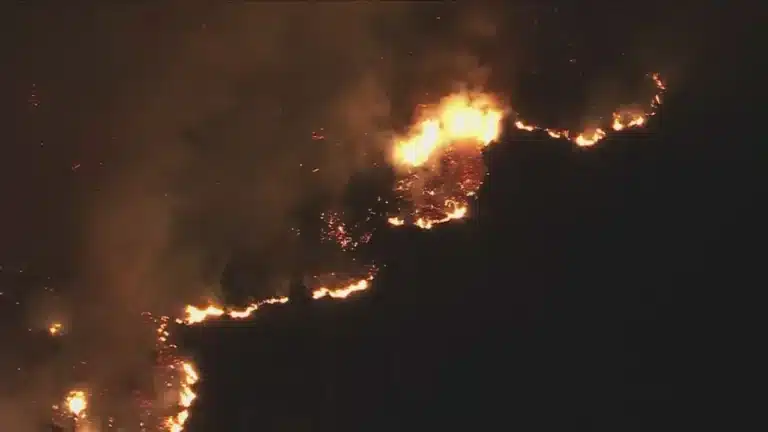
Malibu Fire Forces Hundreds to Flee…
Wildfire in Southern California rarely asks permission. The Bryson Fire,…
By – Tyler Brooks
Tesla Flying Car Roadster Leaps, Flips…
Most car launches involve a spinning platform and some dry…
By – Tyler Brooks
Daylight Saving Time Returns Nov. 1…
Americans will turn their clocks back one hour on Nov.…
By – Jackie Allen
Katie Zacharia Says She Is A…
WASHINGTON – President Donald Trump’s new White House press secretary,…
By – Samuel Lopez
Russian Drone Strikes Hit American Businesses…
Russian drone strikes against American-linked businesses in Ukraine are raising…
By – Jackie Allen
California’s New Mojave Steel Mill Brings…
What Matters in Mojave 1. Pacific Steel Group’s Mojave Micro Mill…
By – Samuel Lopez
Ilhan Omar MIA as Husband Flips…
What Readers Need to Know Federal agents seized Rep. Ilhan…
By – Samuel Lopez
Trump May Replace Susie Wiles as…
Susie Wiles, President Donald Trump’s longtime chief of staff and…
By – Jackie Allen
California Identifies New York Life, Aetna,…
Key Takeaways California’s Department of Insurance maintains an official…
By – Samuel Lopez
California Ballots: Trump DOJ Targets 20,000…
WASHINGTON — The Trump administration sued California on Thursday, seeking…
By – Michallie Harrison
Starship Launches: SpaceX Seeks 456 Flights…
WASHINGTON — SpaceX wants permission for up to 456 Starship…
By – Michallie Harrison
Three Children, Teacher Killed in Oregon…
BEND, Ore. — An Oregon school shooting killed three children…
By – Michallie Harrison
iPhone Duo Buyers Face December Wait…
CUPERTINO, Calif. — iPhone Duo buyers faced delivery estimates stretching…
By – Michallie Harrison
Starlink Restrictions Hit Ukraine’s Drones; Musk…
WASHINGTON — Starlink restrictions disrupted Ukrainian drone missions this week,…
By – Michallie Harrison
Trump Scraps Hegseth’s Execution Livestream After…
WASHINGTON — President Donald Trump canceled the planned execution livestream…
By – Michallie Harrison
California Companies Face Massive Historical Records…
Compliance Takeaways California’s new Truth in Disclosure Act requires some…
By – Samuel Lopez
Judge Rejects John Brennan’s Preemptive Bid…
Key Takeaways Former CIA Director John Brennan suffered a…
By – Samuel Lopez
BOP Says Diddy Fight Never Happened…
By Samuel López | USA Herald For days, reports ricocheted…
By – Samuel Lopez
Halle Berry’s Son Can Testify As…
Sidebar A Los Angeles judge has cleared Halle Berry and…
By – Samuel Lopez
Katie Zacharia Says She Passed the…
The Zacharia Credential Fight in Three Lines A law degree…
By – Samuel Lopez
Bukele Plans Conditional Release for Thousands…
By Samuel López | USA Herald EL SALVADOR – President…
By – Samuel Lopez
David Surkamp Rock Singer Passes at…
Some singers fit a genre. Others bend it around their…
By – Rachel Moore
Trump Weighs ‘Mother of All Bombs’…
WASHINGTON — U.S. military planners have developed options to use…
By – Michallie Harrison
Killed by Police Officer? Sandra Birchmore…
The case of Sandra Birchmore, a 23-year-old Massachusetts woman who…
By – Jackie Allen
Katie Zacharia’s Lawyer Claims Trigger Bar…
WASHINGTON — White House press secretary Katie Zacharia faces calls…
By – Michallie Harrison
Massive Cyberattack Targets Refrigerators In Supermarkets…
What Shoppers and U.S. Supermarkets Need to Know Hackers remotely…
By – Samuel Lopez
Texas Sues Gerber and Nestlé Alleging…
What Parents Need to Know Texas alleges Gerber’s own testing…
By – Samuel Lopez
Pope Leo XIV’s Surgery Exposes Gap…
By Samuel López | USA Herald VATICAN CITY — As…
By – Samuel Lopez
Selma Blair Faces Issues After Alleged…
Selma Blair, the actress known for her roles in Cruel…
By – Jackie Allen
Medicare Insurer Sues CMS After Star…
What’s at Stake Alignment’s largest California Medicare Advantage contract fell…
By – Samuel Lopez
Mother of Dead Russian Plague Lab…
What Readers Need to Know Darya Shipilova’s mother says the…
By – Samuel Lopez
Cornell Rape Case Raises a Difficult…
SIDEBAR Major research generally places demonstrably false sexual-assault reports at…
By – Samuel Lopez
Kevin Hart’s 2017 Sex Tape Could…
SIDEBAR Kevin Hart’s former assistant Miesha Shakes has identified both…
By – Samuel Lopez
AP Poll Top 25: Georgia Claims…
Georgia has reclaimed the top spot in the AP Poll…
By – Rachel Moore
A.J. Armstrong: Former NFL Player’s Son…
HOUSTON — Antonio “A.J.” Armstrong Jr., the son of former…
By – Jackie Allen
NFL Pro Tyreek Hill Takes the…
What the Jury Is Hearing Lakeeta “Keeta” Vaccaro Hill testified…
By – Samuel Lopez
Terrell Owens Sued By Nolan Wells’…
What Readers Need to Know Three young men who were…
By – Samuel Lopez
California Sends Cease and Desist Letter…
What Matters in This Fight California regulators have reportedly ordered…
By – Samuel Lopez
Costco Faces $5 Million Sugar-Free Lawsuit…
By Samuel López | USA Herald Costco Wholesale Corporation is…
By – Samuel LopezNo posts found.
No posts found.


Join the Discussion
Share your thoughts, ask questions, and engage with
other readers. Sign in or create a free account to
comment.